Shandong Fengtu IOT Technology Co., Ltd
Sales Manager:Ms. Emily Wang
Cel,Whatsapp,Wechat:+86 15898932201
Email:info@fengtutec.com
Add:No. 155 Optoelectronic Industry Accelerator, Gaoxin District, Weifang, Shandong, China


Sales Manager:Ms. Emily Wang
Cel,Whatsapp,Wechat:+86 15898932201
Email:info@fengtutec.com
Add:No. 155 Optoelectronic Industry Accelerator, Gaoxin District, Weifang, Shandong, China
time:2024-11-06 08:46:26 source:Weather Station viewed:752 time
The history of human measurement of wind is extensive, evolving from ancient wind vanes and anemometers to modern high-tech equipment. Initially, people measured wind by observing wind vanes and anemometers. During the Renaissance, scientists invented more precise anemometers. In the 18th century, the advent of the cup anemometer further improved the accuracy of wind speed measurement. In modern times, remote sensing technologies such as lidar wind sensors have been widely used for the detection of wind conditions at higher altitudes. The development of these technologies has made wind measurement more accurate and efficient.
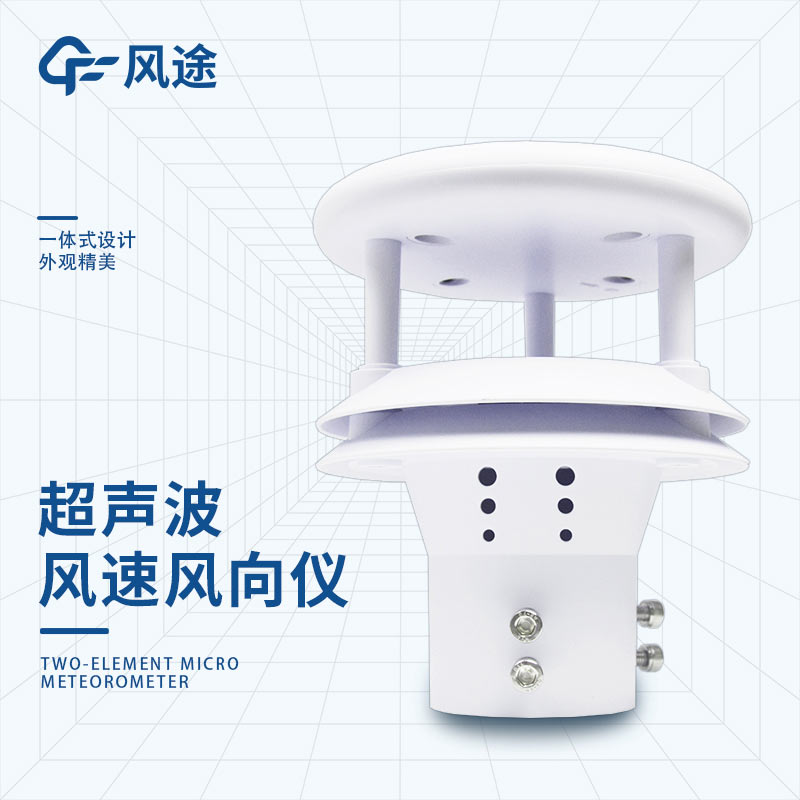
Ultrasonic Anemometer is an instrument based on ultrasonic technology that can measure wind speed and direction. The working principle of this device is based on the variation in the propagation speed of ultrasonic waves in the air, calculating wind speed and direction by measuring the propagation time or frequency difference of ultrasonic pulses in different directions.
The main advantages of this equipment include:
It can perform all-round,死角-free measurements, not limited by wind speed.
It is compact in design, has no moving parts, is durable, and easy to maintain.
It uses advanced error recognition technology to maintain data stability even in high wind conditions.
No calibration is needed after installation, making it easy to operate.
Ultrasonic Anemometer uses four downward-facing ultrasonic sensors that emit and receive ultrasonic signals in a cyclical manner, and calculates wind speed and direction with an integrated microprocessor. This instrument is widely used in meteorological stations, environmental monitoring, wind farms, navigation, and aviation fields due to its high precision and rapid response time.
Water regime monitoring system is mainly used for automatic measurement and analysis of water level, flow and water volume in hydrological forecast. It collects and transmits data information through various sensors, converts it into digital signals, and then processes them to obtain corresponding r...
With rapid industrialisation and urbanisation, there is a growing concern about crop yields and health. Online monitoring of the soil environment is crucial for improving agricultural yields and ensuring the safety of agricultural products.So there are compact, well sealed soil monitoring sensors on...
Although ultrasonic and mechanical wind speed measurement sensors are similar at the basic conceptual level, due to the differences in their designs, their operating modes each possess unique characteristics. Therefore, it is of great significance to clarify the advantages and disadvantages of these...
GNSS receiver price This product, which utilizes differential RTK technology to achieve millimeter-level displacement monitoring, is priced at 6900 RMB. It boasts high accuracy and strong stability, making it suitable for safety monitoring of engineering projects such as dams, bridges, and lan...


 Skype
Skype
 whatsapp
 mail
mail