Shandong Fengtu IOT Technology Co., Ltd
Sales Manager:Ms. Emily Wang
Cel,Whatsapp,Wechat:+86 15898932201
Email:info@fengtutec.com
Add:No. 155 Optoelectronic Industry Accelerator, Gaoxin District, Weifang, Shandong, China


Sales Manager:Ms. Emily Wang
Cel,Whatsapp,Wechat:+86 15898932201
Email:info@fengtutec.com
Add:No. 155 Optoelectronic Industry Accelerator, Gaoxin District, Weifang, Shandong, China
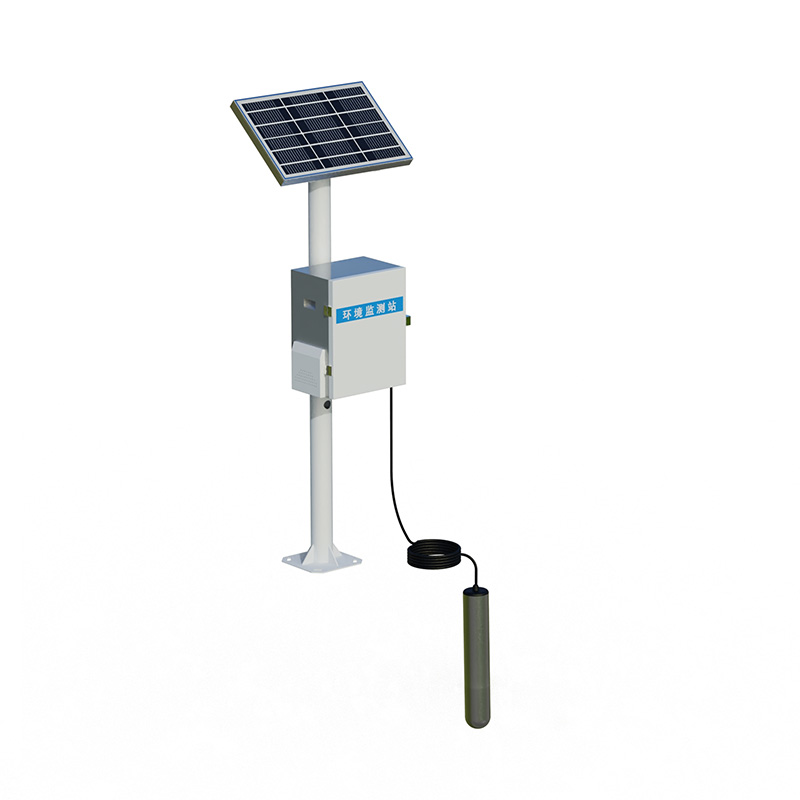
Model:FT-SL1
Brand:fengtu
Seepage Monitoring includes seepage pressure of dam body, seepage pressure of dam foundation, seepage around dam and seepage flow monitoring.
Seepage Monitoring primarily consists of on-site testing equipment and remote monitoring equipment.
On-site testing equipment, including weir gauges and triangular weirs, measures reservoir seepage and monitors flow rates.
Remote monitoring equipment, also known as a remote monitoring terminal, collects data from on-site testing equipment and transmits this information to the monitoring center via wireless transmission.
Seepage Monitoring Introduction
The weir gauge uses a magnetostrictive sensor for liquid level measurement. It features high resolution, excellent stability, reliable performance, fast response, linear measurement, resistance to wear, and a long service life. The weir gauge measures the water head above the weir and then calculates the flow rate based on empirical formulas for weir channels (such as triangular, trapezoidal, and rectangular weirs).
Seepage Monitoring Structure and Principle
The water weir meter consists of a magnetic rod, a floating ball, a measuring circuit and a stainless steel casing.When the water level in the weir flume changes, it will drive the float to produce a liquid level difference. The host computer uses the current liquid level minus the calibrated base value to obtain the actual water level on the weir, and then calculates the flow rate according to the weir flume type.
Seepage Monitoring Product Features
High precision and resolution
Excellent stability and fast response
Minimal temperature drift
Standard MODBUS protocol and wide compatibility
Seepage Monitoring Specifications and parameters
| Measurement range | 0~600mm |
| Sensitivity | 0.01mm |
| Measurement accuracy | ≤0.1%F.S |
| Working voltage | DC12V (0.5W@12V) |
| Output signal | RS485-MODBUS protocol |
| Protection level | IP67 |
| Case material | 304 Stainless Steel |
| Dimensions | Φ89×850mm |
With rapid industrialisation and urbanisation, there is a growing concern about crop yields and health. Online monitoring of the soil environment is crucial for improving agricultural yields and ensuring the safety of agricultural products.So there are compact, well sealed soil monitoring sensors on...
In numerous fields such as meteorological observation, aerospace, and environmental monitoring, measuring wind speed and direction is of extremely great significance. Wind speed and direction data are essential for improving the accuracy of weather forecasts. They can assist meteorological departmen...
In coal mining, which is a crucial part of the industry, ensuring operational safety, enhancing productivity and maintaining environmental health are the primary goals. Our micro-weather monitoring equipment provides real-time and accurate weather data monitoring and forecasting services for mining...
As a major agricultural country, establishing a soil moisture monitoring network is crucial for effective disaster prevention, drought resistance, and water-saving irrigation. By deploying soil moisture monitoring stations in key areas, real-time acquisition of key data such as soil moisture can sup...


 Get a Free Quote

 Skype
Skype
 whatsapp
 mail
mail