Shandong Fengtu IOT Technology Co., Ltd
Sales Manager:Ms. Emily Wang
Cel,Whatsapp,Wechat:+86 15898932201
Email:info@fengtutec.com
Add:No. 155 Optoelectronic Industry Accelerator, Gaoxin District, Weifang, Shandong, China


Sales Manager:Ms. Emily Wang
Cel,Whatsapp,Wechat:+86 15898932201
Email:info@fengtutec.com
Add:No. 155 Optoelectronic Industry Accelerator, Gaoxin District, Weifang, Shandong, China
time:2026-03-11 09:14:24 source:Weather Station viewed:294 time
Wave Height Measurement Instrument is a specialized device dedicated to the monitoring of marine waves and water levels. Equipped with a low-power microprocessor, a high-precision 24-bit AD converter, and a capacitive wave height sensor, it is capable of accurately measuring wave parameters and water levels in free-flowing fluids. By precisely capturing even the most subtle fluctuations in wave height, the device finds extensive application across various scenarios, including marine observation, port operations and maintenance, maritime safety, and meteorological early warning systems.
The core configuration of Wave Height Measurement Instrument strikes an optimal balance between measurement precision and energy efficiency. Its central processing unit utilizes a low-power microprocessor, ensuring the device's long-term, stable operation while minimizing energy consumption. This design makes it ideally suited for prolonged outdoor monitoring applications—such as those in marine environments and ports—without the need for frequent power supply maintenance. Furthermore, the integration of a high-precision 24-bit AD converter enables the accurate digital conversion of signals captured by the sensor, thereby enhancing data measurement accuracy and eliminating errors caused by signal interference. The capacitive wave height sensor, meanwhile, demonstrates excellent environmental adaptability; it responds rapidly to changes in wave conditions and precisely captures wave height fluctuations of varying amplitudes, ensuring the real-time availability and reliability of monitoring data.
The primary function of this instrument is the precise measurement of wave parameters and water levels in free-flowing fluids. Compared to standard monitoring equipment, its key advantage lies in its ability to accurately capture minute changes in wave height—whether involving minor wave ripples or significant wave surges—enabling accurate monitoring and data recording that provides reliable data support for operations in relevant fields. The instrument features user-friendly operation and flexible installation options; depending on the specific requirements of a given scenario, it can be flexibly deployed across various locations—including marine observation stations, port terminals, and vessels—making it adaptable to a wide range of complex marine environments.
In practical application, the usage scenarios for Wave Height Measurement Instrument are extensive and diverse. In the field of marine observation, this technology enables the long-term monitoring of wave dynamics within specific sea areas, providing foundational data for marine environmental research and resource development. In port operations and maintenance, it facilitates real-time monitoring of wave heights, offering critical safety references for cargo handling and vessel docking to prevent accidents caused by excessive wave activity. Regarding maritime safety, it supplies vessels with real-time wave data, empowering crews to proactively mitigate wave-related risks and ensure safe navigation. Furthermore, in the realm of meteorological early warning, by monitoring wave fluctuations, it aids in marine weather forecasting—enabling the early prediction of wave-related hazards and thereby minimizing loss of life and property.
Wave Height Measurement Instrument has established itself as an indispensable monitoring device across marine-related sectors, distinguished by its stable performance, precise measurement capabilities, and broad adaptability. Its low-power design reduces operational and maintenance costs, while its high-precision configuration ensures data reliability. Moreover, its versatility across diverse application scenarios meets the specific monitoring requirements of various industries, providing a robust safeguard for the orderly execution of tasks in marine observation, port operations, and maritime safety, and ultimately empowering these sectors to achieve more efficient and secure operational management.
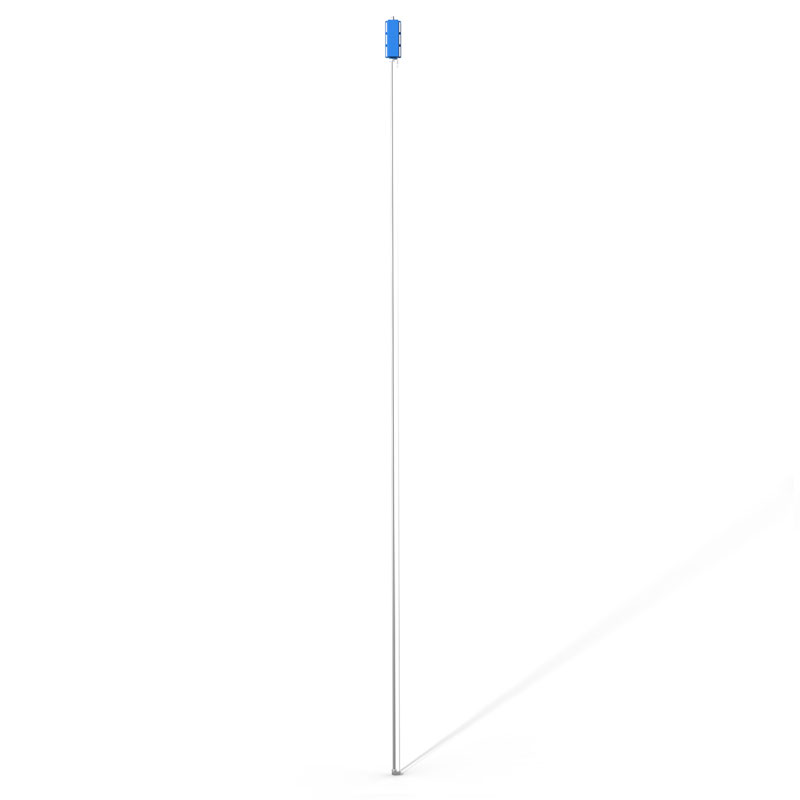
The meteorological environment monitoring sensor FT-WQX10 is a meteorological sensor launched by Fengtu Technology. It is a new type of meteorological monitor based on the Internet of Things technology developed by Fengtu Technology. It processes and analyzes atmospheric data to achieve remote monit...
Industrial Weather Station is specifically designed for flammable and explosive environments such as chemical plants and oil depots. It integrates wind speed, wind direction, temperature, humidity, and atmospheric pressure monitoring, employing high-level explosion-proof and corrosion-resistan...
The 10km visibility sensor is a high-performance device that accurately measures visibility and plays a key role in a variety of applications. In this article, we will describe the working principle of the 10km visibility sensor, its advantages and its importance in areas such as meteorological obse...
The oil density sensor employs a piezoelectric resonant MEMS core component, integrating high-precision signal acquisition and intelligent algorithms to synchronously measure liquid density, dynamic viscosity, and temperature in real time. It is suitable for equipment such as hydraulic power s...


 Skype
Skype
 whatsapp
 mail
mail