Shandong Fengtu IOT Technology Co., Ltd
Sales Manager:Ms. Emily Wang
Cel,Whatsapp,Wechat:+86 15898932201
Email:info@fengtutec.com
Add:No. 155 Optoelectronic Industry Accelerator, Gaoxin District, Weifang, Shandong, China


Sales Manager:Ms. Emily Wang
Cel,Whatsapp,Wechat:+86 15898932201
Email:info@fengtutec.com
Add:No. 155 Optoelectronic Industry Accelerator, Gaoxin District, Weifang, Shandong, China
time:2026-10-19 09:08:22 source:Weather Station viewed:5 time
Shandong Fengtu, a specialist in slope structural safety monitoring and early warning systems, manufactures the FT-BPLD1 and FT-BPLD2 slope monitoring radars, as well as the FT-WY1 GNSS monitoring system. These devices support millimeter-level deformation data acquisition, are designed for rugged field environments, and provide automated slope safety monitoring and threshold-based early warnings.
As a provider of slope structural safety monitoring and early warning systems, Shandong Fengtu independently develops and produces the FT-BPLD1 and FT-BPLD2 slope monitoring radars and the FT-WY1 GNSS displacement monitoring system. This comprehensive suite of hardware and early warning software is tailored for various slope engineering applications—including mines, water conservancy projects, highways, and geologically hazardous sites—offering stable and reliable solutions for slope structural safety.
The FT-BPLD1 and FT-BPLD2 slope monitoring radars utilize Synthetic Aperture Radar (SAR) and interferometric phase-difference measurement technologies to perform non-contact, wide-area scanning of slopes. Capable of sub-millimeter-level deformation data acquisition, these units remain unaffected by weather conditions such as rain, snow, or fog, enabling continuous, 24/7 monitoring of surface displacement. Equipped with an integrated edge-computing module, the devices process data internally without requiring external computing power. The system features a four-level early warning logic, allowing managers to define custom warning thresholds and designate specific protection zones—thereby reducing false alarms triggered by construction activities. Furthermore, the system can automatically generate standardized monitoring reports, meeting regulatory data-reporting requirements for mine safety.
The FT-WY1 GNSS slope monitoring station employs differential RTK technology to achieve millimeter-level displacement monitoring. The terminal is compatible with multiple satellite positioning constellations and integrates tilt and acceleration sensors to help identify sudden, abrupt displacements. Designed for low power consumption and paired with a solar power supply, the system is ideal for long-term, continuous deployment in remote mountainous regions and field construction sites. The FT-WY1 supports multiple data transmission protocols and is capable of independent, offline operation. In the event of a network interruption, it can continue to perform local data processing and trigger threshold-based alarms—effectively addressing the common challenge of unstable network connectivity at remote field monitoring sites.
Displacement and deformation data collected by the slope monitoring system are transmitted to a centralized monitoring platform. Through a web interface or mobile application, management personnel can view real-time data and track structural changes in the slope. As the original manufacturer, Shandong Fengtu (Shandong Fengtu IoT Technology Co., Ltd.) offers customizable equipment configurations tailored to specific site conditions, along with on-site installation guidance and long-term operation and maintenance services. The equipment has been successfully deployed in various settings—including open-pit mine slopes, tailings dams, and highway-adjacent mountain slopes—where it continuously monitors slope deformation, identifies potential structural instability risks in advance, and helps mitigate safety hazards such as landslides and collapses.
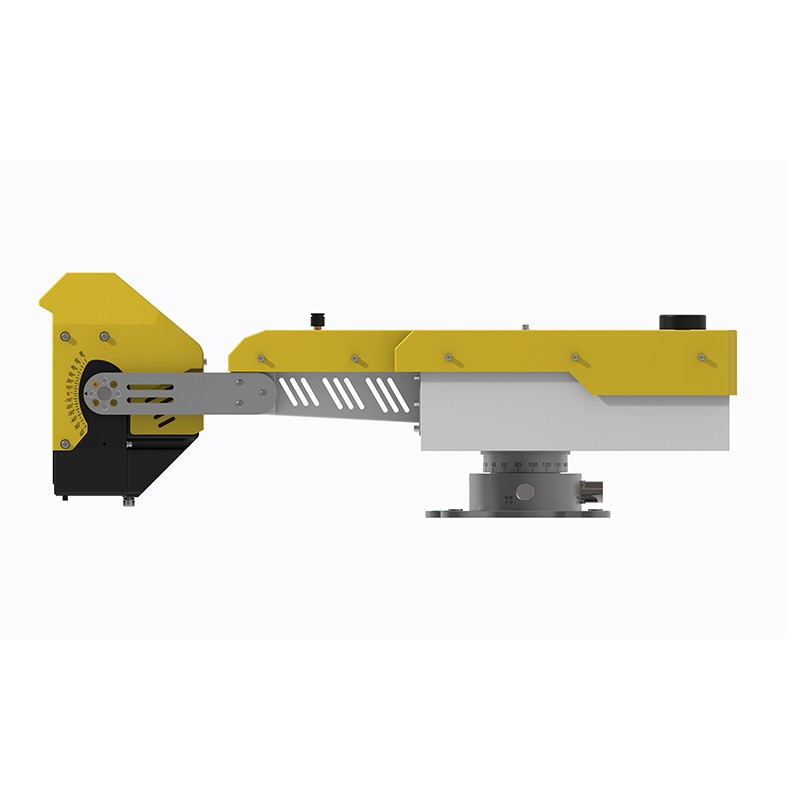
As the scale of the power grid continues to expand, the number and length of transmission lines are also growing rapidly, posing increasing challenges to traditional transmission line inspection methods. Traditional inspection methods not only involve a huge workload but also have many shortcomings,...
A portable visibility sensor is a device capable of measuring the brightness of the surrounding environment and the visibility of the atmosphere. It usually uses laser or infrared technology to provide visibility data quickly and accurately by measuring parameters such as light scattering and reflec...
For a long time, visibility observation has often relied on manual visual estimation, which is subjective and has a large margin of error. With the rapid advancement of photoelectric instruments, manual estimation has gradually been replaced by Visibility meters that can operate around the clock. Cu...
The Air Quality Monitoring Station is a miniaturized, intelligent, and grid-based air quality monitoring device. It integrates multiple sensors, enabling real-time and accurate monitoring of various key indicators in the air. With the help of IoT technology, the collected data is quickly transmitted...


 Skype
 whatsapp
 mail