Shandong Fengtu IOT Technology Co., Ltd
Sales Manager:Ms. Emily Wang
Cel,Whatsapp,Wechat:+86 15898932201
Email:info@fengtutec.com
Add:No. 155 Optoelectronic Industry Accelerator, Gaoxin District, Weifang, Shandong, China


Sales Manager:Ms. Emily Wang
Cel,Whatsapp,Wechat:+86 15898932201
Email:info@fengtutec.com
Add:No. 155 Optoelectronic Industry Accelerator, Gaoxin District, Weifang, Shandong, China
time:2026-11-11 09:47:02 source:Weather Station viewed:7 time
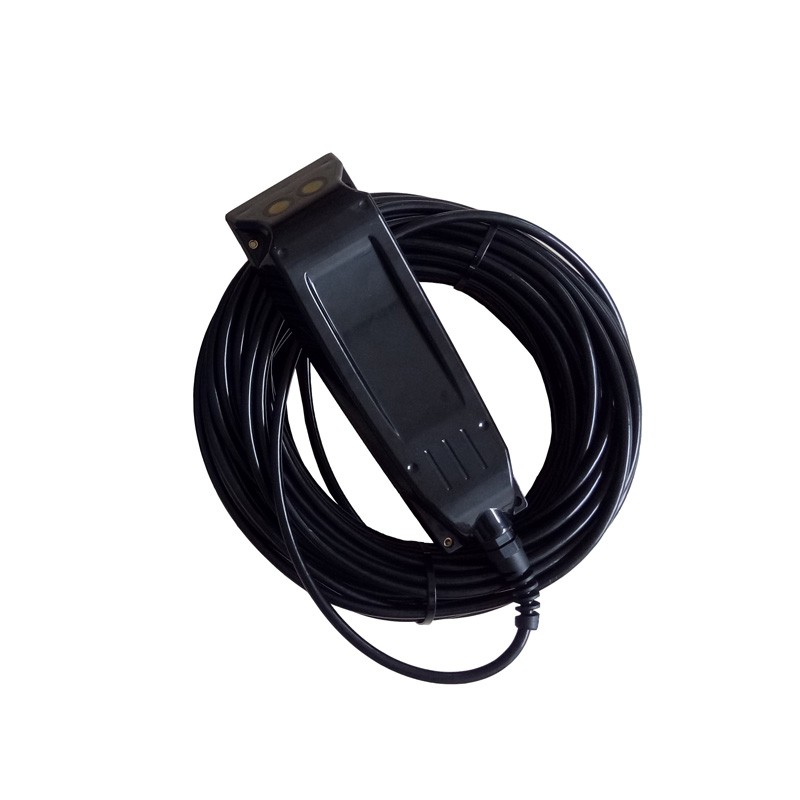
Doppler flowmeters operate based on the acoustic Doppler effect. A probe emits ultrasonic signals at a fixed frequency into the water. As suspended particles or air bubbles in the water move with the flow, they reflect these signals back. A frequency shift occurs between the reflected echo and the emitted signal; this shift is directly proportional to the fluid velocity, which the instrument then calculates. These devices are suitable for real-time flow monitoring in rivers, open channels, and pipelines, providing both instantaneous and cumulative flow data.
Regarding power supply and consumption, Doppler flowmeters operate on a DC voltage of 10 to 15V. The current draw is approximately 10mA in standby mode and about 60mA during active measurement, making them well-suited for long-term operation at field monitoring sites powered by solar panels or batteries. The acoustic frequency is 2MHz, with a "blind zone" (unmeasurable area) limited to 10 centimeters, ensuring effective performance even at low water levels. The flow velocity measurement range spans from 0.02 m/s to 10 m/s, allowing for the detection of slow-moving water. The device can measure water depths from 0.02 m to 5 m, with an operational depth range of 0.2 m to 5 m. During installation, the sensor’s emitting surface must be positioned at a sufficient depth below the minimum expected water level to prevent it from becoming exposed.
The sensor housing is constructed from a combination of ABS plastic and stainless steel, offering both corrosion resistance and structural integrity; it is designed for water temperatures ranging from 0°C to 50°C. The measurement cycle is set to 20 seconds, during which the device samples and calculates flow velocity and water level. It features an RS485 interface and supports the Modbus communication protocol, facilitating integration with data acquisition terminals or remote transmission modules. During installation, the sensor’s emitting surface should face the direction of the water flow. Additionally, areas with heavy silt accumulation or dense aquatic vegetation should be avoided to prevent obstruction of the acoustic path, which could otherwise lead to erroneous data. Doppler flowmeters contain no mechanical moving parts, eliminating issues such as clogging by sediment or entanglement with debris. They are highly versatile for flow monitoring in municipal drainage systems, irrigation channels, and natural rivers. When selecting and positioning a unit, it is essential to consider the cross-sectional shape and the range of water-level fluctuations to ensure a relatively stable flow regime at the measurement site, thereby obtaining representative flow velocity data.
weather sensors are environmental monitoring devices that measure weather data such as temperature, relative humidity, precipitation, barometric pressure, wind direction, and wind speed....
Greenhouses play a vital role in agricultural production, providing indispensable support for the cultivation of high-value vegetables, anti-seasonal crops and rare fruits, making their position in the modern agricultural field more and more prominent.Greenhouse greenhouse has many advantages, it is...
Deep beneath the city, drainage networks are responsible for collecting and conveying various liquids, including domestic sewage, industrial wastewater, and rainwater, ensuring these fluids flow smoothly to wastewater treatment plants or natural water bodies to maintain urban operations and environm...
The development and application of micro-weather stations play an important role in the meteorological business. Miniature weather stations are usually portable and easily deployable meteorological observation devices that can monitor and record various meteorological parameters, such as temperature...


 Skype
 whatsapp
 mail