Shandong Fengtu IOT Technology Co., Ltd
Sales Manager:Ms. Emily Wang
Cel,Whatsapp,Wechat:+86 15898932201
Email:info@fengtutec.com
Add:No. 155 Optoelectronic Industry Accelerator, Gaoxin District, Weifang, Shandong, China


Sales Manager:Ms. Emily Wang
Cel,Whatsapp,Wechat:+86 15898932201
Email:info@fengtutec.com
Add:No. 155 Optoelectronic Industry Accelerator, Gaoxin District, Weifang, Shandong, China
time:2026-11-02 09:26:00 source:Weather Station viewed:3 time
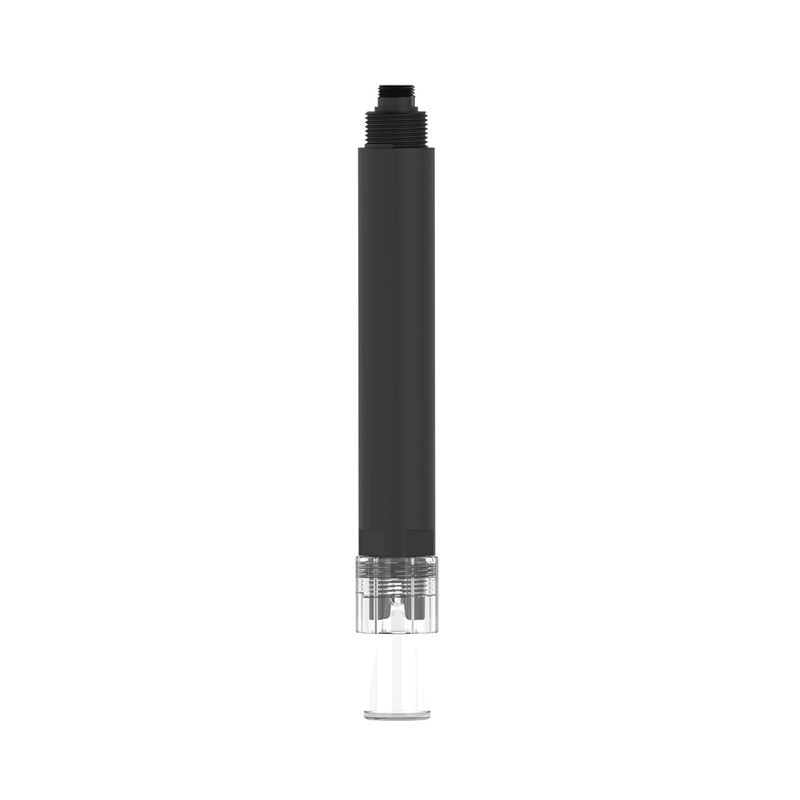
The Water PH Sensor is designed for environmental water quality monitoring and the testing of water samples with varying ionic strengths. It supports RS485 and 4-20mA outputs, utilizes a low-impedance glass membrane combined with signal isolation technology, and features an IP68 ingress protection rating, making it suitable for both submersible and in-line (pipeline) installation. This guide outlines its core specifications, installation standards, and maintenance essentials to assist with selection for industrial and environmental online monitoring applications.
In settings such as industrial wastewater discharge outlets, municipal water supply pipelines, or natural water monitoring sites, the simultaneous acquisition of pH and temperature data is a fundamental requirement for water quality control. The Water PH Sensor integrates an electrochemical glass electrode with a temperature-sensing element. It measures hydrogen ion activity via the salt bridge principle and employs a built-in temperature probe for automatic compensation, thereby minimizing the impact of temperature fluctuations on pH readings. These devices typically support both RS485 (MODBUS-RTU) digital signals and 4-20mA analog current outputs, allowing for seamless integration with existing PLCs, data loggers, or remote monitoring platforms without the need for additional conversion modules.
Regarding technical specifications, standard models offer a measurement range of 0 to 14.00 pH with a resolution of 0.01, maintaining an accuracy of ±0.1 pH and ±0.1°C. The response time is approximately 10 seconds in flowing liquid and 15 seconds in static liquid—sufficient to track water quality changes in municipal pipe networks or industrial processes. The housing is generally constructed from ABS, and the unit comes with a standard 5-meter cable. It operates on a 12–24 VDC power supply with low power consumption, making it well-suited for solar-powered installations or deployment at remote sites. While the IP68 rating ensures the sensor can operate underwater for extended periods, it is important to ensure the ambient temperature remains below 50°C (without freezing) and the pressure stays under 0.2 MPa.
A frequently overlooked detail during installation is that the Water PH Sensor must not be positioned upside down or perfectly horizontal; it should be installed at an incline of at least 15 degrees to ensure proper contact between the reference junction and the water. The 3/4" NPT pipe thread provides a versatile interface for flush-mounting onto pipes or tanks, offering excellent adaptability for field installation. For electrical connections, a 5-core shielded cable is used: the brown wire connects to the positive power supply, the black wire to ground, and the green and yellow wires correspond to 485B and 485A, respectively. Please verify the wiring sequence before connection to prevent equipment damage. Before initial use—or when resuming operation after a long period of inactivity—the sensing bulb should be soaked in a 3.3 mol/L potassium chloride (KCl) solution for at least 2 hours to rehydrate the glass membrane and the reference system.
Maintenance primarily involves cleaning the electrode surface and performing periodic calibration. If the glass membrane accumulates deposits or becomes translucent after prolonged immersion, it may be cleaned with dilute hydrochloric acid and then rinsed thoroughly with clean water. The sensor should not be left for extended periods in deionized water, protein-rich solutions, or environments with strong acids or bases; it should also be kept away from silicone-based greases. If measurement deviations persist and cannot be corrected through cleaning and calibration, the electrode has likely reached the end of its service life and requires replacement. For equipment deployed in wastewater treatment aeration tanks or river sections, it is recommended to establish a cleaning schedule based on specific water quality characteristics—shortening the inspection interval in environments with high suspended solids—to ensure the continuity and reliability of the data.
anemometer miniaturization is a compact wind speed and direction sensor that uses the ultrasonic principle to monitor wind conditions and thus enables miniaturization....
The Shandong Fengtu piezoelectric rainfall sensor utilizes a PVDF piezoelectric film as its sensing element. It incorporates an embedded AI neural network to identify raindrop signals, effectively reducing false triggers caused by debris (such as gravel or dust) or vibrations. The sensor provides st...
Air quality is directly related to human health and the safety of the ecological environment. As the pace of industrialisation and urbanisation continues to accelerate, the problem of air pollution is becoming more and more prominent, posing a serious threat to people's health and quality of lif...
In the third-party pollution control of industrial parks, "monitoring" is a core link. However, scattered monitoring points face problems such as high operation and maintenance costs and difficulty in unified management. Atmospheric pollution grid monitoring technology, which combines &quo...


 Skype
 whatsapp
 mail