Shandong Fengtu IOT Technology Co., Ltd
Sales Manager:Ms. Emily Wang
Cel,Whatsapp,Wechat:+86 15898932201
Email:info@fengtutec.com
Add:No. 155 Optoelectronic Industry Accelerator, Gaoxin District, Weifang, Shandong, China


Sales Manager:Ms. Emily Wang
Cel,Whatsapp,Wechat:+86 15898932201
Email:info@fengtutec.com
Add:No. 155 Optoelectronic Industry Accelerator, Gaoxin District, Weifang, Shandong, China
time:2026-11-10 09:02:33 source:Weather Station viewed:6 time
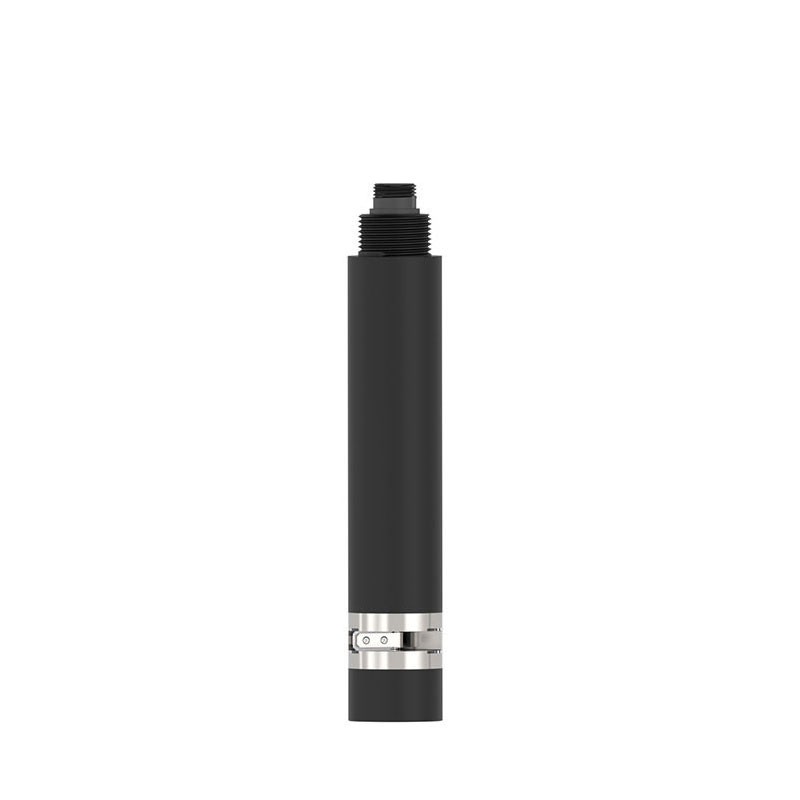
Online water quality sensors for COD and turbidity utilize a dual-light-source (UV254) measurement system. One light source measures COD, while the other measures turbidity; the system automatically applies both turbidity and temperature compensation. These sensors support immersion-style installation and provide RS-485 output.
In the field of online water quality monitoring, Chemical Oxygen Demand (COD) and turbidity are closely related parameters that can easily interfere with one another. While the absorption of ultraviolet (UV) light by organic matter provides an optical basis for measuring COD, suspended particles in the water can alter light transmission, leading to inaccuracies in readings based solely on UV absorption. The core concept behind the dual-light-source design is to perform both turbidity and COD measurements within a single probe. Real-time turbidity data is used to correct the COD absorbance calculations, rather than relying on separate, independent devices for each parameter.
Specifically, one light source within the sensor operates in the UV spectrum, estimating COD concentration based on the degree to which dissolved organic matter absorbs light near the 254nm wavelength. A second, independent light source handles turbidity measurement; the resulting data is not merely output as an NTU (Nephelometric Turbidity Unit) value, but is also integrated into the signal compensation process for the COD channel. This step filters out the effects of light scattering and obstruction caused by suspended particles, ensuring that the remaining absorption signal is attributed solely to the organic matter itself. Simultaneously, an integrated temperature sensor continuously monitors the water temperature, correcting for any temperature-related drift in the optical measurements to ensure consistent readings across different seasons and climatic conditions.
During field deployment, careful attention must be paid to the installation angle. The sensor should not be installed upside down; it must be positioned at an incline of at least 15 degrees to prevent air bubbles or sediment from accumulating on the optical window. Some models are equipped with an automatic cleaning mechanism that periodically wipes the optical window, preventing biofouling and the buildup of debris—a feature particularly essential for unattended, remote monitoring sites. Regarding calibration, the device is pre-calibrated before leaving the factory. Should on-site calibration be required, the process is straightforward: distilled water is typically used for zero-point calibration, followed by a standard solution of known concentration for slope calibration.
This online water quality sensor—designed for measuring COD, turbidity, and temperature—is well-suited for applications that demand continuous data while requiring minimal maintenance. Rather than aiming for the extreme precision of a laboratory instrument, it provides stable and reliable COD and turbidity readings under field conditions. By accounting for the effects of turbidity and temperature directly during the measurement process, it reduces the need for subsequent data correction.
The FT-FHQ2 type Portable gas detector is a pump-suction four-in-one gas detector that can simultaneously detect four kinds of gases: combustible gas (EX), hydrogen sulfide (H₂S), carbon monoxide (CO), and oxygen (O₂).Working PrincipleIts sensitive components adopt high-quality gas sensors....
The weather environment monitor is a high-tech device used for real-time monitoring of various meteorological elements in the atmospheric environment, mainly used in the fields of weather forecasting, climate change research, environmental monitoring, agricultural production and so on. It can help u...
Slope Stability Radar integrates multiple sensors, including slope radar, to achieve 24-hour automated monitoring of geological disasters such as landslides, collapses, and debris flows. The system boasts sub-millimeter deformation measurement accuracy and intelligent early warning capabilitie...
In the fields of atmospheric and tunnel environment detection, every data point is crucial for ensuring safety and the accuracy of decision - making. The FT - FT - SGT1 portable light transmittance detector emerges as your reliable detection partner.Operationally, the FT - SGT1 detector is extremely...



 Skype
 whatsapp
 mail