Shandong Fengtu IOT Technology Co., Ltd
Sales Manager:Ms. Emily Wang
Cel,Whatsapp,Wechat:+86 15898932201
Email:info@fengtutec.com
Add:No. 155 Optoelectronic Industry Accelerator, Gaoxin District, Weifang, Shandong, China


Sales Manager:Ms. Emily Wang
Cel,Whatsapp,Wechat:+86 15898932201
Email:info@fengtutec.com
Add:No. 155 Optoelectronic Industry Accelerator, Gaoxin District, Weifang, Shandong, China
time:2026-05-14 09:52:33 source:Weather Station viewed:228 time
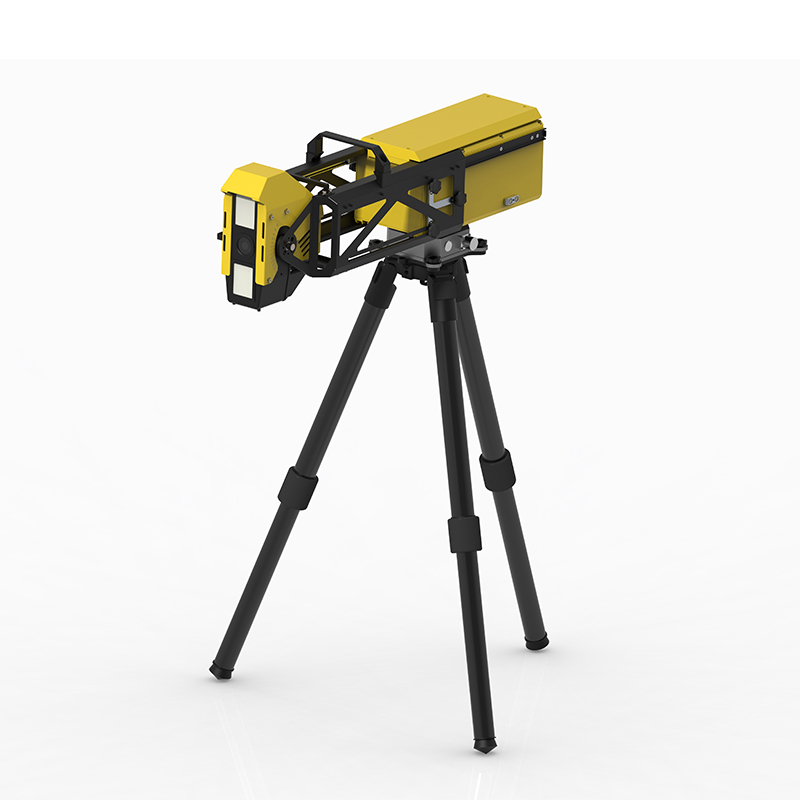
Slope Stability Radar integrates multiple sensors, including slope radar, to achieve 24-hour automated monitoring of geological disasters such as landslides, collapses, and debris flows. The system boasts sub-millimeter deformation measurement accuracy and intelligent early warning capabilities, making it suitable for scenarios such as open-pit mines, highway and railway slopes, and water conservancy projects.
Slope Stability Radar utilizes various technologies to achieve comprehensive real-time monitoring and early warning of geological disasters such as landslides, collapses, and debris flows. The system integrates multi-source sensing equipment, including GNSS high-precision positioning, slope deformation monitoring radar, soil and rock sensors, and video surveillance, enabling automated and continuous acquisition of key parameters such as slope surface displacement, deep internal displacement, groundwater level, rainfall, crack changes, and stress and strain of the support structure. Taking radar technology as an example, current mainstream slope deformation monitoring radars are based on Arc Synthetic Aperture Radar (ArcSAR) and phase differential interferometry technology. They can achieve 360° omnidirectional scanning, sub-millimeter deformation measurement accuracy, and a measurement distance of several kilometers. They are unaffected by cloud cover, rain, fog, or lighting conditions, enabling continuous monitoring around the clock.
At the data acquisition level, the equipment can acquire millimeter-level displacement changes on the slope surface in real time, accurately capturing even extremely subtle surface displacements. It can also detect changes within the slope interior and deep soil and rock masses. Furthermore, due to its non-contact remote sensing characteristics, a single radar system can cover a large mountain area, allowing for rapid deployment at emergency rescue sites and eliminating secondary disasters that threaten the safety of rescue personnel and equipment.
Slope Stability Radar is equipped with an intelligent early warning platform. All monitoring data is transmitted in real time to the backend data management and analysis system via wired, wireless networks, or BeiDou short message services. The platform utilizes big data analytics, intelligent algorithms, and visualization technologies to interpret and analyze massive amounts of monitoring data. It can determine the overall stability of slopes and quickly issue early warnings of landslides, collapses, and other disasters when monitoring data exceeds preset thresholds, buying valuable time for disaster prevention decisions and personnel evacuation. This system is currently widely used in scenarios such as open-pit mine slopes, tailings dams, highway and railway slopes, hydropower station dams, and tunnel entrances, providing reliable technical support for the safe operation of various projects and the early identification of geological hazards.
Fengtu, as a manufacturer of Online Ammonia Nitrogen analyzers, has launched two ammonia nitrogen detectors, both of which are common instruments in the market.Firstly, the FT-ZS5 Online Water Quality AnalyzerIt integrates a water quality ammonia nitrogen sensor, a measurement module, an...
The FT - GSZ04 Water Supply Quality Station is a Water Quality Monitoring Station Secondary Water that integrates Internet of Things technology, combining functions such as sensor data collection, data display, and analysis. The system consists of multiple units including steady - flow exhaust, anal...
Why do we need automatic weather stations when we have weather forecasts?...
4-Component Net Radiometer consists of two shortwave and two longwave radiometers, one at the top and one at the bottom. It simultaneously measures the four components of downward and upward shortwave radiation and downward and upward longwave radiation. The net radiation flux at the Earth'...


 Skype
 whatsapp
 mail