Shandong Fengtu IOT Technology Co., Ltd
Sales Manager:Ms. Emily Wang
Cel,Whatsapp,Wechat:+86 15898932201
Email:info@fengtutec.com
Add:No. 155 Optoelectronic Industry Accelerator, Gaoxin District, Weifang, Shandong, China


Sales Manager:Ms. Emily Wang
Cel,Whatsapp,Wechat:+86 15898932201
Email:info@fengtutec.com
Add:No. 155 Optoelectronic Industry Accelerator, Gaoxin District, Weifang, Shandong, China
time:2026-08-11 09:30:16 source:Weather Station viewed:29 time
The GNSS monitoring station acquires millimeter-level deformation data using differential RTK technology, making it suitable for dam, bridge, and landslide monitoring. The hardware is highly weather-resistant, supports remote data analysis, and can be integrated with various engineering monitoring platforms.
Using differential RTK technology as its core monitoring method, the GNSS monitoring station accurately captures minute displacements of structures and geological slopes. The equipment is currently deployed in various engineering projects, including dam safety management, bridge health inspections, and landslide early warning. The entire system prioritizes measurement accuracy and long-term operational stability, conducting displacement data acquisition around the clock. It can stably output monitoring results even in complex field environments, avoiding data deviations caused by environmental factors.
The GNSS monitoring station's hardware parameters are suitable for long-term outdoor operation. The sensor power supply range is DC10V-15V, with a typical operating power consumption of only 0.25W, resulting in very low daily energy consumption. In differential mode, the horizontal monitoring accuracy reaches ±(2.5mm+1ppm), and the vertical accuracy is ±(5mm+1ppm). Equipped with a choke antenna and magnetic absorbing material, it reduces signal interference caused by multipath effects. The device communicates using the Modbus-RTU protocol, enabling horizontal and vertical displacement calculations at a local terminal. It is compatible with RTCM3 format differential data. The hardware dimensions are 360mm in diameter and 163mm in height. It operates within a temperature range of -40°C to +85°C, and can function normally even in humid, non-condensing conditions.
The GNSS monitoring station installation process is simple. After completing the hardware deployment, staff can begin monitoring. Management personnel can retrieve real-time monitoring information via a remote port to analyze displacement trends. The device has a built-in mature data processing module, excellent hardware compatibility, and can connect to mainstream engineering monitoring systems on the market to transmit, integrate, and share monitoring data.
In scenarios such as slope hazard investigation, reservoir dam deformation monitoring, and long-term health monitoring of large road and bridge projects, the equipment continuously collects three-dimensional displacement information. Based on the transmitted data, staff judge the structural stability, identify geological hazards in advance, and avoid safety accidents such as engineering collapse and landslides, providing hardware support for the routine safety management of outdoor infrastructure projects.
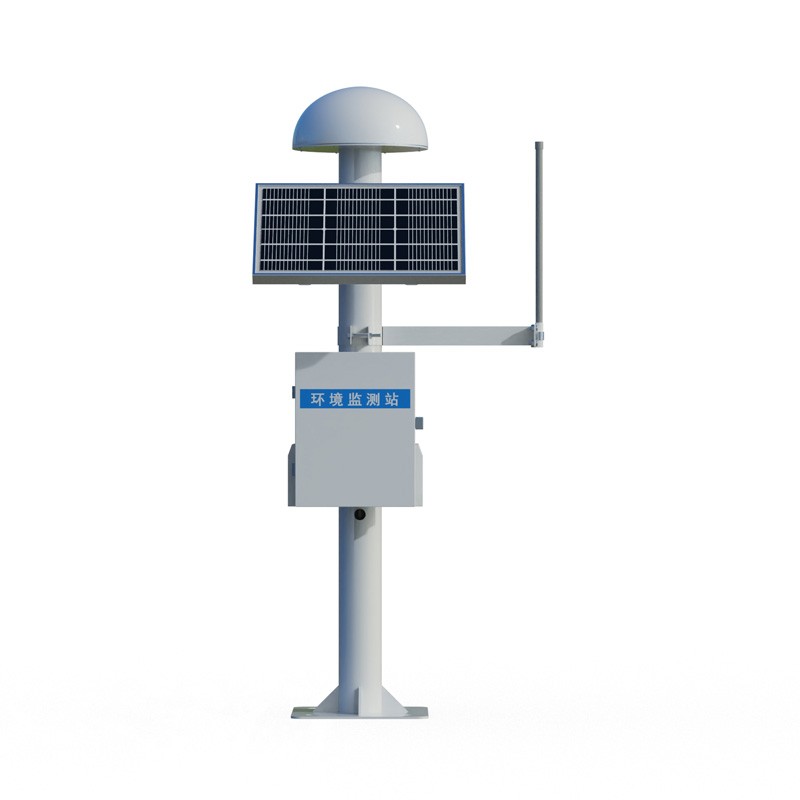
Strawberries are fruits in spring, but with the development of greenhouse technology, we can now also eat strawberries in winter. Winter strawberries are harvested from greenhouses because they have meteorological requirements. Therefore, we can create an environment suitable for strawberry growth i...
GNSS receiver price varies significantly depending on the model and features. The high-precision choke coil antenna version costs approximately 6900 yuan. The device fully supports the Beidou satellite navigation system, integrates differential RTK technology, boasts millimeter-level positioning accuracy, and an IP68 protection rating, making it suitable for surveying, disaster prevention, and transportation applications....
GNSS sensor employs Differential RTK technology to achieve millimeter-level displacement monitoring. Widely applied in engineering fields such as dam safety monitoring, bridge structural health assessment, and landslide early warning systems, it is capable of accurately detecting minute displa...
Duct wind speed is a very important parameter in industrial production and environmental monitoring. Measuring duct air velocity can help engineers and regulatory agencies to accurately understand the operation of pipelines, to ensure the quality and safety of industrial production, or to monitor pr...


 Skype
Skype
 whatsapp
 mail
mail