Shandong Fengtu IOT Technology Co., Ltd
Sales Manager:Ms. Emily Wang
Cel,Whatsapp,Wechat:+86 15898932201
Email:info@fengtutec.com
Add:No. 155 Optoelectronic Industry Accelerator, Gaoxin District, Weifang, Shandong, China


Sales Manager:Ms. Emily Wang
Cel,Whatsapp,Wechat:+86 15898932201
Email:info@fengtutec.com
Add:No. 155 Optoelectronic Industry Accelerator, Gaoxin District, Weifang, Shandong, China
time:2026-11-05 09:26:48 source:Weather Station viewed:0 time
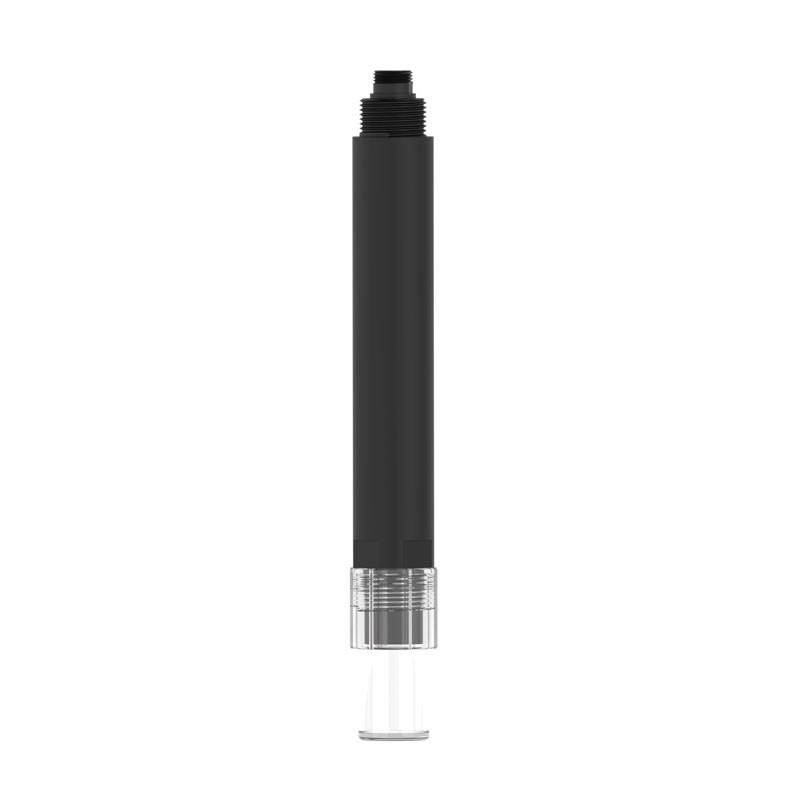
Water hardness is a fundamental parameter in industrial water treatment and environmental water quality monitoring; excessive hardness often leads to scaling in pipelines and reduced equipment efficiency. Online water hardness sensors replace manual sampling with continuous measurement, providing real-time data for boiler feed water, circulating cooling water, and softened water systems. For water samples with varying ionic strengths, sensors utilizing an indirect conductivity-based measurement method can convert changes in electrical conductivity into a water hardness value (expressed as calcium ion concentration). With a measurement range of 0 to 1000 mg/L and a resolution of 0.1 mg/L, these sensors meet the continuous monitoring requirements of most industrial and environmental applications. Such devices typically feature RS485 Modbus-RTU signal output and internal electrical isolation, facilitating seamless integration with PLCs or data acquisition systems. They are designed with 3/4" NPT pipe threads, allowing for either submersible installation or mounting directly onto pipes or tanks. With an IP68 ingress protection rating and a durable ABS housing, they are suitable for long-term immersion. They offer a response time of approximately 30 seconds, while high thermal stability and low drift characteristics minimize the need for frequent recalibration. For sites requiring both installation flexibility and robust data integration, these sensors provide a compact and highly compatible solution.
In environmental water quality monitoring, online water hardness sensors often face challenges stemming from fluctuations in the ionic strength of water samples. The impact of ionic strength on the conductivity-based measurement method varies: in high-ionic-strength samples, a high background conductivity reduces the signal-to-noise ratio for hardness-related readings, while in low-ionic-strength samples, a low total ion concentration may result in insufficient signal resolution. These sensors employ contact-based electrodes for indirect measurement; prior to deployment, a correlation curve between conductivity and hardness must be established using standard calibration solutions. If the water matrix changes significantly during operation, recalibration is necessary to maintain accuracy. The nominal measurement accuracy is ±10%—a standard level for the conductivity-based method—making these sensors well-suited for applications where extremely stringent hardness control is not required. Temperature compensation is handled by built-in components with an accuracy of ±0.1°C, which helps mitigate the impact of water temperature fluctuations on conductivity readings.
From a system integration perspective, the RS485 Modbus-RTU protocol is a widely used communication standard in industrial settings. Combined with internal signal isolation, it ensures a stable data link even in environments with high electromagnetic interference, such as pump rooms or chemical dosing areas. The sensor’s compact design and standard 3/4" NPT threads simplify installation and retrofitting; it can be deployed via submersion directly into a tank or basin, or installed in-line using appropriate pipe fittings. A 5-meter cable is provided as standard, which is sufficient for most small-scale sites; however, if longer transmission distances are required, the potential impact of extended cabling on communication quality should be considered. Overall, this type of sensor is well-suited for online monitoring applications that require a reasonable response time and involve relatively stable water sample conditions—making it ideal for tasks such as monitoring the output of water softening systems or tracking conditions in circulating water bypass loops.
Park air quality monitoring station is an important part of urban garden construction in my country, and its main function is to monitor the concentration and distribution of air pollutants in parks. With the continuous acceleration of urbanization and the rapid growth of urban population, the probl...
Micrometeorology refers to meteorological changes in very short time and small scale space, usually measuring meteorological parameters within a few metres to a few tens of metres. The main objective of micrometeorological research is to reveal the patterns of variability of meteorological elements...
Aviation safety is closely linked to meteorological conditions. Every flight—whether it's takeoff, en route, or landing—is inevitably affected by the weather conditions. Accurate meteorological information is crucial for ensuring flight safety as it helps pilots and air traffic controllers mak...
The 5-in-1 Weather Sensor, a high-performance meteorological monitoring device meticulously crafted by Fengtu IoT, is specifically designed for complex environments such as docks. It can monitor five key meteorological parameters - wind speed, wind direction, temperature, humidity, and air pressure...


 Skype
 whatsapp
 mail