Shandong Fengtu IOT Technology Co., Ltd
Sales Manager:Ms. Emily Wang
Cel,Whatsapp,Wechat:+86 15898932201
Email:info@fengtutec.com
Add:No. 155 Optoelectronic Industry Accelerator, Gaoxin District, Weifang, Shandong, China


Sales Manager:Ms. Emily Wang
Cel,Whatsapp,Wechat:+86 15898932201
Email:info@fengtutec.com
Add:No. 155 Optoelectronic Industry Accelerator, Gaoxin District, Weifang, Shandong, China
time:2023-06-29 09:18:23 source:Weather Station viewed:1358 time
Micrometeorology refers to meteorological changes in very short time and small scale space, usually measuring meteorological parameters within a few metres to a few tens of metres. The main objective of micrometeorological research is to reveal the patterns of variability of meteorological elements and processes of material and energy exchange under various surface conditions, as well as to reveal the effects of these elements and processes on the atmosphere, ground, water bodies and plants. Micro-meteorology is of great importance to agriculture, forestry, meteorology, environment and urban planning. Through micrometeorological observations and research, the impact of various natural and man-made factors on the environment can be better understood, providing a scientific basis for environmental protection and ecological construction.
A micrometeorological monitoring system is a device used to measure, record and analyse micro-meteorological elements, including temperature, humidity, wind speed, wind direction, air pressure, precipitation and radiation. It usually consists of multiple sensors, data collectors, data storage and data processors that can automatically and continuously monitor the meteorological elements and transmit the data to a data centre or other receiving equipment. Micro-meteorological monitoring systems are mainly used in meteorology, agriculture, forestry, ecology, urban planning and other fields.
Micrometeorological monitoring systems can be used in the following areas:
1. Agricultural production: Micro-meteorological monitoring systems can monitor changes in meteorological elements, such as temperature, humidity, wind speed and light, to provide the meteorological information needed for agricultural production so that farmers can reasonably plant and manage their crops.
2. Forestry fire prevention: The micro-meteorological monitoring system can monitor the meteorological conditions in forest areas, such as temperature, humidity, wind speed, wind direction, etc., to provide timely warning of fire hazards and prevent and control forest fires.
3. Urban environment monitoring: Micro-meteorological monitoring system can monitor the meteorological conditions in the city, such as temperature, humidity, wind speed, wind direction, etc., to predict and warn of urban environmental pollution, meteorological disasters, etc.
4. Transport: Micro-meteorological monitoring systems can monitor the meteorological conditions of roads, such as temperature, humidity, rainfall, etc., providing the meteorological information required by traffic safety management departments for effective scheduling and management of road transport.
5. Water resources management: The micrometeorological monitoring system can monitor the meteorological conditions of water resources, such as rainfall, evaporation, humidity, etc., providing meteorological information to support the development, use and management of water resources.
6. Sports events: Micro-meteorological monitoring systems can monitor the meteorological conditions of sports venues, such as temperature, humidity, wind speed, wind direction, etc., providing meteorological information to support athletes' competitions, so that the events can be carried out smoothly.
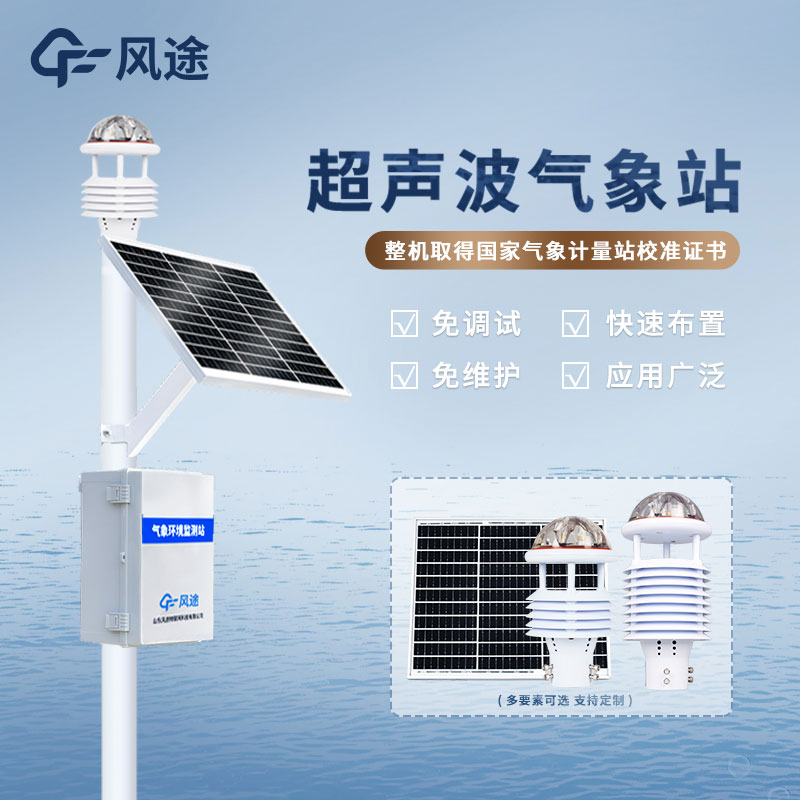
A weather station is a commonly used meteorological instrument that provides detailed meteorological data and combines it with specific application scenarios, industries and specific options for the various sensing hardware devices that make it up. This equipment enables the timely and accurate dete...
The goal of high yields in agricultural cultivation requires an in-depth understanding of the growing environment of crops, and monitoring plays a crucial role in this process. Through accurate monitoring, we can gain a detailed understanding of the growth habits of crops, including their needs for...
Buoy-type automatic water quality monitoring station, is a water quality monitor as the center, the use of sensor technology will be the buoy body, power supply system and data transmission equipment combined and constitute a small water quality monitoring system placed in the water.Buoy intelligent...
The main task of the railroad rainfall monitoring system is to obtain real-time, accurate information on precipitation near the metro. It not only provides important rainfall information for the railroad transportation department, but also has great significance for studying the natural environment...


 Skype
Skype
 whatsapp
 mail
mail