Shandong Fengtu IOT Technology Co., Ltd
Sales Manager:Ms. Emily Wang
Cel,Whatsapp,Wechat:+86 15898932201
Email:info@fengtutec.com
Add:No. 155 Optoelectronic Industry Accelerator, Gaoxin District, Weifang, Shandong, China


Sales Manager:Ms. Emily Wang
Cel,Whatsapp,Wechat:+86 15898932201
Email:info@fengtutec.com
Add:No. 155 Optoelectronic Industry Accelerator, Gaoxin District, Weifang, Shandong, China
time:2026-08-17 09:30:36 source:Weather Station viewed:25 time
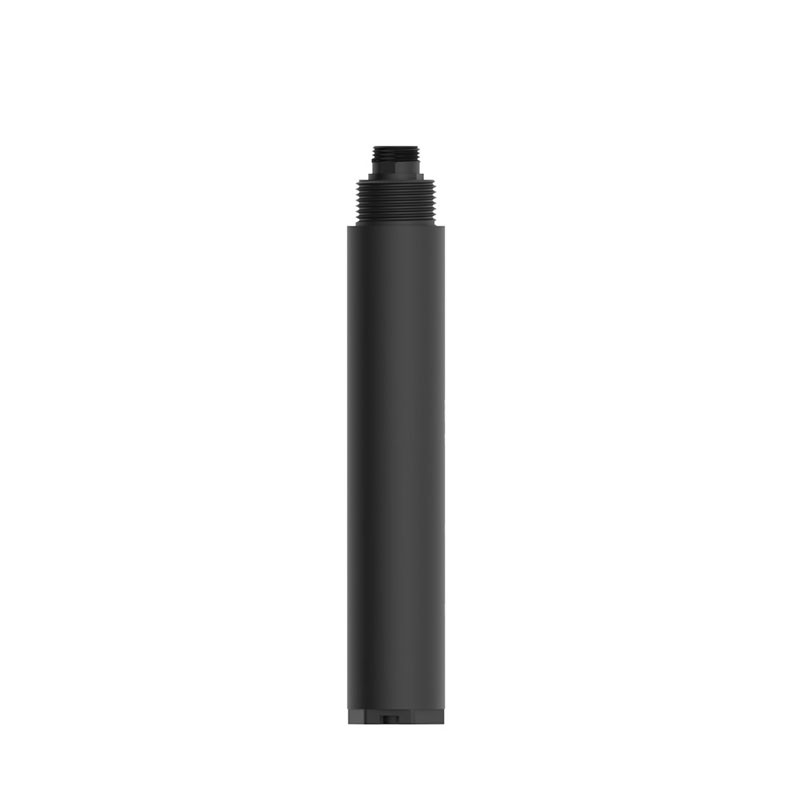
Water transparency sensor employs the scattered light detection principle, combining an infrared LED light source with signal isolation technology to enhance anti-interference capabilities. It supports RS485 communication, is IP68 waterproof, and is easy to install. It can perform long-term online monitoring of the transparency of rivers, lakes, and sewage treatment plants.
Water transparency sensor uses the scattered light method for water body detection. The equipment utilizes the scattering or absorption of light by suspended particles within the water to calculate the water transparency value. This allows for uninterrupted real-time online monitoring, overcoming the shortcomings of manual sampling methods using Sebastian disks, which cannot be monitored 24/7 and suffer from significant human error. The sensor is equipped with an infrared LED light source and internal signal isolation technology, reducing data interference from ambient light and electromagnetic signals, ensuring repeatability and thermal stability of measurement results. Data drift is minimal over long-term operation, reducing the frequency of repeated calibration.
The measurement range of Water transparency sensor is 50-1000mm, with a resolution of 1mm and a measurement accuracy of ±5%. The accuracy is affected by the uniformity of sludge in the water. The device housing is made of glass and ABS material, resulting in a compact overall size. It comes standard with a 5-meter connecting cable and operates on a 12-24VDC power supply. Power consumption is approximately 0.4W on 12V, making it suitable for monitoring sites with limited long-term power supply in the field. The device uses a 3/4NPT pipe thread structure, allowing for both direct submersion and mounting on pipes or tank walls, offering flexible installation options. It has an IP68 waterproof rating, enabling long-term underwater monitoring. The operating water temperature must be maintained between 0-50℃, and the water pressure must not exceed 0.2MPa. Operation must be stopped when the water freezes to prevent probe damage.
The Water transparency sensor output signal is RS485, compatible with the MODBUS-RTU communication protocol, and can be directly connected to industrial control data acquisition equipment, data transmission terminals, and water quality monitoring platforms, facilitating overall network construction for projects. The two-point calibration mode helps staff perform parameter correction based on actual water quality conditions, further improving monitoring accuracy. Currently, this equipment has been widely deployed in surface water monitoring, river management, wastewater treatment, and industrial water cycle control. The stable output of transparency monitoring data helps staff promptly grasp changes in water clarity, providing reliable data support for water environment management and sewage discharge control.
Radiation Sensor Solar Irradiance Sensor covers a wavelength range of 280-400nm, features RS485 communication, low power consumption, and a measurement accuracy of less than ±3%, enabling stable acquisition of solar ultraviolet radiation values in outdoor environments. Radi...
The measurement principle of Radar water level sensor is clear and easy to understand. The radar water level sensing antenna emits radar pulses, and the antenna receives the pulses reflected back from the water surface and records the time. Since the propagation speed of electromagnetic waves...
The Radar Flowmeter is an all-in-one flow monitoring device with non-contact, continuous detection of flow velocity, water level, flow and other parameters. It is the use of radar plane microwave technology in a non-contact way to detect the flow rate, water level and other parameters of the water b...
transmission line micrometeorological monitoring system.The guardian of micrometeorology.Under the seemingly simple appearance.It hides the magic of science and technology.It's powered by solar panels.No need to take care of it.It monitors the weather around the clock.Wind speed, wind direction,...


 Skype
Skype
 whatsapp
 mail
mail