Shandong Fengtu IOT Technology Co., Ltd
Sales Manager:Ms. Emily Wang
Cel,Whatsapp,Wechat:+86 15898932201
Email:info@fengtutec.com
Add:No. 155 Optoelectronic Industry Accelerator, Gaoxin District, Weifang, Shandong, China


Sales Manager:Ms. Emily Wang
Cel,Whatsapp,Wechat:+86 15898932201
Email:info@fengtutec.com
Add:No. 155 Optoelectronic Industry Accelerator, Gaoxin District, Weifang, Shandong, China
time:2026-08-20 09:07:02 source:Weather Station viewed:28 time
Remote Rain Gauge is an IoT-based intelligent rainfall monitoring device. Utilizing piezoelectric sensing and AI recognition technology, it achieves high-precision monitoring, supports wireless remote data transmission and platform-based visual management, and is suitable for all-weather rainfall monitoring operations across multiple industries.
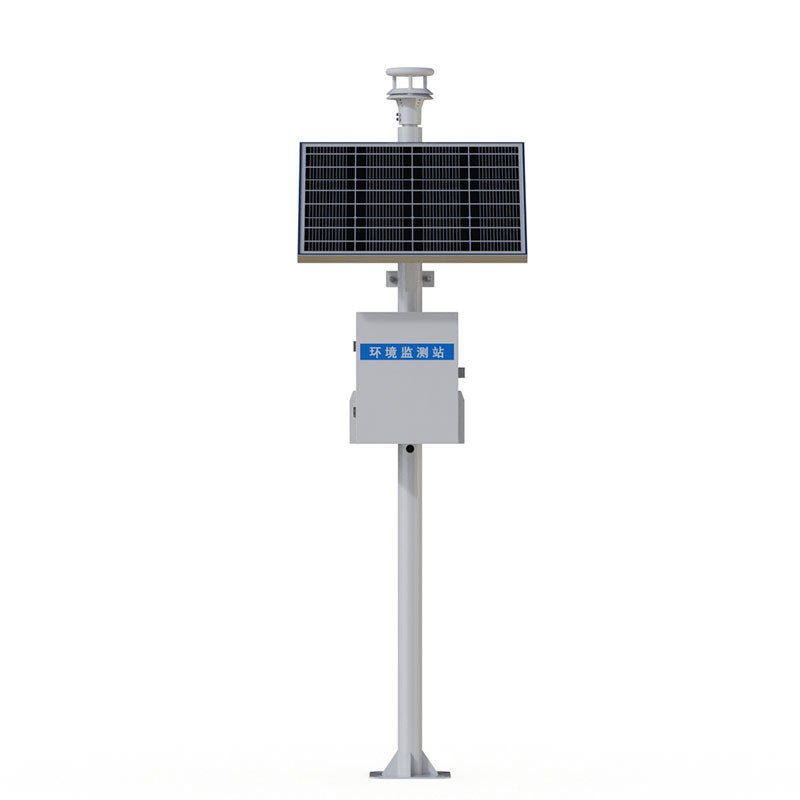
Remote Rain Gauge is a modern intelligent rainfall monitoring device built on IoT technology. The entire system consists of core components such as piezoelectric rain sensors, data acquisition units, solar power systems, and pole supports. The device adopts an integrated structural design, with a simple and neat appearance, convenient installation and deployment, and adaptability to various complex outdoor monitoring environments.
The core sensing component of Remote Rain Gauge uses a PVDF piezoelectric film as the rain-sensing device, coupled with an embedded AI neural network algorithm, which can accurately identify valid raindrop signals, effectively avoiding false triggering problems caused by external factors such as gravel, dust, and equipment vibration, significantly improving monitoring stability. The equipment boasts core advantages such as high measurement accuracy, wide measurement range, low power consumption, and strong anti-interference capabilities. Its rainfall intensity measurement range is 0-4 mm/min, with a measurement accuracy of ±4% and a resolution of 0.01 mm. It also supports second-level accuracy in monitoring rainfall duration and can operate stably and continuously around the clock, unaffected by weather changes such as wind, rain, and dust storms.
The various rainfall data collected by Remote Rain Gauge can be wirelessly transmitted to an IoT monitoring platform. Staff can log in to the platform to view real-time rainfall status, minute-level, hourly, daily, and monthly rainfall data. They can also view hourly rainfall variation curves and bar charts, among other visual data. The platform supports customizable daily boundary times and rainfall alarm thresholds, and can also export historical data to Excel, meeting the industry's needs for data statistics, archiving, and analysis.
Remote Rain Gauge has a wide range of applications, including meteorological observation, flood control and drought relief, agricultural production, hydrology and water conservancy, ecological and environmental protection, highways, airports and ports, etc. It can provide accurate raw data such as precipitation intensity, precipitation duration and precipitation for various monitoring stations, and can also provide reliable real-time data support for water conservancy and water affairs work such as flood control scheduling, reservoir management and water supply allocation.
rients such as nitrogen, phosphorus and potassium. This comprehensive monitoring capability greatly enhances the prevention of and response to agro-meteorological disasters, provides strong data support for meteorological services for modern agriculture, and lays a solid foundation for promoting the...
Remote Terminal Unit is a microprocessor-controlled embedded device designed for remote monitoring in fields such as meteorology, hydrology, and geology. It features capabilities for data acquisition, transmission, storage, and remote control, making it suitable for unattended scenarios such a...
The GNSS automatic monitoring system uses differential RTK technology to acquire millimeter-level displacement data, suitable for engineering scenarios such as dam safety monitoring, bridge health monitoring, and landslide early warning. This product features high precision and high stability,...
Four air and two dust miniature weather station , is a small weather observation instrument launched by Windway Technology. It is mainly used to collect, analyze and process and output meteorological data, and provide a variety of climate information services for production management. It adopts the...


 Skype
Skype
 whatsapp
 mail
mail