Shandong Fengtu IOT Technology Co., Ltd
Sales Manager:Ms. Emily Wang
Cel,Whatsapp,Wechat:+86 15898932201
Email:info@fengtutec.com
Add:No. 155 Optoelectronic Industry Accelerator, Gaoxin District, Weifang, Shandong, China


Sales Manager:Ms. Emily Wang
Cel,Whatsapp,Wechat:+86 15898932201
Email:info@fengtutec.com
Add:No. 155 Optoelectronic Industry Accelerator, Gaoxin District, Weifang, Shandong, China
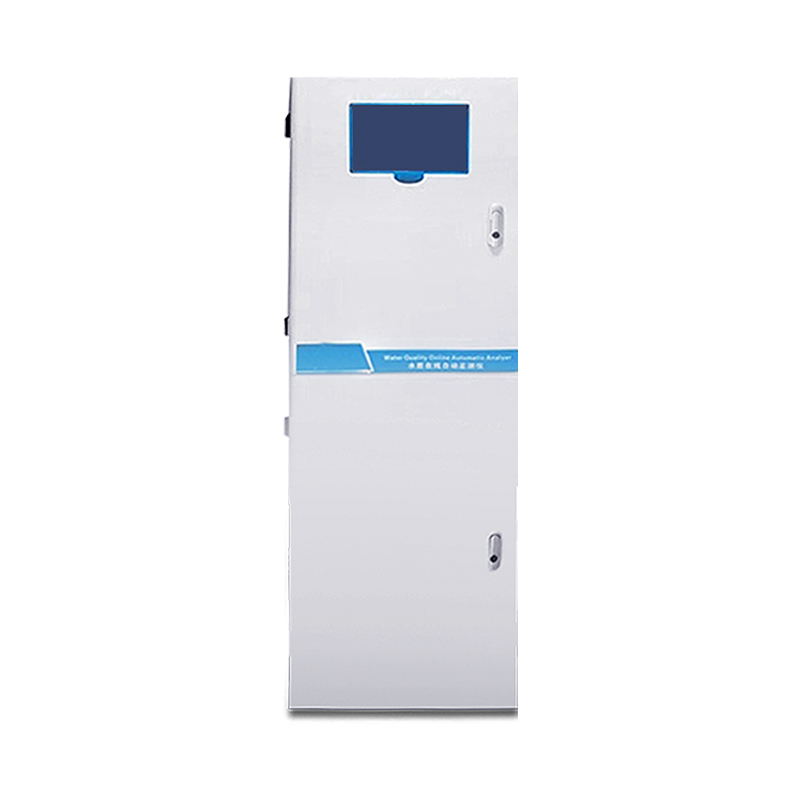
Model:FT-CU
Brand:fengtu
1.Copper Analyzer Principle
Copper Analyzer uses diethyldithiocarbamate sodium spectrophotometric method for on-line monitoring of total copper, which is suitable for copper ion detection in various water quality.In an alkaline environment (PH=8-10), copper reacts with the color developer to form a yellow-brown complex; this complex can be extracted with carbon tetrachloride or chloroform, and the absorbance is measured at a specific wavelength. The color can be stable for 1 hour.
2. Features of Copper Analyzer
The new photoelectric quantitative technology is not affected by interference such as large chromaticity, large amounts of suspended matter, and large amounts of bubbles. It has high reliability and accuracy and strong anti-interference ability.
High detection accuracy, low measurement limit and small long-term drift of the instrument.
It has one-button self-test function and self-diagnosis function.
Adopt single-channel highly integrated valve group, maintenance and cleaning are simple and quick.
All-weather networking function, monitor the instrument operation status anytime and anywhere.
It has alarm function, quality control function and reverse control function.
It has automatic cleaning and automatic calibration functions.
It has functions of hourly measurement, interval measurement and external control measurement.
It will work automatically after power failure.
Automatic prompt and automatic reset function for fault and reagent (sample) shortage.
With fault recording function.
Can save historical data for more than 3 years.
Meet the requirement of separate discharge of cleaning liquid and waste liquid
3. Copper Analyzer Technical Parameters
Measurement method: Sodium diethyldithiocarbamate spectrophotometry
Measuring range: 0-2 mg/L; 0-20 mg/L; range can be customized
Indication error: ≤±10% Detection limit: 0.01mg/L
Repeatability: ≤±3% Waste volume: 6mL/time
Memory effect: ≤±1% Actual water sample comparison: ≤±10%
Constant temperature time: 360 seconds Voltage stability: ≤±5%
Measuring cycle: 30 minutes Calibration cycle: any specified time
Maintenance cycle: ≥720h/time Maintenance workload: <2 hours/month
Reagent consumption: 3 months/500ml Display output: Equipped with 10.1-inch color LCD touch screen
Color development temperature: recommended temperature is 125℃, can be set according to the actual water sample conditions
Data export: The measured values can be imported into a USB flash drive and saved via the USB port
Signal output: RS485/RS232/USB interface/standard 2-way 4-20mA output/standard 2-way switch input and output
Environmental requirements: Temperature-controlled indoor environment, recommended temperature (5-28°C), humidity ≤ 90% (no condensation)
Power supply and power: (220V±22)V/AC, (50±0.5Hz), 5A, 150W
Instrument size: upper cabinet 600*450*300mm; upper cabinet 700*450*300mm
The Atmospheric environment monitoring system is crucial for understanding air quality conditions and addressing environmental pollution issues. Among them, the monitoring of four gases and two dusts is one of the core tasks, precisely monitoring the dynamic changes of key pollutants in the air.Moni...
Moisture monitoring refers to the monitoring and assessment of soil moisture conditions to understand soil moisture content and soil moisture changes, which provides an important reference basis for agricultural production. Through moisture monitoring, the problem of soil water shortage or excess wa...
The industrial park environmental monitoring system FT-CQX12 is an environmental monitoring device launched by Fengtu Technology. It is mainly used in industrial parks. It can monitor the wind speed, wind direction, temperature, humidity, air pressure, optical rainfall, pm2.5, pm10, etc. CO, NO2, SO...
Measuring snow depth data to better understand snow conditions is important for many industries and fields. Here are a few common application scenarios:1. Transportation: Snow depth data is an important basis for transportation departments to develop road arrangements and traffic control, especially...


 Get a Free Quote
 Skype
Skype
 whatsapp
 mail
mail