Shandong Fengtu IOT Technology Co., Ltd
Sales Manager:Ms. Emily Wang
Cel,Whatsapp,Wechat:+86 15898932201
Email:info@fengtutec.com
Add:No. 155 Optoelectronic Industry Accelerator, Gaoxin District, Weifang, Shandong, China


Sales Manager:Ms. Emily Wang
Cel,Whatsapp,Wechat:+86 15898932201
Email:info@fengtutec.com
Add:No. 155 Optoelectronic Industry Accelerator, Gaoxin District, Weifang, Shandong, China
time:2026-02-27 09:49:55 source:Weather Station viewed:386 time
Particle Counter can simultaneously measure the number of dust particles in six particle size channels in a single sampling and display their changes. It is primarily used for dynamic environmental monitoring in aseptic production areas of pharmaceutical companies, enabling real-time monitoring of the number and size distribution of airborne particulate matter. It is widely used in cleanrooms, pharmaceutical workshops, and electronics manufacturing, contributing to environmental quality control.
Particle Counter is a specialized device for real-time monitoring of air cleanliness. Its core function is to accurately measure the number and size distribution of suspended particulate matter in the air. The system primarily uses laser scattering technology. When airborne particles pass through the detection chamber, a beam of light emitted from a built-in semiconductor laser illuminates the particles, generating scattered light. The scattered light signal is received by a photodetector and converted into electrical pulses. The amplitude and number of pulses correspond to the particle size and concentration, respectively. Based on this principle, the system can synchronously count particles in specific particle size channels.
The application of this system is particularly crucial in the pharmaceutical industry. Aseptic production areas must meet stringent GMP cleanliness standards. Particle Counter enables dynamic environmental monitoring of Class A and Class B clean areas, reflecting real-time changes in particulate matter during production. The system typically features remote sensors with 316L stainless steel housings, capable of withstanding corrosive reagents used in daily cleanroom disinfection, and employs an isokinetic sampling head design to avoid interfering with unidirectional airflow. When the detected particulate matter concentration exceeds a preset threshold, the system triggers an audible and visual alarm, prompting timely intervention from operators.
A key feature of this system is its ability to simultaneously detect dust particle counts across six particle size channels in a single sampling operation. Common particle size channels include 0.3μm, 0.5μm, 1.0μm, 3.0μm, 5.0μm, and 10.0μm. Multi-channel simultaneous monitoring means that users can obtain complete distribution data for particles of different sizes with a single sampling action, allowing real-time viewing of the number and trends of particles of each size. This design improves monitoring efficiency and provides more comprehensive data support for environmental quality assessment.
In terms of data management and communication, the modern Particle Counter supports multiple transmission methods, including WiFi, Ethernet, RS485, and 4G wireless transmission. The system can upload monitoring data to a cloud platform or central control room in real time, facilitating long-term and short-term cleanliness trend analysis and remote fault diagnosis. Some models have built-in large-capacity data storage, which can temporarily save monitoring records during network outages and automatically re-upload them after network restoration, ensuring data continuity and integrity.
The system is designed for reliable long-term continuous operation. Core components such as the laser light source have a lifespan of over 30,000 hours. For large-scale deployment scenarios, the system supports modular networking, allowing a single vacuum pump to connect to multiple remote sensors simultaneously for multi-point synchronous sampling. This design reduces equipment costs and simplifies installation and maintenance, enabling the Particle Counter to meet the long-term monitoring needs of various clean environments, from pharmaceutical workshops and electronic semiconductor factories to food processing production lines.
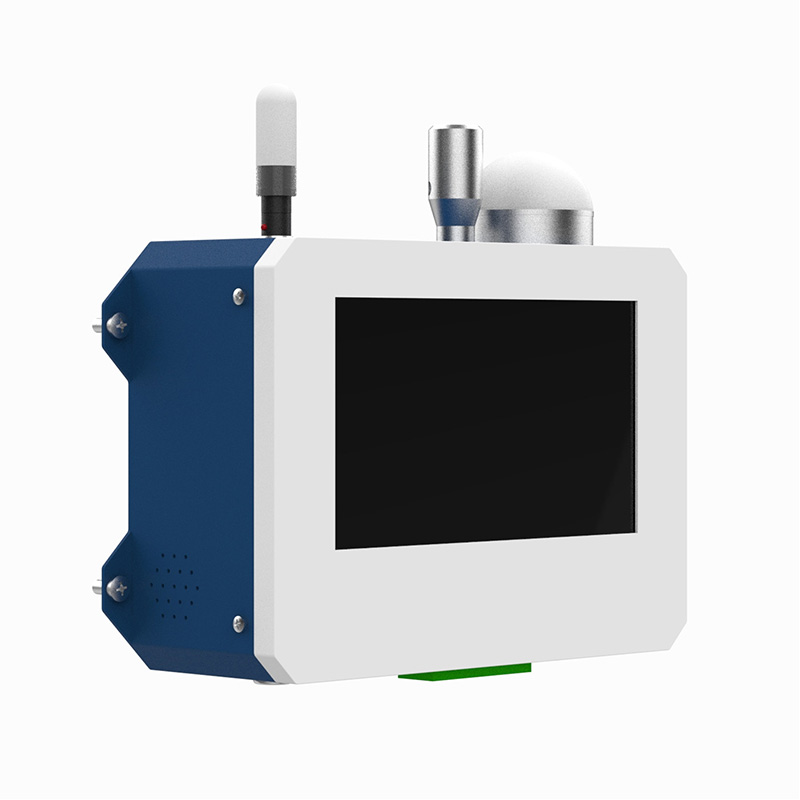
Wave Height Measurement Instrument is a specialized device dedicated to the monitoring of marine waves and water levels. Equipped with a low-power microprocessor, a high-precision 24-bit AD converter, and a capacitive wave height sensor, it is capable of accurately measuring wave parameters an...
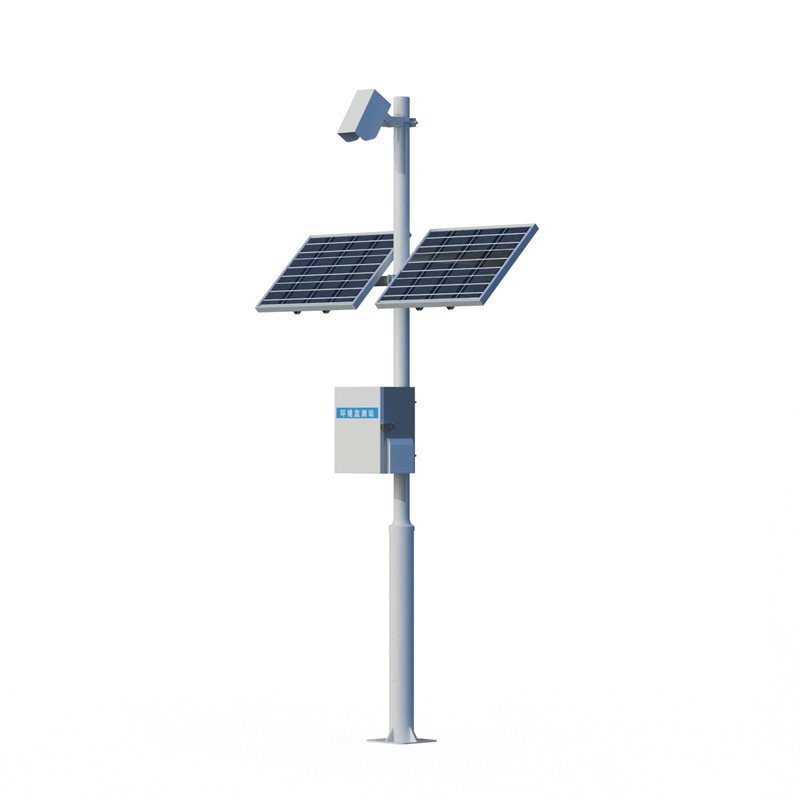
Agricultural development will encounter some bad weather, such as typhoon, rainstorm, drought, hail, frost, etc., which will bring losses to agriculture. Setting up a meteorological and environmental monitoring system in farmland will help to improve the level of agro-meteorological environmental monitoring in the region, increase the yield of crops, and increase the ability to prevent disasters. With the development of smart agriculture, the model of weather station + Internet continues to develop, and the agricultural environment monitoring system will bring more development opportunities....
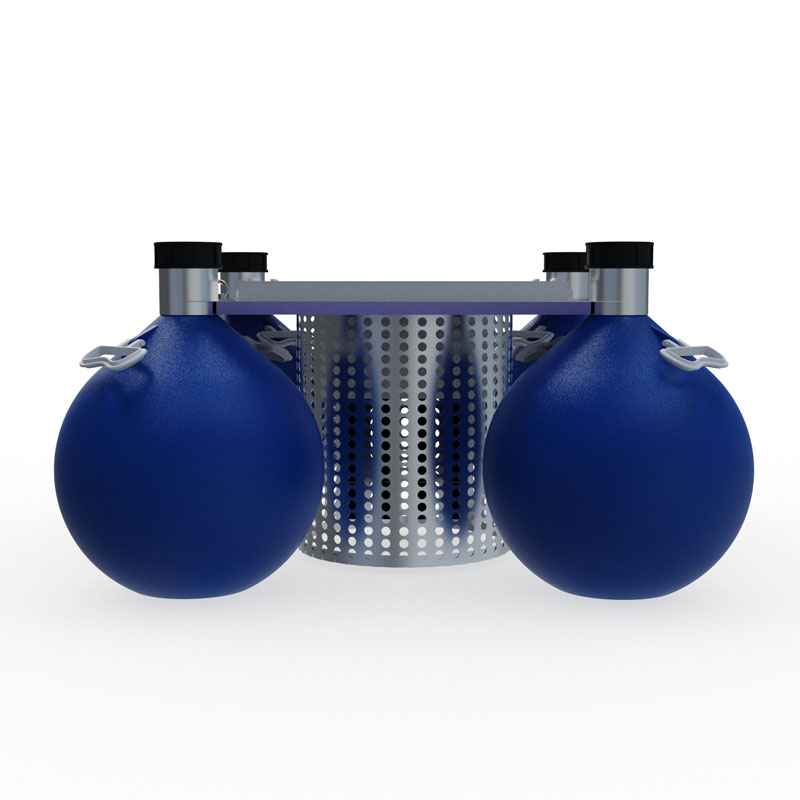
Measuring wind direction is important for predicting the weather, guiding aviation and marine navigation, tracking environmental pollution, planning agricultural activities, optimising sporting events and harnessing wind power for electricity generation. Understanding wind direction helps us to bett...
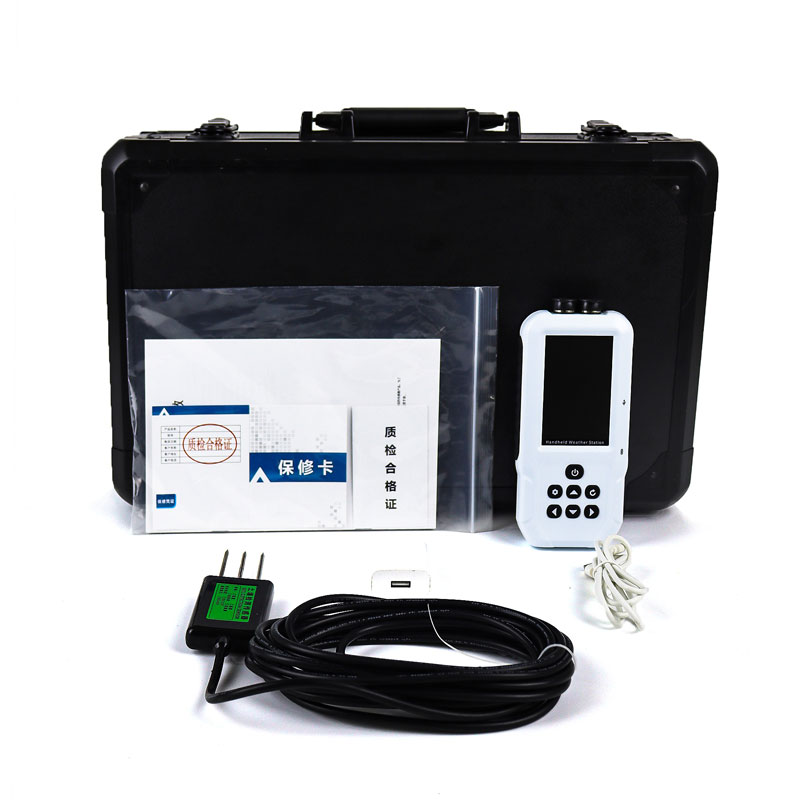
In the absence of instrumentation, the moisture condition of the soil can be quickly assessed by hand feel and is usually categorised into the following four classes:Wet: if water flows out visibly when the soil is squeezed, this indicates high soil moisture.Wet: Soil that leaves wet marks in the ha...


 Skype
Skype
 whatsapp
 mail
mail