Shandong Fengtu IOT Technology Co., Ltd
Sales Manager:Ms. Emily Wang
Cel,Whatsapp,Wechat:+86 15898932201
Email:info@fengtutec.com
Add:No. 155 Optoelectronic Industry Accelerator, Gaoxin District, Weifang, Shandong, China


Sales Manager:Ms. Emily Wang
Cel,Whatsapp,Wechat:+86 15898932201
Email:info@fengtutec.com
Add:No. 155 Optoelectronic Industry Accelerator, Gaoxin District, Weifang, Shandong, China
time:2026-09-28 09:25:59 source:Weather Station viewed:34 time
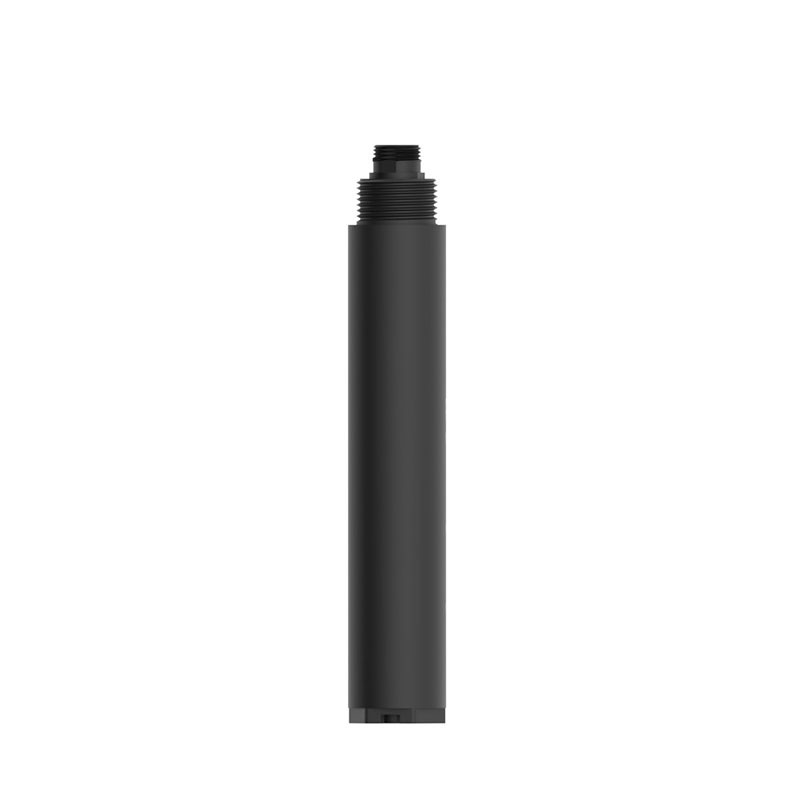
Online turbidity sensor utilizes the 90° scattered light method to detect particle concentration in water, optimizing data through temperature compensation algorithms. It features high precision and low power consumption, supports customizable measurement ranges and standard communication outputs, and is suitable for online water quality monitoring across various industries.
Online turbidity sensor is a core optical detection device in the field of water quality monitoring. It primarily employs the 90° angle scattered light method to measure turbidity. By continuously illuminating the liquid with a light source and capturing the intensity of light scattered by suspended particles, it accurately converts the data into particle concentration and turbidity values using linear processing. It serves as a key device for routine monitoring in diverse water treatment scenarios.
To ensure measurement accuracy in complex environments, Online turbidity sensor incorporates an automatic temperature compensation algorithm. This effectively mitigates the impact of ambient temperature fluctuations on optical data, maintaining measurement precision within ±1% and temperature detection accuracy within ±0.3°C. Its high resolution of 0.1 NTU allows for the precise detection of subtle changes in water turbidity. The device offers flexible measurement ranges: a default of 0–1000 NTU, with customizable options of 0–40 NTU and 0–3000 NTU to meet specific water quality monitoring requirements.
Designed for continuous industrial operation, Online turbidity sensor operates on a wide DC 12V–24V power supply with a power consumption of only 0.2W, ensuring energy efficiency and operational stability. It utilizes the RS-485 (Modbus/RTU) standard for industrial communication, providing stable data transmission and strong compatibility for direct integration with centralized water quality monitoring systems. Featuring an immersion-style design, the device comes with standard 3/4 NPT mounting threads and a 5-meter cable; the installation process is straightforward, making it suitable for monitoring water in various tanks and pipelines. The Online turbidity sensor features an ABS housing and an IP68 protection rating, enabling stable operation in standard aqueous environments at temperatures of 0–50°C and pressures up to 0.2 MPa; it also boasts a storage temperature range of -5°C to +65°C, demonstrating exceptional environmental adaptability. The device supports a two-point calibration mode, allowing for periodic calibration and ensuring data stability during long-term use. Currently, it is widely utilized in sectors such as municipal water supply, drinking water treatment, wastewater treatment, integrated purification, and pulp and paper manufacturing, providing continuous, accurate data to support water quality compliance and control.
Road surface condition data is one of the most important parameters of concern for traffic safety, apart from visibility. Whether there is water on the road surface. Snow, ice and other road conditions are one of the safety hazards alerted to. FT-LM2 non-contact road condition detector uses remote s...
The quality of water resources is directly related to human survival and ecological balance. Fengtu's online water quality detection equipment is fully functional. For example, the online pH tester (FT-ZS3) can quickly and accurately record the pH value of water bodies. It also supports the expa...
Automatic small weather station equipment is a kind of weather environment monitoring instrument which is widely used at present, and it has many advantages in practical work. The device uses sensors as the monitoring core, driven by external solar energy, to achieve data acquisition and processing;...
The safety of reservoir dams is crucial to the lives and property of people in downstream areas, making it essential to establish a scientific and systematic monitoring system. It mainly consists of four core components: deformation monitoring, seepage monitoring, meteorological monitoring, and term...


 Skype
 whatsapp
 mail