Shandong Fengtu IOT Technology Co., Ltd
Sales Manager:Ms. Emily Wang
Cel,Whatsapp,Wechat:+86 15898932201
Email:info@fengtutec.com
Add:No. 155 Optoelectronic Industry Accelerator, Gaoxin District, Weifang, Shandong, China


Sales Manager:Ms. Emily Wang
Cel,Whatsapp,Wechat:+86 15898932201
Email:info@fengtutec.com
Add:No. 155 Optoelectronic Industry Accelerator, Gaoxin District, Weifang, Shandong, China
time:2026-09-20 09:05:47 source:Weather Station viewed:25 time
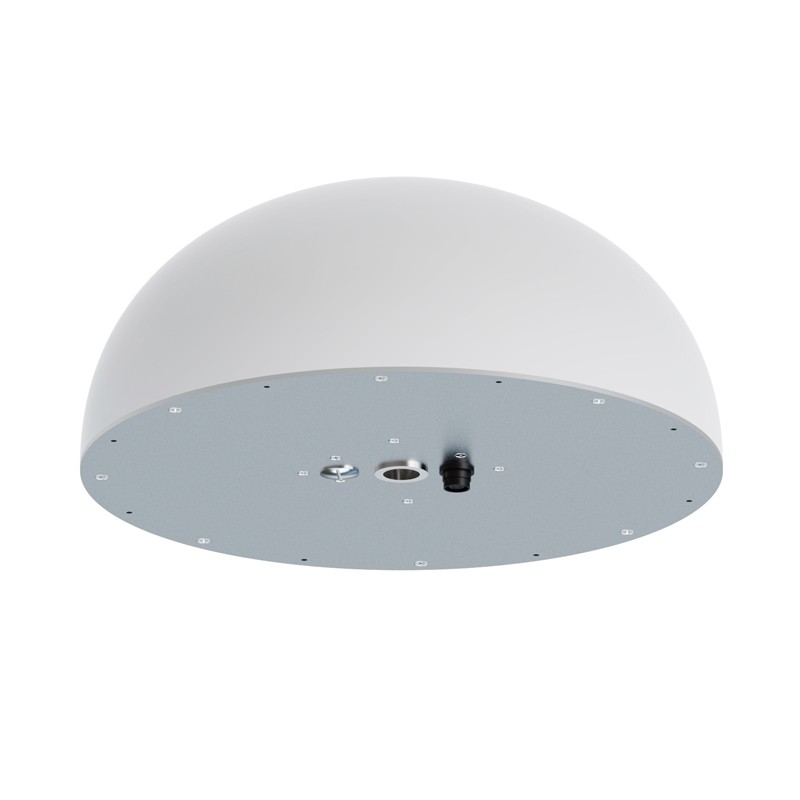
GNSS Receivers leverages differential RTK technology to achieve millimeter-level displacement monitoring suitable for engineering applications such as dams, bridges, and landslide sites. It offers robust stability, easy installation, and remote data analysis capabilities, while integrating seamlessly into various monitoring systems for data sharing.
GNSS Receivers is an integrated surface displacement monitoring device designed for engineering safety monitoring. Powered by core differential RTK technology, it delivers millimeter-level precision, accurately capturing minute deformations in engineering structures and the ground surface—making it a key asset for modern infrastructure and geological hazard monitoring. Engineered for complex outdoor environments, it effectively addresses industry challenges associated with traditional equipment, such as insufficient accuracy, poor environmental adaptability, and cumbersome maintenance.
GNSS Receivers boasts exceptional monitoring accuracy and stability. In static differential mode, it achieves high-precision monitoring with horizontal accuracy of ±(2.5mm + 1ppm) and vertical accuracy of ±(5mm + 1ppm). Equipped with a choke-ring antenna and magnetic wave-absorbing materials, it effectively mitigates interference caused by multipath effects, ensuring the accuracy of long-term monitoring data. The device features low power consumption and stable power supply compatibility (DC 10V–15V); with an operating power of just 0.25W, it supports continuous, long-term operation. It also demonstrates outstanding environmental adaptability, operating stably in temperatures ranging from -40°C to +85°C and in high-humidity environments without condensation, thereby meeting the demands of all-weather field monitoring.
In terms of usage and integration, GNSS Receivers features a streamlined, integrated design with compact dimensions. Its installation and deployment are straightforward, requiring no complex debugging, which significantly reduces on-site construction and maintenance costs. The device supports the standard Modbus-RTU communication protocol and RTCM3 differential data reception. It performs autonomous offline displacement calculations at the device level, accurately distinguishing between vertical and horizontal displacement data, while automating the entire process of data acquisition, processing, and transmission.
GNSS Receivers offers outstanding practicality and compatibility, enabling remote device monitoring, data retrieval, and analysis without the need for on-site personnel. At the same time, the equipment seamlessly integrates with various engineering monitoring systems to enable the sharing and fusion of monitoring data. It is widely applied in scenarios such as dam safety monitoring, bridge health assessment, landslide early warning, and surface deformation monitoring, providing reliable data support and comprehensive monitoring assurance for the safe operation of diverse civil engineering, water conservancy, and geological protection projects.
It employs a fluorescence detection principle, leveraging the absorption and emission peaks of soluble oil spectra for accurate detection. Supporting RS485 communication output, it boasts high anti-interference capabilities and stability, making it suitable for various industries' online w...
Wireless level monitoring in wastewater treatment plants, is radar level meter feasible?To treat wastewater, it needs to go through a variety of processes, and this will involve the measurement of liquid level, flow, pressure, temperature, ph, dissolved oxygen, turbidity and other parameters, among...
Wind, as a natural phenomenon, has a crucial impact on our lives and numerous fields. In meteorology, accurately measuring wind speed and direction helps us predict weather changes, such as the movement path and intensity of disastrous weather like storms and hurricanes. In the aviation field, wind...
Automatic water quality monitoring is of great significance for freshwater resource management. Its monitoring parameters include physical parameters (such as temperature, pH value, turbidity) and chemical parameters (such as dissolved oxygen, residual chlorine). Temperature reflects the hydrotherma...



 Skype
 whatsapp
 mail