Shandong Fengtu IOT Technology Co., Ltd
Sales Manager:Ms. Emily Wang
Cel,Whatsapp,Wechat:+86 15898932201
Email:info@fengtutec.com
Add:No. 155 Optoelectronic Industry Accelerator, Gaoxin District, Weifang, Shandong, China


Sales Manager:Ms. Emily Wang
Cel,Whatsapp,Wechat:+86 15898932201
Email:info@fengtutec.com
Add:No. 155 Optoelectronic Industry Accelerator, Gaoxin District, Weifang, Shandong, China
time:2026-02-24 10:07:29 source:Weather Station viewed:376 time
Settlement monitoring system utilizes differential RTK technology to achieve millimeter-level displacement monitoring, continuously observing vertical surface displacement through GNSS base stations and IoT sensor networks. This technology system can be widely applied in engineering fields such as dam safety monitoring, bridge health monitoring, and landslide early warning, providing data support for preventing structural damage caused by land subsidence.
Land subsidence is a significant geological hazard that cannot be ignored in urban construction and operation management. Land subsidence can lead to various problems such as structural damage, pipeline leaks, and uneven roads, and in severe cases, even threaten the lives and property of the people. By implementing online subsidence monitoring, the ground subsidence situation can be grasped in real time, providing a scientific basis for engineering safety assessment and risk early warning.
Currently, the core technology of Settlement monitoring system is differential RTK technology, a high-precision positioning method based on the Global Navigation Satellite System that can achieve millimeter-level displacement monitoring. Taking a GNSS displacement monitoring station as an example, its static accuracy can reach ±2.5mm+1ppm in the horizontal direction and ±5mm+1ppm in the vertical direction, accurately calculating the three-dimensional coordinates of the monitoring point and capturing minute displacement changes. The monitoring station typically uses solar power and 4G transmission, supporting 24/7 real-time monitoring to ensure data timeliness and accuracy.
In practical engineering applications, [Company Name] has constructed a multi-technology integrated three-dimensional monitoring network. Space-based monitoring uses improved time-series InSAR technology, utilizing continuous satellite radar imagery to achieve millimeter-level surface deformation detection, providing large-scale, continuous deformation monitoring for areas such as subway lines and road subsidence zones. Ground-based monitoring is based on an NB-IoT Internet of Things sensor network, enabling real-time acquisition of structural responses such as settlement, tilt, and cracks, maintaining stable data acquisition capabilities even in weak signal environments. Furthermore, the construction of deep leveling piles and stratified monitoring wells is also crucial, allowing for independent monitoring of different soil layers by drilling into stable strata and setting bedrock and stratification markers.
The installation of Settlement monitoring system has strict technical requirements. The recommended distance between the base station and the measuring station is less than 500 meters, and should not exceed 2 kilometers; excessive distance will lead to decreased accuracy. Simultaneously, tall buildings should be avoided from obstructing the monitoring station, the antenna must be positioned at its highest point within a 20-meter radius, and the mounting base must be secure to avoid wind-induced errors. For key monitoring areas, such as along high-speed railway lines, layered monitoring groups are deployed every 5 kilometers, and fiber optic grating sensor arrays are installed on the piers of cross-sea bridges to form a dense monitoring network.
The application scenarios of Settlement monitoring system are very extensive. In dam safety monitoring, the system tracks dam displacement changes in real time to prevent the risk of dam failure caused by seepage deformation; in bridge health monitoring, it monitors pier settlement and beam deflection to assess the structural safety status; in landslide early warning, it achieves localized early warning through anomaly detection of displacement rates. The Beijing ground settlement monitoring project has newly built and renovated 48 monitoring facilities, achieving full coverage automated monitoring in key areas and improving the time resolution of monitoring data to the minute level.
With technological advancements, [the system] is evolving towards an integrated space-air-ground system. Through a complete technological system encompassing satellite macro-monitoring, real-time ground sensor monitoring, intelligent analysis and early warning, and 3D visualization, it achieves comprehensive monitoring from macro to micro levels and from intermittent to continuous operation. This system not only significantly reduces the cost of manual inspections but also enables the early detection of potential risks such as ground subsidence and structural damage, providing reliable assurance for safe urban operation and the full lifecycle management of major projects.
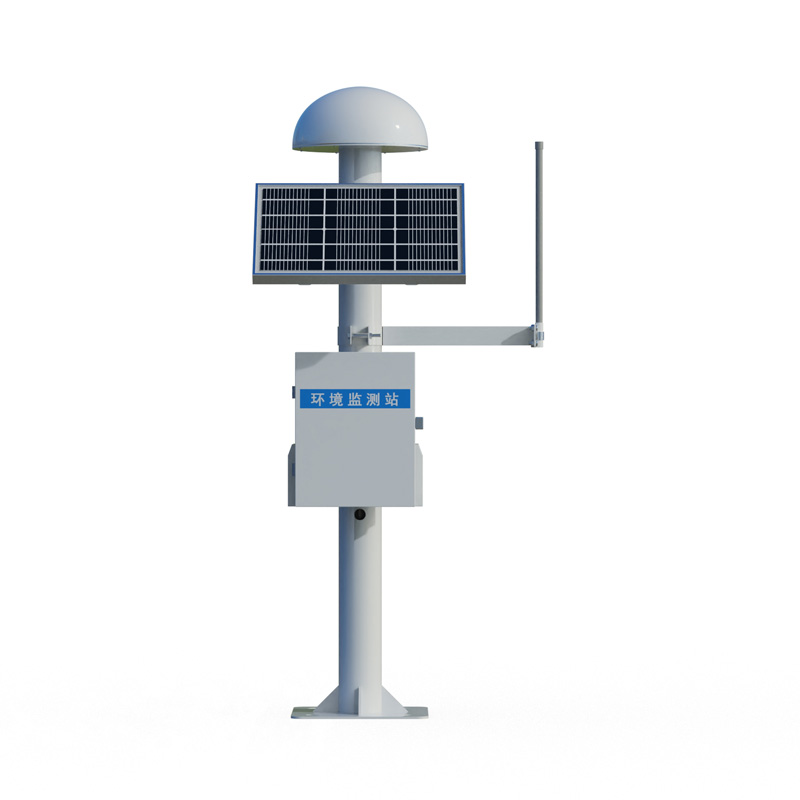
How can moisture deficiency be solved? Why is moisture monitoring done?...
Rainfall monitor is an IoT-based intelligent rainfall monitoring device that integrates multiple hardware systems. It accurately collects multi-dimensional rainfall data and transmits it wirelessly to a monitoring platform. It supports data export and SMS alarms for exceeding limits, and is su...
Moisture describes the level of moisture in the soil, which reflects the actual water content in the soil and is critical to plant growth. There are three key indicators of soil moisture: the maximum saturated water content of the soil, which is the degree to which the soil can become completely sat...
Non Contact Road Condition Sensor is the heart of an automatic traffic meteorological station. It detects wind speed and direction by measuring the time difference of ultrasonic waves traveling through the air, and monitors key meteorological parameters such as air temperature, humidity, and atmosph...


 Skype
Skype
 whatsapp
 mail
mail