Shandong Fengtu IOT Technology Co., Ltd
Sales Manager:Ms. Emily Wang
Cel,Whatsapp,Wechat:+86 15898932201
Email:info@fengtutec.com
Add:No. 155 Optoelectronic Industry Accelerator, Gaoxin District, Weifang, Shandong, China


Sales Manager:Ms. Emily Wang
Cel,Whatsapp,Wechat:+86 15898932201
Email:info@fengtutec.com
Add:No. 155 Optoelectronic Industry Accelerator, Gaoxin District, Weifang, Shandong, China
time:2026-02-05 09:09:19 source:Weather Station viewed:402 time
Slope monitoring displacement sensor utilizes differential RTK technology to achieve millimeter-level displacement monitoring, used for monitoring horizontal or vertical displacement of slopes. It provides comprehensive monitoring of the slope surface and interior, support structures, and surrounding environment, suitable for open-pit mines, highway and railway cut and fill slopes, rock collapse areas, and water conservancy projects, serving in dam, bridge, and landslide early warning systems.
Slope monitoring displacement sensor is a high-precision displacement monitoring device utilizing differential RTK technology, with its core capability being the provision of millimeter-level displacement change data. This product is primarily used to monitor the horizontal or vertical displacement of slopes, providing critical information for engineering safety through comprehensive and continuous data collection from the slope surface and interior, support structures, and surrounding environment.
In various infrastructure construction and resource extraction fields, the stability of slopes directly relates to life and property safety and engineering operational safety. Traditional monitoring methods often suffer from insufficient accuracy or poor real-time performance, while displacement sensors based on differential RTK technology effectively overcome these limitations. RTK (Real-Time Kinematic) technology, through the collaborative work of base stations and mobile stations, can greatly eliminate satellite positioning errors, thus maintaining high reliability and high-precision positioning capabilities even under complex terrain and weather conditions, achieving long-term, stable, and continuous displacement monitoring.
The sensor has a wide range of applications. In the transportation sector, it is used for monitoring cut and fill slopes along highways and railways, as well as unstable rock collapse areas, enabling timely detection of minute displacements caused by rainfall, geological activity, or engineering disturbances, providing valuable time for maintenance and early warning. In the resource extraction industry, especially open-pit mines, slope stability is paramount for safe production, and millimeter-level displacement monitoring can warn of potential landslide risks, ensuring operational safety. Furthermore, in water conservancy projects, continuous health monitoring of dam abutments, reservoir slopes, and large bridge foundations also relies on this high-precision monitoring method.
The monitoring process is a systematic engineering project. Sensors are scientifically deployed at key points on the slope, forming a monitoring network that continuously collects three-dimensional coordinate data. This real-time data is transmitted wirelessly to the analysis platform at the monitoring center. The platform software automatically processes and analyzes the data, and if the displacement exceeds the preset warning threshold, an alarm is immediately triggered, notifying management personnel to take countermeasures such as inspection, reinforcement, or evacuation. This closed-loop system, from data acquisition to intelligent early warning, constitutes a crucial line of defense in modern engineering safety monitoring.
Compared to other monitoring methods, such as manual measurements with total stations or simple GPS devices, displacement sensors using differential RTK technology offer significant advantages in terms of automation, monitoring frequency, and overall cost-effectiveness. It reduces the need for extensive fieldwork, overcomes observation difficulties in harsh environments, and enables 24/7 unattended monitoring. The monitoring results not only serve as the basis for risk warnings but also provide a long-term, detailed data foundation for analyzing slope deformation mechanisms and evaluating the effectiveness of remediation projects.
In summary, Slope monitoring displacement sensor, with its millimeter-level monitoring accuracy and strong environmental adaptability, has become an indispensable technological tool for dam safety monitoring, bridge health monitoring, landslide early warning, and various slope engineering projects. By providing accurate and timely displacement information, it significantly improves safety management and risk control capabilities in related fields, and is a key technology for ensuring the long-term safe operation of major infrastructure and hazardous areas.
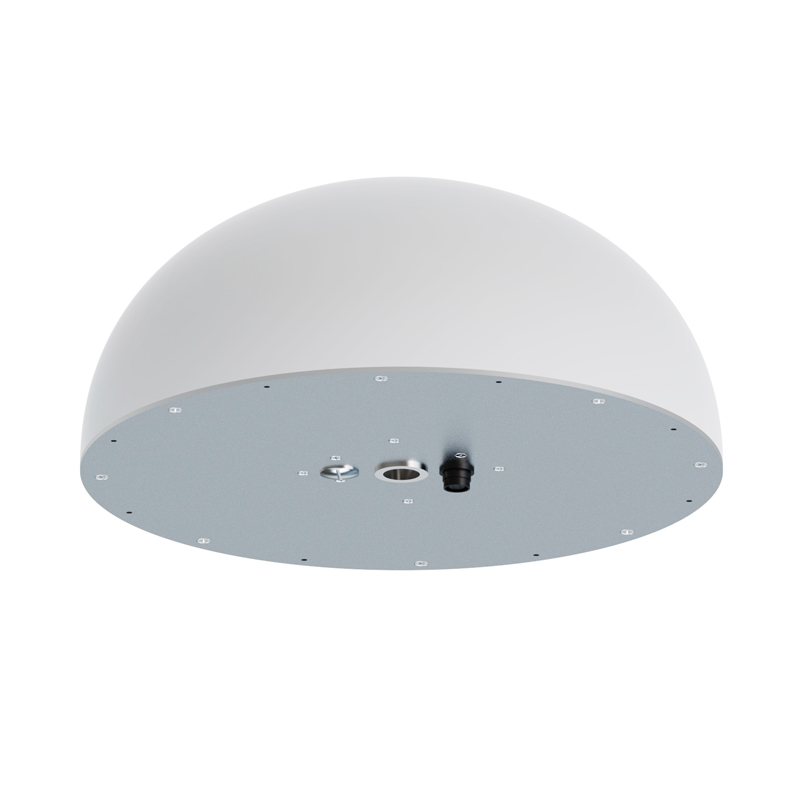
precipitation measurement unit measures the amount of rainfall in millimeters or inches, primarily collecting the water that falls on it and recording changes in the depth of the rainfall over time....
The device is based on the principle of pressure-based measurement, whereby the height of the water surface is calculated by monitoring the change in the weight of the liquid in the evaporating dish, which in turn gives the amount of evaporation. This technique is applicable to a variety of environm...
The establishment of a small weather station on campus promotes the development of meteorological science. The product serves as a carrier to transmit scientific knowledge related to meteorology, environment and astronomy to the campus, so that children can develop an interest in science and feel th...
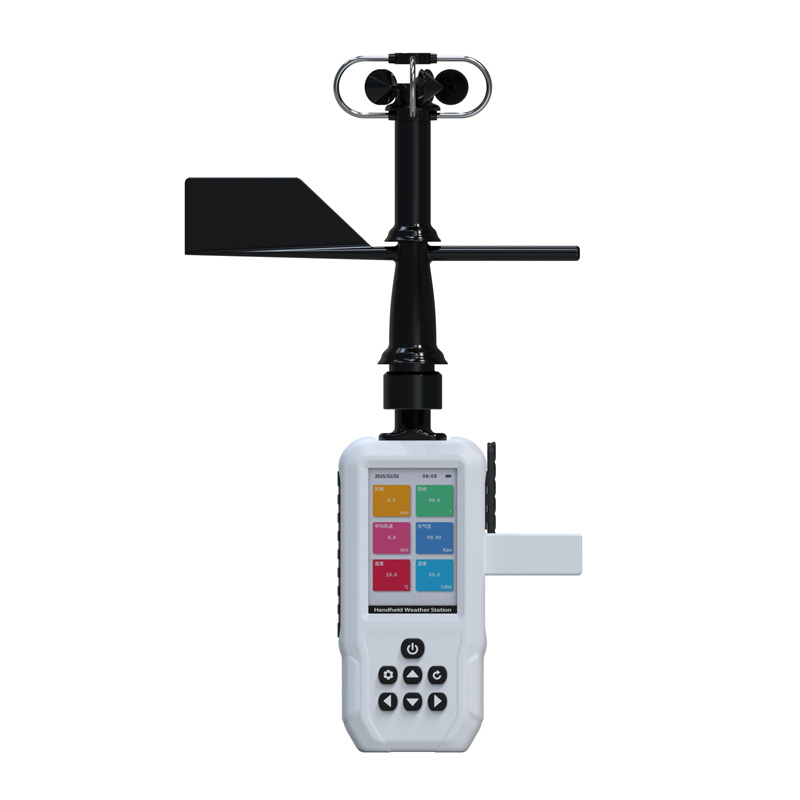
The measurement of wind is of great significance for weather forecasting. It can assist in analyzing weather systems, judging the convergence of air masses, providing a basis for early warnings of disastrous weather, and predicting air quality and the spread of pollutants. Through precise wind measu...


 Skype
Skype
 whatsapp
 mail
mail