Shandong Fengtu IOT Technology Co., Ltd
Sales Manager:Ms. Emily Wang
Cel,Whatsapp,Wechat:+86 15898932201
Email:info@fengtutec.com
Add:No. 155 Optoelectronic Industry Accelerator, Gaoxin District, Weifang, Shandong, China


Sales Manager:Ms. Emily Wang
Cel,Whatsapp,Wechat:+86 15898932201
Email:info@fengtutec.com
Add:No. 155 Optoelectronic Industry Accelerator, Gaoxin District, Weifang, Shandong, China
time:2026-01-27 09:16:30 source:Weather Station viewed:420 time
GNSS receiver price This product, which utilizes differential RTK technology to achieve millimeter-level displacement monitoring, is priced at 6900 RMB. It boasts high accuracy and strong stability, making it suitable for safety monitoring of engineering projects such as dams, bridges, and landslides. It also features real-time data transmission and remote monitoring capabilities.
The specific application of GNSS receivers in engineering safety monitoring is often reflected in high-precision displacement monitoring. Millimeter-level monitoring products based on differential RTK technology are a significant category in the current market. The price of such products is influenced by technical configuration, performance indicators, and application scenarios. For example, a GNSS receiver capable of millimeter-level displacement monitoring may have a market price of around 6900 RMB. This price point makes it a viable option for many engineering monitoring projects.
The core of this monitoring product lies in its use of real-time kinematic differential technology. This technology, through the collaborative work of base stations and mobile stations, effectively eliminates common errors such as satellite orbit errors and atmospheric delays, thereby improving positioning accuracy to the millimeter level. This level of precision makes it possible to monitor even minute displacement changes of the monitored object. The product's stability is specifically designed to operate continuously in various complex environments, including strong winds, temperature variations, and areas with significant electromagnetic interference.
In engineering practice, this GNSS displacement monitoring station is primarily used in structural health and geological disaster early warning fields. Dam safety monitoring is a typical application. By deploying monitoring points on the surface of the dam, it is possible to continuously obtain three-dimensional displacement data of the dam under water level changes, temperature changes, and its own load, and analyze its deformation trend. Bridge health monitoring also relies on this technology. By installing receivers on key parts such as bridge towers and main beams, it is possible to monitor the displacement and vibration of the bridge under operating loads and wind loads, and assess its safety status. Furthermore, in areas prone to geological disasters such as landslides and slopes, deploying such equipment can capture the slow creep and sudden displacement of the ground or rock mass in real time, providing critical data support for early warning and prevention.
This product, priced at 6900 RMB, combines high accuracy and high stability with ease of use. Its operation process is simplified, installation and deployment are relatively quick, and basic setup can be completed without requiring extremely complex professional expertise. The device supports remote monitoring, and monitoring data can be transmitted in real time to the cloud or a local server via a wireless network. Users can perform data analysis, view historical trends and real-time status, and receive early warning information through a dedicated software platform.
Another advantage of this product is its powerful data processing capabilities and system compatibility. It can output raw observation data and calculation results in standard formats, allowing for easy integration into various existing engineering safety monitoring systems or IoT platforms. This enables the integration and analysis of monitoring data with data from other sensors such as pore pressure, stress, and tilt, providing a more comprehensive safety assessment solution for engineering projects. Overall, this GNSS receiver offers professional-grade displacement monitoring capabilities at a competitive price, making it a reliable technological tool option for numerous infrastructure and geotechnical engineering safety monitoring projects.
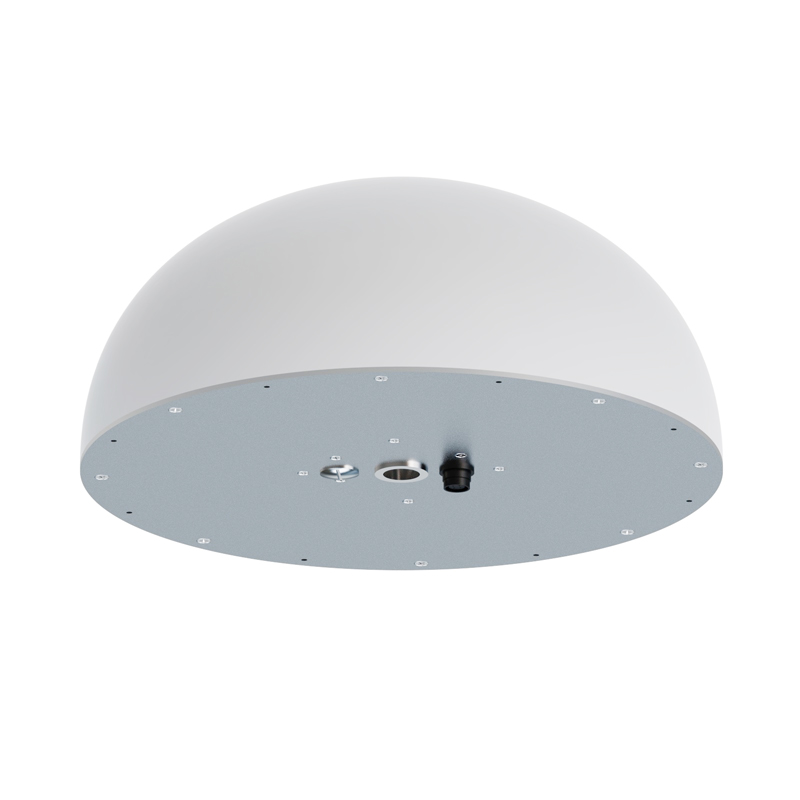
Hydrological Telemetry Rain Gauge Station Equipment utilizes a stainless steel rainfall sensor with a measurement range of 0–4 mm/min and an accuracy of ±0.2 mm. It transmits rainfall data to a monitoring platform via wireless remote transmission, automatically compiling daily, weekly, month...
A rainfall monitor is an instrument that can measure the amount of rainfall. As climate change becomes more and more serious, meteorological monitoring has become a very important task. As one of the meteorological monitoring equipment, rainfall monitor can provide important reference information fo...
how to use the anemometer After holding the anemometer in the air and selecting the measurement options, you can calculate the wind speed....
Soil is a key natural resource and is vital for crop growth. Crops are affected by dry or excessively wet soils, and economic and social development and climate change have exacerbated the problem of drought, leading to increased water scarcity and associated disaster losses. In hilly and forested a...


 Skype
Skype
 whatsapp
 mail
mail