Shandong Fengtu IOT Technology Co., Ltd
Sales Manager:Ms. Emily Wang
Cel,Whatsapp,Wechat:+86 15898932201
Email:info@fengtutec.com
Add:No. 155 Optoelectronic Industry Accelerator, Gaoxin District, Weifang, Shandong, China


Sales Manager:Ms. Emily Wang
Cel,Whatsapp,Wechat:+86 15898932201
Email:info@fengtutec.com
Add:No. 155 Optoelectronic Industry Accelerator, Gaoxin District, Weifang, Shandong, China
time:2026-08-26 09:18:38 source:Weather Station viewed:38 time
These sensors calculate cyanobacteria concentration using the fluorescence excitation characteristics of phycocyanin, employing RS485 signal output and incorporating multiple anti-interference technologies. They are easy to install, have an IP68 protection rating, and are suitable for long-term real-time water quality monitoring of various water bodies.
The online cyanobacteria sensor is a commonly used immersion-type detection device in water environment monitoring projects. It relies on the fluorescence excitation characteristics of phycocyanin within cyanobacteria for detection. The sensor's internal light source emits a specific wavelength of light beam to illuminate the water, exciting the phycocyanin to produce a fluorescence signal. The probe collects the fluorescence intensity, and the built-in algorithm calculates the actual concentration of cyanobacteria in the water. Compared to traditional manual sampling and microscope counting methods, this device offers faster detection speeds, enabling continuous real-time online monitoring. It eliminates the need for laboratory testing and waiting time, promptly capturing the growth trends of cyanobacteria in the water, and providing reliable data support for algal bloom early warning.
The online cyanobacteria sensor uses RS485 (MODBUS-RTU) as its standard signal output, enabling easy connection to DTUs, PLCs, and water quality monitoring platforms. This facilitates remote data transmission and centralized management at monitoring sites. The device features a filter detection structure combined with internal signal isolation technology, providing dual protection to reduce signal interference from external factors such as turbidity and impurities in the water, ensuring stable and reliable measurement results. The sensor exhibits excellent reproducibility and thermal stability, low measurement drift, a compact overall probe size, and fast response speed. It maintains stable detection accuracy even during long-term underwater operation. The device has a linearity R² > 0.999, a measurement resolution of up to 0.1 Kcells/mL, a detection limit of 1.0 Kcells/mL, and a measurement range covering 0–200.0 Kcells/mL, meeting the monitoring needs of most freshwater cyanobacteria concentrations.
In terms of installation, the probe adopts a 3/4 NPT pipe thread structure at the tail, allowing operators to either submerge the probe in water for in-situ monitoring or fix it inside water pipelines or storage tanks for monitoring operations. The installation process is simple and convenient. The sensor housing is made of a combination of glass, 316L stainless steel, and ABS plastic. The standard cable length is 5 meters, and the probe has an IP68 protection rating, allowing for long-term underwater operation. It is waterproof and corrosion-resistant, and the overall equipment has stable performance and a long service life.
The online blue-green algae sensor has a wide range of applications. It can be deployed for long-term monitoring in drinking water sources, reservoirs, lakes, rivers, aquaculture water bodies, and landscape water areas to promptly grasp the growth dynamics of blue-green algae and facilitate the orderly implementation of water environment management.
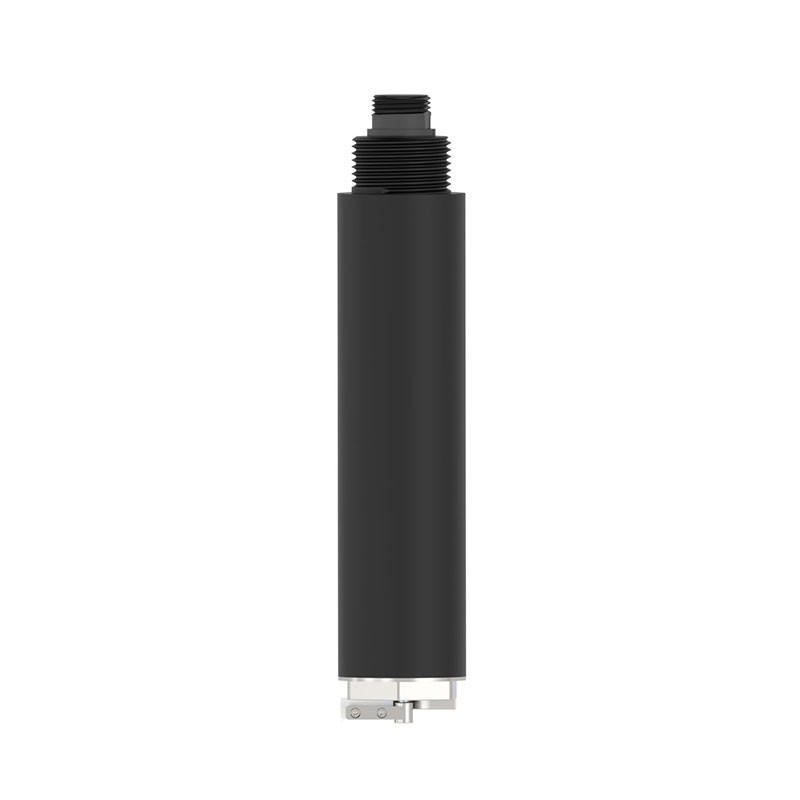
Mining Weather Station is an integrated meteorological monitoring device specifically designed for flammable and explosive environments such as chemical plants and oil depots. It integrates data acquisition, storage, and communication uploading, and supports interface with central control room...
In the construction project of automated geological disaster monitoring, the rainfall monitoring station, as an important device, plays a crucial role in the prevention and response to geological disasters.Heavy rainfall is a key factor triggering geological disasters such as debris flows and landsl...
In the fields of water conservancy management and flood control and disaster reduction, water level monitoring is of great importance, and the Water Level Monitoring System achieves efficient and accurate monitoring of water levels.The Water Level Monitoring System is mainly composed of front-end mo...
water level sensors A sensor that measures the level of water in a stationary container and can accurately measure the amount of liquid in the tank....


 Skype
Skype
 whatsapp
 mail
mail