Shandong Fengtu IOT Technology Co., Ltd
Sales Manager:Ms. Emily Wang
Cel,Whatsapp,Wechat:+86 15898932201
Email:info@fengtutec.com
Add:No. 155 Optoelectronic Industry Accelerator, Gaoxin District, Weifang, Shandong, China


Sales Manager:Ms. Emily Wang
Cel,Whatsapp,Wechat:+86 15898932201
Email:info@fengtutec.com
Add:No. 155 Optoelectronic Industry Accelerator, Gaoxin District, Weifang, Shandong, China
time:2026-05-09 09:43:46 source:Weather Station viewed:189 time
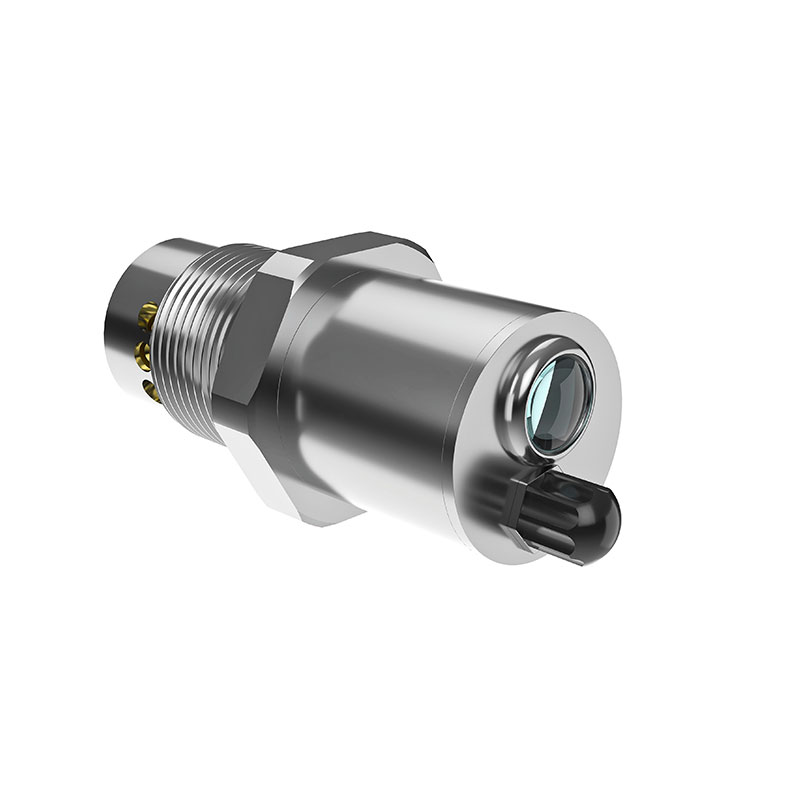
Oil Pressure Sensor integrates four distinct technologies—Electrochemical Impedance Spectroscopy (EIS), Ultrasonic Viscosity Monitoring, Micro-moisture Detection, and Inductive Magnetic Field Analysis—to provide real-time assessment of lubricant health. It simultaneously monitors key parameters such as viscosity, density, micro-moisture levels, free water content, water activity, fluid level, pressure, and ferrous debris. This system is ideally suited for the condition monitoring and predictive maintenance of various industrial oils, including hydraulic fluids, gear oils, engine oils, and air compressor oils.
Oil Pressure Sensor is a specialized device designed for the real-time, online monitoring of lubricant health status. The sensor incorporates four core technologies: Electrochemical Impedance Spectroscopy (EIS) is utilized to detect changes in the oil's impedance spectrum, thereby assessing the degree of oil degradation; Ultrasonic Viscosity Monitoring measures the oil's viscosity and density; and Micro-moisture Detection identifies trace moisture levels and water activity within the fluid. These technologies work in tandem to monitor dissolved water, free water, fluid levels, pressure, and wear particles—such as ferrous debris—ultimately generating a comprehensive health index that reflects the overall condition of the lubricant.
Oil Pressure Sensor is primarily designed for the continuous condition monitoring of various industrial lubricants, including hydraulic fluids, gear oils, engine oils, and air compressor oils. In practical application, the sensor's probe makes direct contact with the fluid to acquire physical and chemical parameters. These data are processed by an internal microprocessor and subsequently transmitted to a higher-level control system via a CAN bus or RS485 digital communication interface. The data refresh rate reaches up to once per second, and measurement results encompass more than five core parameters: viscosity, density, dielectric constant, moisture content, water activity, and temperature. The system boasts a viscosity measurement accuracy of ±5%, a moisture measurement accuracy of ±10%, and a dielectric constant measurement accuracy of ±0.01. This combination of rapid data response and high-precision measurement enables the sensor to promptly detect issues related to oil contamination and degradation while equipment is in operation. In terms of application scenarios, the Oil Pressure Sensor can be deployed within the lubrication circuits of critical equipment such as wind turbine gearboxes, hydraulic transmission systems, steam turbines, diesel engines, compressors, and various types of gearboxes. The sensor is highly sensitive to changes in oil moisture content; it is capable of detecting not only the free water that causes oil emulsification but also trace amounts of dissolved water that have not yet reached saturation levels. Its water activity monitoring function precisely indicates the risk level associated with the presence of free water; the system issues a warning when the water activity value exceeds 0.9 aw, thereby preventing continuous moisture exposure from causing corrosion and wear on metal components.
From a maintenance management perspective, the Oil Pressure Sensor enables enterprises to transition from a traditional offline inspection model—typically involving monthly sampling and laboratory analysis—to an online, real-time, and continuous monitoring mode. While traditional manual sampling typically assesses fluid quality once every three months, this sensor continuously collects data 24 hours a day, immediately notifying operations and maintenance personnel whenever oil parameters exceed pre-configured alarm thresholds. This real-time early warning capability mitigates the risk of equipment downtime caused by sudden fluid degradation or unexpected contamination; furthermore, by leveraging historical data trends to inform decision-making, it facilitates the optimization of oil change intervals, thereby reducing the waste of lubricants resulting from unnecessary oil changes. The sensor's integrated structural design simplifies installation, while its metal housing—characterized by excellent corrosion resistance and pressure tolerance—makes it ideally suited for continuous monitoring applications involving high-velocity oil flows.
A weather monitoring system is a device and software system for measuring, recording, transmitting and analysing meteorological elements. It allows real-time monitoring of weather elements such as temperature, humidity, air pressure, wind speed, wind direction, precipitation etc. in order to monitor...
Atmospheric transmittance refers to the ratio of the luminous flux that passes through the atmosphere to the incident luminous flux when light propagates in the atmosphere. When the atmospheric transmittance is high, it means that more light can successfully propagate in the atmosphere. In this case...
A meteorological sensor is a device used to measure and monitor atmospheric environmental parameters, primarily to obtain meteorological data and convert it into electrical signals for data processing and storage. Meteorological sensors usually include components such as sensors and signal conversio...
Soil erosion refers to the process in which soil minerals, organic matter, and substances dissolved in water are dispersed, transported, and deposited under the action of water, wind, gravity, and human factors. Its hazards are multifaceted. On the one hand, it leads to a decline in soil fertility,...


 Skype
Skype
 whatsapp
 mail
mail