Shandong Fengtu IOT Technology Co., Ltd
Sales Manager:Ms. Emily Wang
Cel,Whatsapp,Wechat:+86 15898932201
Email:info@fengtutec.com
Add:No. 155 Optoelectronic Industry Accelerator, Gaoxin District, Weifang, Shandong, China


Sales Manager:Ms. Emily Wang
Cel,Whatsapp,Wechat:+86 15898932201
Email:info@fengtutec.com
Add:No. 155 Optoelectronic Industry Accelerator, Gaoxin District, Weifang, Shandong, China
time:2026-07-29 09:19:09 source:Weather Station viewed:48 time
Photosynthetically active radiometer is used to measure photosynthetically active radiation (PAR) in the 400-700 nm wavelength range. It employs a silicon photodetector and optical filters, outputting a voltage signal proportional to the incident radiation. This instrument conforms to the national standard GB/T 35139-2017 and is widely used in agricultural meteorology and crop growth research.
Photosynthetically active radiometer is a specialized instrument for measuring PAR in the 400-700 nm wavelength range of natural light. This wavelength band is the core spectral region required for photosynthesis in green plants, and PAR is the energy source for plant life activities, organic matter synthesis, and yield formation. Photosynthetically active radiometer uses a silicon photodetector as its core sensing element, combined with a 400-700 nm optical filter for spectral selection. When there is light, the detector generates a voltage signal proportional to the incident radiation intensity, and its sensitivity is proportional to the cosine of the incident light's angle of incidence. Each instrument is calibrated with its own sensitivity coefficient and can directly output measurement values in μmol·m⁻²·s⁻¹.
The technical specifications of Photosynthetically active radiometer determine its measurement performance and applicable scenarios. It uses a DC 12V power supply, with an operating current of only 3mA and a power consumption of 0.036W, classifying it as a low-power device. The operating temperature range is -20 to 65℃, and the communication interface uses the RS485 standard interface with a minimum data interval of 0.5 seconds. Regarding sensor parameters, the photosynthetically active radiation measurement range is 0 to 2000 W/m², with a resolution of 1 W/m² and an accuracy better than ±3%. The photosynthetic photon flux density measurement range is 0 to 9200 μmol·m⁻²·s⁻¹, also possessing a resolution of 1 and an accuracy better than ±3%. The response time is no more than 10 seconds, the annual stability is better than ±3%, and the zero-point drift is no more than 10 W/m². The measurement spectral range is 400 to 700 nanometers, covering the effective wavelengths required for plant photosynthesis.
The Photosynthetically active radiometer is designed for all-weather use. The body is machined from cast bronze and treated with electrostatic powder coating for excellent corrosion resistance. The hemispherical quartz glass cover is cold-worked and ground to a thickness of 1.5 ± 0.1 mm, with a concentricity deviation of no more than 0.05 mm and a spectral transmittance of over 90%. O-rings are installed at all connections, and a desiccant is included inside to ensure normal operation in humid environments.
The Photosynthetically active radiometer has wide applications in agricultural meteorology, crop growth research, photosynthetic potential research, greenhouse control, ecology, and solar energy research. The Photosynthetically active radiometer has been incorporated into the national standard system; GB/T 35139-2017 "Photosynthetically active radiometer" is under the jurisdiction of the National Technical Committee for Standardization of Meteorological Instruments and Observation Methods, and the competent authority is the China Meteorological Administration. The implementation of standards provides a unified technical basis for product design, production and inspection.
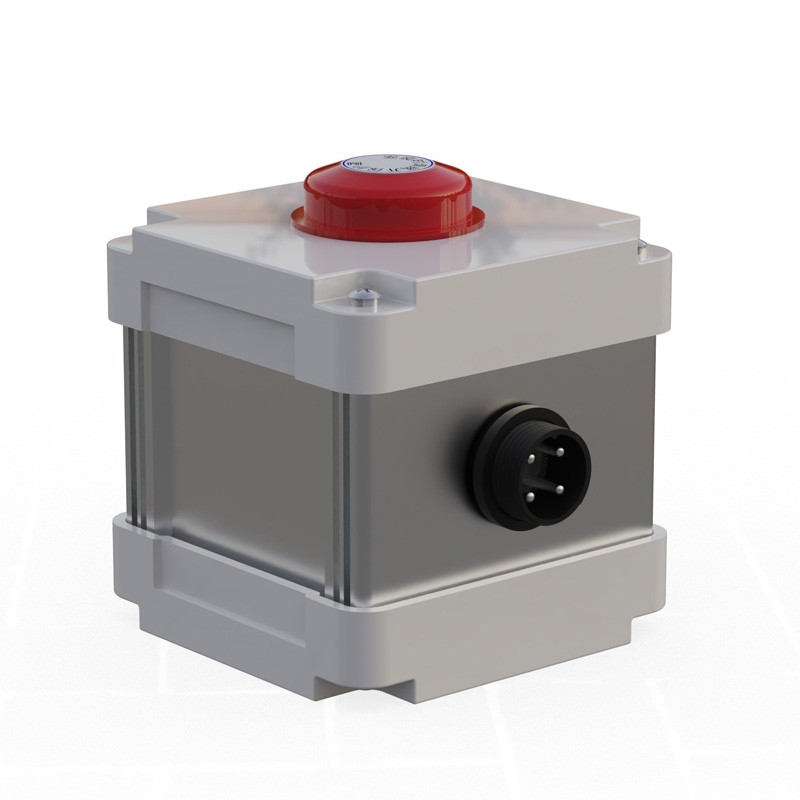
In the fields of water conservancy management and flood control and disaster reduction, water level monitoring is of great importance, and the Water Level Monitoring System achieves efficient and accurate monitoring of water levels.The Water Level Monitoring System is mainly composed of front-end mo...
A wind speed meteorometer is a meteorological instrument used to measure wind speed. It is one of the very important devices in meteorological observation and prediction for monitoring and recording the speed and direction of wind in the atmosphere. Anemometers can use different operating principles...
3D Anemometer utilizes ultrasonic technology to measure gas flow velocity, offering a wind speed measurement range of 0–70 m/s with an accuracy of ±3%. Its wind direction range spans 0–360° with an accuracy of ±2°. Constructed from stainless steel, the device is ideally suited for deploy...
The online ammonia nitrogen sensor is a device for real-time monitoring of ammonia nitrogen concentration in water, with a measurement range of 0-1000 mg/L. It utilizes a built-in pH electrode and temperature probe for dual compensation, improving measurement accuracy. It is suitable for vario...


 Skype
Skype
 whatsapp
 mail
mail