Shandong Fengtu IOT Technology Co., Ltd
Sales Manager:Ms. Emily Wang
Cel,Whatsapp,Wechat:+86 15898932201
Email:info@fengtutec.com
Add:No. 155 Optoelectronic Industry Accelerator, Gaoxin District, Weifang, Shandong, China


Sales Manager:Ms. Emily Wang
Cel,Whatsapp,Wechat:+86 15898932201
Email:info@fengtutec.com
Add:No. 155 Optoelectronic Industry Accelerator, Gaoxin District, Weifang, Shandong, China
time:2026-01-26 09:16:39 source:Weather Station viewed:481 time
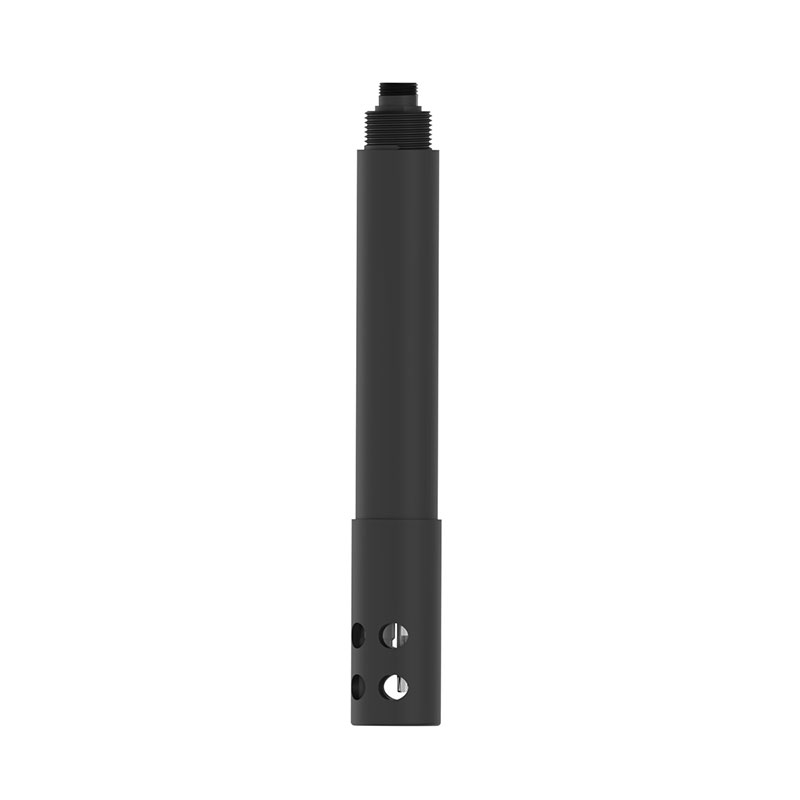
The online ammonia nitrogen sensor is a device for real-time monitoring of ammonia nitrogen concentration in water, with a measurement range of 0-1000 mg/L. It utilizes a built-in pH electrode and temperature probe for dual compensation, improving measurement accuracy. It is suitable for various water environment monitoring scenarios, including surface water, wastewater, pipeline outlets, and industrial parks.
Ammonia nitrogen is a key indicator in water quality monitoring. Excessive concentrations can seriously harm aquatic ecosystems and affect drinking water safety. Traditional ammonia nitrogen measurement methods are often cumbersome and cannot achieve real-time continuous monitoring. The application of the modern online ammonia nitrogen sensor provides an efficient technical means for online monitoring and rapid response of ammonia nitrogen content in water.
The online ammonia nitrogen sensor can monitor ammonia nitrogen concentration in water bodies in real time, with a typical range of 0 to 1000.00 mg/L, covering the monitoring needs of various water bodies, from clean surface water to high-concentration industrial wastewater. Its core advantage lies in solving a key interference factor in ammonia nitrogen measurement: ammonia nitrogen in water exists mainly in two forms: free ammonia and ammonium ions. The ratio of these two forms changes dynamically with water quality conditions, directly affecting the measurement results.
Specifically, this ratio is highly dependent on the pH value (acidity/alkalinity) and temperature of the water sample. At the same temperature, the higher the pH value, the greater the proportion of free ammonia; and under the same pH conditions, temperature changes also affect the equilibrium state of both. Without correction for these factors, the measurement data will exhibit significant deviations.
Therefore, the advanced online ammonia nitrogen sensor integrates a pH electrode and a temperature sensor to achieve automatic compensation. The sensor simultaneously measures the current pH and temperature of the water body while measuring the ammonia nitrogen concentration. The built-in intelligent algorithm, based on a known chemical equilibrium model, automatically corrects and compensates for the ammonia nitrogen readings based on the real-time measured pH and temperature values, ultimately outputting a corrected value that more accurately represents the total ammonia nitrogen concentration. This dual compensation mechanism greatly improves the reliability and effectiveness of the monitoring data.
With its stable and reliable performance, online ammonia nitrogen sensor is widely used in various complex water environment monitoring scenarios. It can be used for long-term ecological monitoring of natural surface water such as rivers, reservoirs, and lakes, and is also suitable for monitoring pollution sources such as urban sewage pipe networks and industrial wastewater discharge outlets. It also plays an important role in process control at waterworks, water quality management in industrial parks, and aquaculture. By deploying such sensors at different nodes, a real-time, continuous ammonia nitrogen monitoring network can be built, providing timely and accurate data support for environmental protection, production management, and public drinking water safety.
The electronic weather instrument is a portable device that integrates multiple meteorological data, including wind speed, wind direction, temperature, humidity, atmospheric pressure, altitude, thermal index, wet-bulb temperature, wave height, dew point temperature, wind chill index, and GNSS positioning. This highly integrated instrument is widely used in environmental monitoring, meteorological research, third-party testing, and emergency response, providing accurate meteorological data support....
GNSS Monitoring employs differential RTK technology, using GNSS monitoring equipment to collect millimeter-level horizontal and vertical displacement data of the dam body in real time, and monitors settlement and tilt changes. This system provides continuous and accurate data for assessing the safety and stable operation of the dam structure....
In the field of snow depth measurement, the Ultrasonic Snow Depth Detector and the Laser Snow Depth Monitor are two common devices. So, how should consumers make a choice?The Ultrasonic Snow Depth Detector operates in a way similar to echolocation. It emits ultrasonic waves towards the snow surface....
The Continuously Operating Reference Station Network (CORS), as a crucial support for modern positioning services, consists of core elements such as continuously operating reference stations, a data center, and a data communication network, forming an organic whole.The continuously operating referen...


 Skype
Skype
 whatsapp
 mail
mail