Shandong Fengtu IOT Technology Co., Ltd
Sales Manager:Ms. Emily Wang
Cel,Whatsapp,Wechat:+86 15898932201
Email:info@fengtutec.com
Add:No. 155 Optoelectronic Industry Accelerator, Gaoxin District, Weifang, Shandong, China


Sales Manager:Ms. Emily Wang
Cel,Whatsapp,Wechat:+86 15898932201
Email:info@fengtutec.com
Add:No. 155 Optoelectronic Industry Accelerator, Gaoxin District, Weifang, Shandong, China
time:2026-07-31 09:22:05 source:Weather Station viewed:46 time
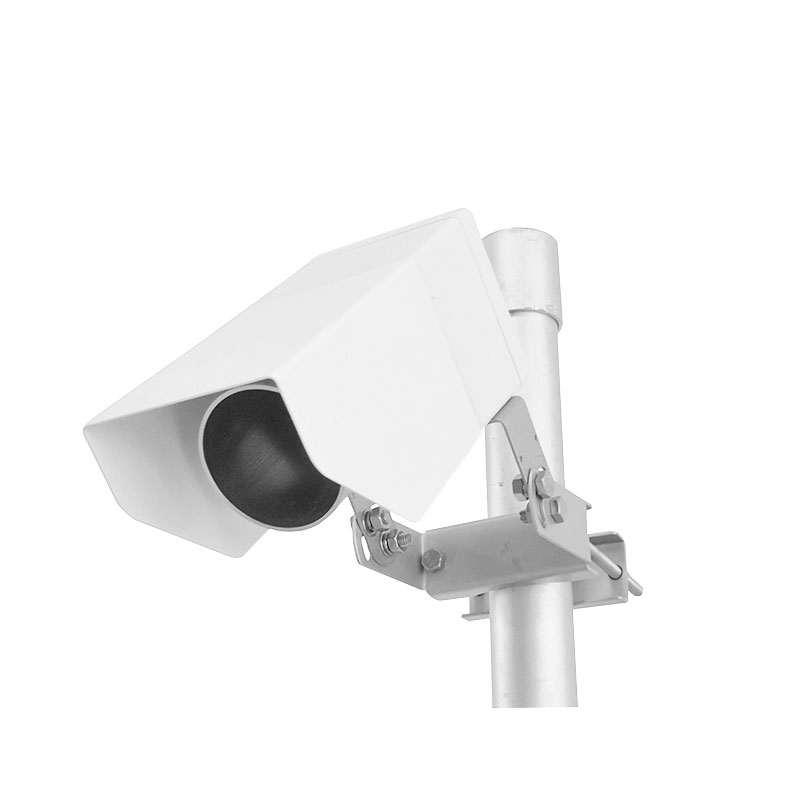
Automatic Rain Gauge, based on IoT technology, consists of an optical rain gauge sensor, a data logger, a solar power system, and a pole support. It transmits rainfall data wirelessly to a monitoring platform, supporting real-time viewing and historical data export. It is widely used in meteorology, flood control, agriculture, and hydrology.
Rainfall monitoring is fundamental in meteorological observation, flood warning, agricultural irrigation, and hydrological management. Traditional rainfall monitoring methods rely on manual readings and wired transmission, which are often difficult to deploy effectively in remote areas or in environments without mains power. The emergence of the optical rain gauge monitoring station solves this problem. Using IoT technology at its core, it achieves automated acquisition and remote wireless transmission of rainfall data.
Automatic Rain Gauge consists of an optical rain gauge sensor, a data logger, a solar power system, and a pole support. The optical rain gauge sensor uses optical principles to detect raindrops. Compared to traditional tipping bucket or piezoelectric rain gauge sensors, optical sensors have advantages in response speed and measurement accuracy. The solar power system incorporates a wide-temperature-range colloidal maintenance-free battery, ensuring stable operation even in situations without mains power, such as in the field, forest fire prevention, and flash flood monitoring. The equipment transmits rainfall data wirelessly to the monitoring platform, enabling a managed, unattended operation mode.
Users can view real-time rainfall data and historical records after logging into the IoT platform. The platform provides comprehensive rainfall data dimensions, including rainfall status, one-minute rainfall, five-minute rainfall, ten-minute rainfall, one-hour rainfall, and daily rainfall. It also supports monthly and daily rainfall bar charts, as well as hourly rainfall variation curves and bar charts within a day. The cloud platform also supports setting daily boundary times and daily rainfall alarm thresholds. Data can be exported in Excel format for convenient data analysis and report compilation.
Automatic Rain Gauge has a wide range of applications. In the meteorological field, it provides meteorological stations with raw data such as precipitation, precipitation intensity, and precipitation time. In the fields of flood control and hydrology, the monitoring station provides valuable real-time data for flood control scheduling, water supply scheduling, and hydrological management of power plants and reservoirs. In agriculture, accurate rainfall data helps in the rational planning of irrigation schedules. Furthermore, the equipment can also be used for environmental monitoring, rainfall observation at highways, airports, and ports.
From equipment configuration to data application, Automatic Rain Gauge forms a complete chain of data acquisition, transmission, storage, and analysis. It not only meets the accuracy requirements of professional meteorological and hydrological observation but also lowers the barriers to equipment deployment and maintenance through IoT and cloud platform technologies, making it one of the more mature solutions in the current rainfall monitoring field.

Sensor technology is developing rapidly and is widely used, especially in the field of consumer electronics. In agriculture, however, the pace of application of this technology has been relatively slow. Modern greenhouses, for example, are typically equipped with only one sensor per 1,000 square met...
After an earthquake, aftershocks often occur. An aftershock is a small earthquake that occurs successively after the main shock. It is generated because when the main shock occurs, the rock layers in the earth's crust are strongly impacted, and the internal stress distribution changes greatly. T...
The mini weather station is an integrated structure and highly integrated weather sensor, which can provide a variety of elements to be monitored in combination, measuring PM2.5, PM10, CO, SO2, NO2, O3, temperature, humidity, wind speed, wind direction, atmospheric pressure, rainfall and other eleme...
A weather phenomenon sensor is a sensor used to measure and identify various weather phenomena in the environment. It can identify the type of precipitation and snowfall and differentiate between weather phenomena such as drizzle, light rain, moderate rain and heavy rain. It can also be equipped wit...


 Skype
 whatsapp
 mail