Shandong Fengtu IOT Technology Co., Ltd
Sales Manager:Ms. Emily Wang
Cel,Whatsapp,Wechat:+86 15898932201
Email:info@fengtutec.com
Add:No. 155 Optoelectronic Industry Accelerator, Gaoxin District, Weifang, Shandong, China


Sales Manager:Ms. Emily Wang
Cel,Whatsapp,Wechat:+86 15898932201
Email:info@fengtutec.com
Add:No. 155 Optoelectronic Industry Accelerator, Gaoxin District, Weifang, Shandong, China
time:2026-07-23 09:12:32 source:Weather Station viewed:47 time
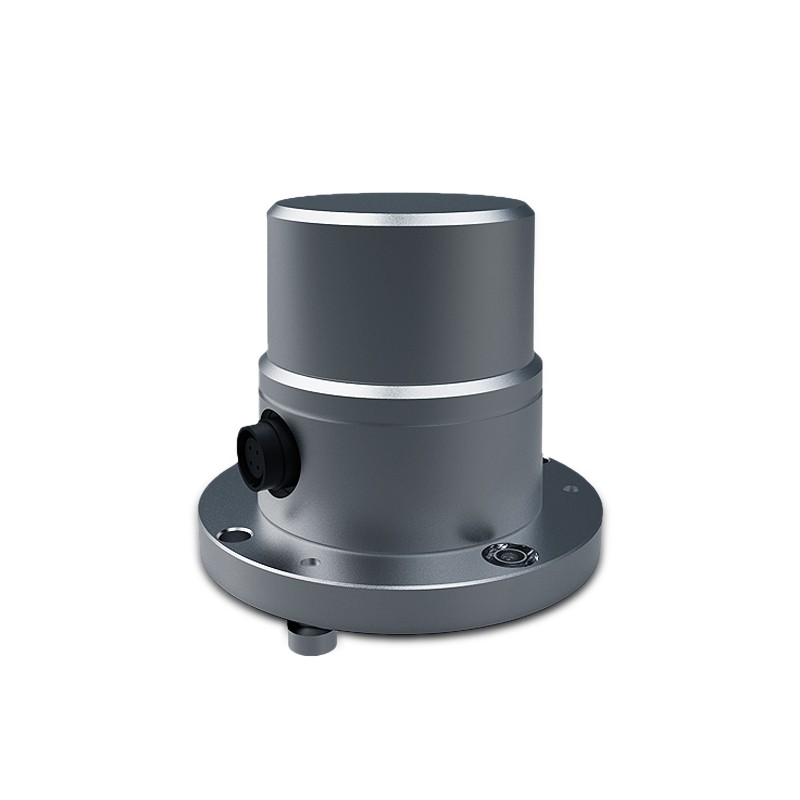
The TBQ total radiation sensor measures total solar radiation using the thermoelectric effect principle. It has a measurement range of 0-2000 W/m², an accuracy of ≤±3.1%, and a response time of ≤10S. Powered by DC12V, it features an RS485 communication interface and operates at -20~70℃. It is suitable for meteorology, agriculture, and solar energy applications.
The TBQ total radiation sensor is a solar radiation measurement device based on the thermoelectric effect principle, primarily used to measure total solar radiation in the spectral range of 0.3~3μm. The core sensing element of the sensor uses a wire-wound electroplated multi-junction thermopile, with the sensing surface coated with 3M matte black paint. When the blackened sensing surface receives solar radiation, its temperature rises, creating a thermoelectric electromotive force between the hot and cold junctions. This electromotive force is proportional to the solar radiation intensity. The sensor is equipped with a double-layered quartz glass cover; the outer layer reduces the influence of air convection on the measurement results, while the inner layer blocks the infrared radiation emitted by the glass cover itself.
In terms of technical specifications, the TBQ total radiation sensor is powered by DC12V with a power consumption of only 0.06W and an operating current of 5mA@DC12V, exhibiting low power consumption characteristics. The communication interface uses RS485 with a minimum data interval of 0.5S, and the operating ambient temperature range is -20~70℃. Regarding sensor parameters, the total radiation measurement range is 0-2000W/m², with a resolution of 1W/m² and an accuracy of ≤±3.1%. The sunshine duration measurement range is 0-6500h, with a resolution of 0.1h and an accuracy of <0.2h. The response time is ≤10S, the annual stability is ≤±3%, and the zero-point drift is ≤6W/m².
In terms of application areas, the TBQ total radiation sensor is widely used in meteorological observation, atmospheric environment monitoring, solar energy resource assessment, agricultural research, and building physics research. In the meteorological field, as one of the core sensors of meteorological stations, this sensor measures solar radiation flux and, combined with data such as soil heat flux and air temperature and humidity, constructs a surface energy balance model to study climate change mechanisms. In agriculture, the sensor monitors photosynthetically active radiation (RADR), combines it with leaf area index (LAI) models to assess crop growth, and guides precision irrigation and fertilization. In solar energy, it is used to assess solar resource potential, help determine the optimal site selection and scale for solar power plants, and monitor the actual radiation received by solar panels.
The TBQ total radiation sensor also features multiple measurement methods. Placing the sensor face down measures reflected radiation, tilting it measures solar radiation incident on an inclined surface, and adding a shading ring measures diffuse radiation. Installation requires a location with open space on all sides and no obstructions above the sensor face. The radiation meter cable plug should be aligned with north and adjusted to a horizontal position before securing it. Routine maintenance requires regularly cleaning dust and debris from the glass cover with a lint-free cloth to ensure measurement accuracy.
weather instruments and their uses are used to collect weather data and monitor meteorological parameters such as temperature, atmospheric pressure, humidity, wind speed, wind direction, and rainfall....
Dissolved oxygen refers to the molecular oxygen dissolved in water, expressed as the number of milligrams of oxygen per liter of water (mg/L). It is an important indicator for measuring the self-purification capacity of water bodies and is crucial for the survival of aquatic organisms, the balance o...
Weather Station Data Logger is an integrated monitoring device specifically designed for hazardous environments such as chemical plants and oil depots. It features a corrosion-resistant, explosion-proof, waterproof, shockproof, and dustproof design. It can monitor five elements: wind speed and direction, temperature, humidity, and atmospheric pressure. With miniaturization and explosion-proof capabilities as its core, it is suitable for high-risk industrial scenarios with limited space....
Water Velocity Meter is a non-contact measurement device utilizing a K-band planar microstrip array antenna to provide real-time monitoring of flow velocity, water level, and flow rate in natural rivers, irrigation canals, and open channels. Unaffected by weather conditions, temperature fluctu...


 Skype
Skype
 whatsapp
 mail
mail