Shandong Fengtu IOT Technology Co., Ltd
Sales Manager:Ms. Emily Wang
Cel,Whatsapp,Wechat:+86 15898932201
Email:info@fengtutec.com
Add:No. 155 Optoelectronic Industry Accelerator, Gaoxin District, Weifang, Shandong, China


Sales Manager:Ms. Emily Wang
Cel,Whatsapp,Wechat:+86 15898932201
Email:info@fengtutec.com
Add:No. 155 Optoelectronic Industry Accelerator, Gaoxin District, Weifang, Shandong, China
time:2026-03-16 10:56:11 source:Weather Station viewed:281 time
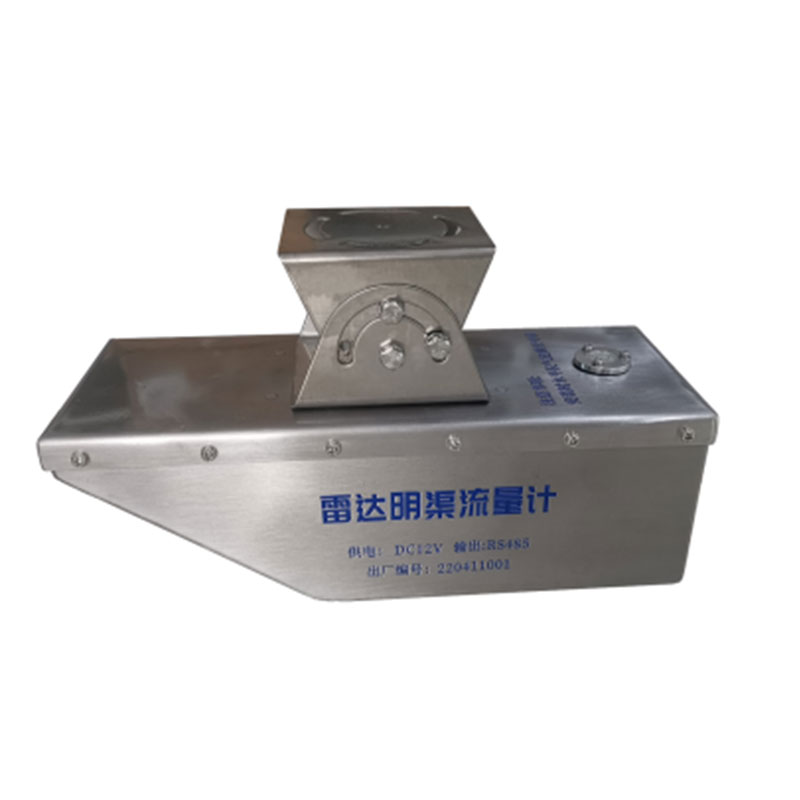
Water Velocity Meter is a non-contact measurement device utilizing a K-band planar microstrip array antenna to provide real-time monitoring of flow velocity, water level, and flow rate in natural rivers, irrigation canals, and open channels. Unaffected by weather conditions, temperature fluctuations, atmospheric moisture, or waterborne pollutants, this device provides precise data support for hydrological monitoring and water resource management.
Based on microwave technology, Water Velocity Meter employs a K-band planar microstrip array antenna to measure water flow velocity and water levels via a non-contact method. The device utilizes the Doppler effect principle to measure the surface velocity of the water flow, while simultaneously employing Frequency Modulated Continuous Wave (FMCW) radar technology to perform high-precision water level measurements. By integrating built-in software algorithms, it calculates real-time cross-sectional flow rates and cumulative flow volumes based on the velocity-area method.
The core technological advantage of this sensor lies in its planar microstrip array antenna design, which is characterized by concentrated energy emission and low power consumption. The device integrates various functions—including vertical angle compensation, flow velocity averaging, and signal strength detection—and is capable of automatically identifying the direction of water flow while performing internal vertical angle corrections. During the measurement process, the direction of the transmitted radar waves is aligned parallel to the water flow and maintained at a specific angle relative to the water surface; the device automatically measures this specific angle internally and applies it during the flow velocity calculation.
In terms of environmental adaptability, Water Velocity Meter demonstrates significant advantages. Due to its non-contact measurement approach, the device is immune to corrosion from wastewater and remains unaffected by factors such as sediment, river pollutants, and surface debris. The measurement process is not disrupted by climatic conditions—including temperature fluctuations, fog, or atmospheric moisture—enabling the device to operate normally across a wide temperature range of -35°C to 70°C. With an IP68 protection rating, the device is well-suited for long-term operation in a wide variety of harsh outdoor environments.
Water Velocity Meter can be widely applied for non-contact flow measurement in various settings, including natural rivers, main and branch irrigation canals, open drainage channels, underground drainage networks, and flood warning systems. The device is suitable for measuring flow in open channels with diverse water quality conditions, cross-sectional shapes, and widths; whether the channel features a trapezoidal, circular, or U-shaped cross-section, precise measurements can be achieved simply by configuring the appropriate cross-sectional parameters. Particularly in water environments characterized by high flood levels, rapid currents, high sediment loads, or heavy pollution, this device serves as an effective alternative to traditional contact-based measurement methods, successfully resolving the common issues of wear and clogging associated with conventional flow meters.
In terms of data output and system integration, the sensor supports various communication protocols—including RS485 and 4–20mA—and is compatible with the standard Modbus-RTU protocol, facilitating seamless integration into existing automated hydrological monitoring and reporting systems. The device can operate autonomously or be combined with data loggers and wireless transmission modules to form an automated flow measurement system, thereby enabling remote, real-time flow monitoring. Furthermore, its low-power design allows for solar-powered operation, effectively meeting the requirements for long-term, unattended deployment in field environments.
Explosion-proof meteorological instrument is a special meteorological instrument used for meteorological monitoring and measurement, with explosion-proof performance, i.e., it can be used in flammable, explosive and other safety hazards, to avoid potential dangers such as fire caused by electrical f...
With data collectors, sensors, wireless transmission devices, mounting brackets and software platforms, the wireless automatic weather station is an integrated IoT weather monitoring system that not only automatically collects and records weather environment and soil moisture conditions, but also tr...
In the construction project of automated geological disaster monitoring, the rainfall monitoring station, as an important device, plays a crucial role in the prevention and response to geological disasters.Heavy rainfall is a key factor triggering geological disasters such as debris flows and landsl...
Wireless level monitoring in wastewater treatment plants, is radar level meter feasible?To treat wastewater, it needs to go through a variety of processes, and this will involve the measurement of liquid level, flow, pressure, temperature, ph, dissolved oxygen, turbidity and other parameters, among...


 Skype
Skype
 whatsapp
 mail
mail