Shandong Fengtu IOT Technology Co., Ltd
Sales Manager:Ms. Emily Wang
Cel,Whatsapp,Wechat:+86 15898932201
Email:info@fengtutec.com
Add:No. 155 Optoelectronic Industry Accelerator, Gaoxin District, Weifang, Shandong, China


Sales Manager:Ms. Emily Wang
Cel,Whatsapp,Wechat:+86 15898932201
Email:info@fengtutec.com
Add:No. 155 Optoelectronic Industry Accelerator, Gaoxin District, Weifang, Shandong, China
time:2026-05-19 09:30:40 source:Weather Station viewed:175 time
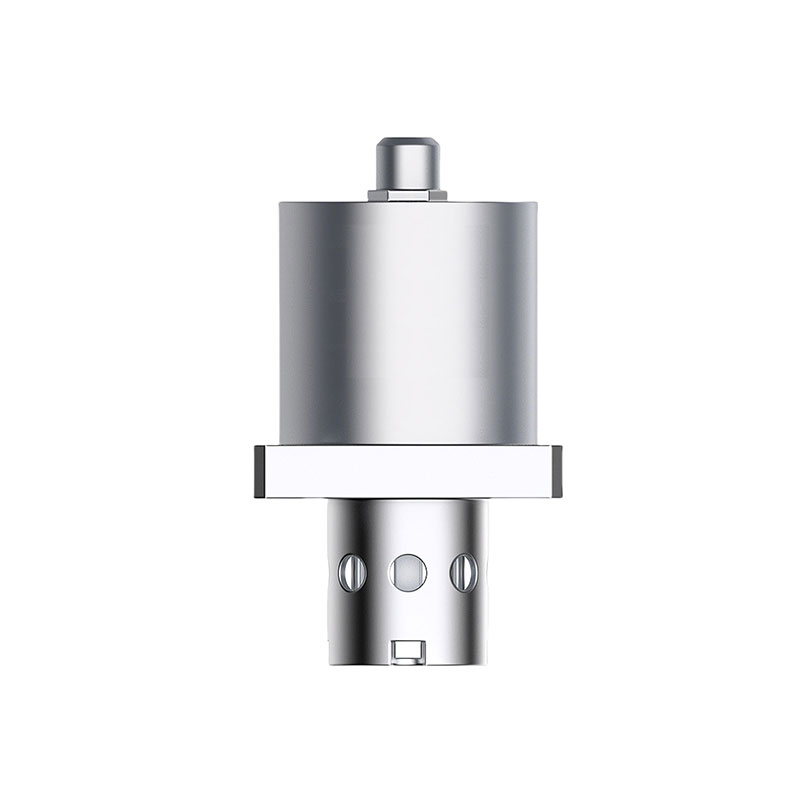
Viscosity & Density Sensor utilizes a piezoelectric resonant MEMS core component, integrating high-precision signal acquisition and intelligent algorithms. It can simultaneously measure the temperature, dynamic viscosity, and density of liquids in real time, automatically completing the detection without human intervention.
Viscosity & Density Sensor is a professional instrument for online monitoring of oil conditions in industrial equipment, employing a piezoelectric resonant MEMS core component as its measurement basis. The sensor integrates a high-precision signal acquisition unit, a signal processing unit, and intelligent algorithms, enabling real-time simultaneous measurement of three key indicators: temperature, dynamic viscosity, and density. No human intervention is required during sensor operation; all detection work is completed automatically by the sensor. Users simply need to install the sensor on the equipment's pipeline to achieve continuous online measurement of density, viscosity, and temperature during production. Analysis and detection can also be performed in a laboratory environment using an offline kit.
In terms of technical performance, Viscosity & Density Sensor has a dynamic viscosity measurement range of 1 to 400 cP or 1 to 1000 cP, a density measurement range of 600 to 1250 kg/m³, and a temperature measurement range of 0 to 100℃. The dynamic viscosity measurement accuracy is ±3%, and the density accuracy is ±3%. The sensor refreshes data every second. Its stainless steel housing offers excellent chemical corrosion resistance and pressure resistance, making measurements unaffected by external vibrations. With no moving or consumable parts, its service life can exceed ten years. The sensor supports both RS485 MODBUS RTU digital output and 4-20mA analog output communication, operates on 12 to 32V DC, consumes less than 20mA, and uses a standard G3/4 thread mechanical interface.
In terms of applications, Viscosity & Density Sensor is widely used in hydraulic power stations, gearboxes, diesel engines, turbines, and air compressors. The sensor is suitable for various oil types, including common mineral oils, synthetic and semi-synthetic lubricating oils, hydraulic oils, and transformer oils. Continuous monitoring of the condition of industrial oils such as lubricating oils and hydraulic oils improves the visibility of equipment maintenance, helps optimize oil change cycles, reduces reliance on traditional offline oil analysis, and prevents abnormal wear and corrosion caused by oil aging and contamination. This sensor has applications in the power generation industry (wind power, thermal power), transportation industry (aviation, shipping, railway), marine engineering, and large-scale engineering machinery and equipment. It can help users improve the health management level of equipment assets, assist maintenance decisions based on real-time monitoring results, and provide a guarantee for the continuous and reliable operation of equipment.
In the field of snow depth measurement, the Ultrasonic Snow Depth Detector and the Laser Snow Depth Monitor are two common devices. So, how should consumers make a choice?The Ultrasonic Snow Depth Detector operates in a way similar to echolocation. It emits ultrasonic waves towards the snow surface....
Video telemetry terminal is a microprocessor-controlled industrial intelligent gateway designed for hydrological, meteorological, and geological monitoring scenarios. It facilitates data acquisition and storage, multi-protocol communication, and remote control. Its low-power design supports solar po...
Four air and two dust miniature weather station , is a small weather observation instrument launched by Windway Technology. It is mainly used to collect, analyze and process and output meteorological data, and provide a variety of climate information services for production management. It adopts the...
Instruments for measuring rainfall:Rainfall measurement is a method used to measure the amount of rainfall and is usually achieved using a rain gauge. A rain gauge is a special container that measures precisely the amount of rainwater collected over a certain period of time. Typically, a rain gauge...


 Skype
Skype
 whatsapp
 mail
mail