Shandong Fengtu IOT Technology Co., Ltd
Sales Manager:Ms. Emily Wang
Cel,Whatsapp,Wechat:+86 15898932201
Email:info@fengtutec.com
Add:No. 155 Optoelectronic Industry Accelerator, Gaoxin District, Weifang, Shandong, China


Sales Manager:Ms. Emily Wang
Cel,Whatsapp,Wechat:+86 15898932201
Email:info@fengtutec.com
Add:No. 155 Optoelectronic Industry Accelerator, Gaoxin District, Weifang, Shandong, China
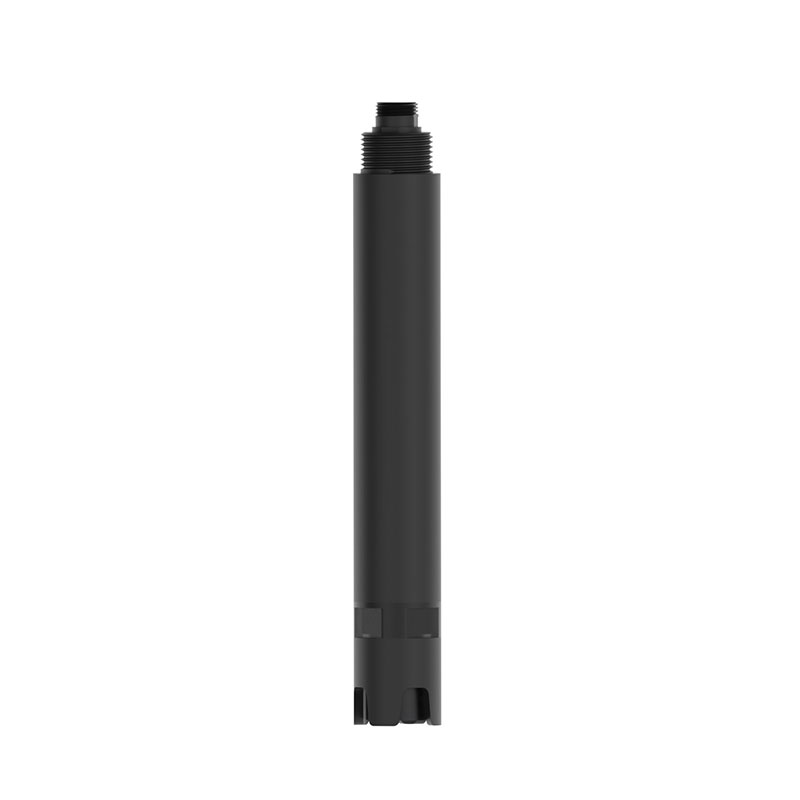
Model:FT-S7
Brand:fengtu
one. Water conductivity sensor application environment description
Water conductivity sensor is an analytical instrument used to continuously monitor the conductivity of pure water for a variety of applications.It is used for environmental water quality testing and testing of various high/low ionic strength water samples, and can meet the requirements of most industrial/environmental applications for online conductivity measurement.
Signal output: RS485 (MODBUS-RTU).
Internal signal isolation technology, strong interference resistance.
Good reproducibility, thermal stability, low drift, small size, fast response
Easy and simple installation, 3/4NPT pipe thread, convenient for submersible installation or installation in pipes and tanks
Stable performance and long service life
IP68 waterproof standard
24*1.2 18*1.5*2 28*2 2
two. Water conductivity sensor technical performance and specifications
1.Water conductivity sensor technical parameters
| Measurement principle | contact electrode method |
| Signal mode | RS485 (MODBUS-RTU) |
| Measuring range | 0~10000uS/cm |
| Measurement resolution | 1 |
| Measurement accuracy | ±1.5%; ±0.1°C |
| response time | About 30s (98% still liquid) |
| Shell material | ABS and 316L stainless steel |
| temperature compensation | Automatic temperature compensation (M1820Z) |
| Cable length | Standard 5 meters |
| Supply voltage | 12-24VDC (0.4W@12V) |
| Measurement environment | Temperature 0~50℃ (non-freezing), <0.2MPa |
| Waterproof level | IP68 |
| Installation method | Submersible installation, NPT3/4 thread |
2.Water conductivity sensor dimension diagram
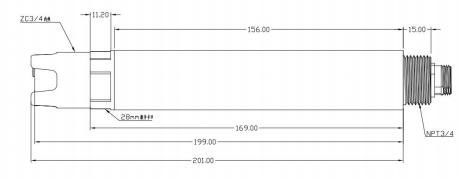
The sensor connector is M12 aviation plug connector 5-pin female seat
three. Water conductivity sensor installation and electrical connections
1.Water conductivity sensor installation
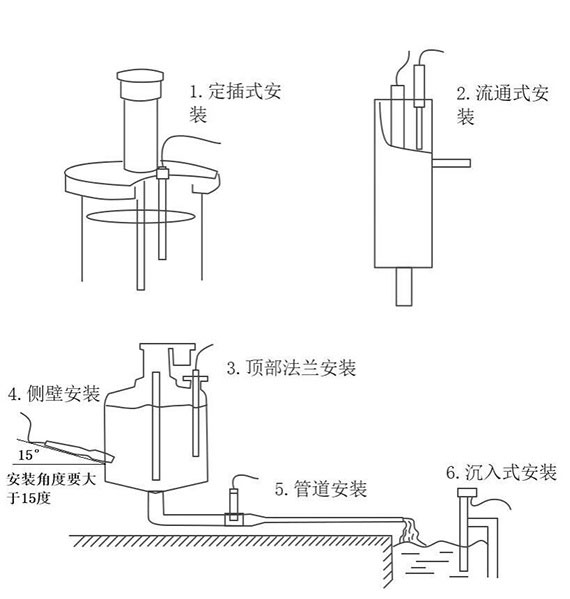
Note: The sensor cannot be installed upside down or horizontally, and must be installed at an angle of at least 15 degrees.
2.Water conductivity sensor electrical installation
The cable is a 5-core shielded wire, wire sequence definition: brown - power cord (12~24VDC)
Black - Ground (GND)
Blue-485A Green-485B
Yellow-4-20mA current output (can be left floating if not used)
The wiring sequence should be carefully checked before powering on to avoid unnecessary losses caused by wiring errors.
Four. Water conductivity sensor maintenance and care
1.Use and maintenance
Conventional electrodes require periodic cleaning and calibration, and the maintenance cycle is determined by the customer based on his or her own working conditions. Conventional electrode cleaning method: use a soft brush to remove attachments (be careful to avoid scratching the electrode surface), then clean with distilled water, and then perform calibration operations.
Villa weather station monitoring equipment is a kind of monitoring instrument used to monitor temperature and humidity, wind speed and direction, air pressure, PM2.5, PM10 and other weather environment parameters of the villa. Its structure includes: sensor module, communication transmission module,...
The FT-WQX5S Five Elements Micro Meteorological Instrument is quite an impressive piece of equipment!...
In the fields of atmospheric and tunnel environment detection, every data point is crucial for ensuring safety and the accuracy of decision - making. The FT - FT - SGT1 portable light transmittance detector emerges as your reliable detection partner.Operationally, the FT - SGT1 detector is extremely...
co2 meter is suitable for industrial, scientific, HVAC, IAQ CO2 monitoring to obtain real-time data on CO2 levels, temperature, and humidity....


 Get a Free Quote
 Skype
Skype
 whatsapp
 mail
mail