Shandong Fengtu IOT Technology Co., Ltd
Sales Manager:Ms. Emily Wang
Cel,Whatsapp,Wechat:+86 15898932201
Email:info@fengtutec.com
Add:No. 155 Optoelectronic Industry Accelerator, Gaoxin District, Weifang, Shandong, China


Sales Manager:Ms. Emily Wang
Cel,Whatsapp,Wechat:+86 15898932201
Email:info@fengtutec.com
Add:No. 155 Optoelectronic Industry Accelerator, Gaoxin District, Weifang, Shandong, China
time:2023-08-31 17:33:06 source:Weather Station viewed:961 time
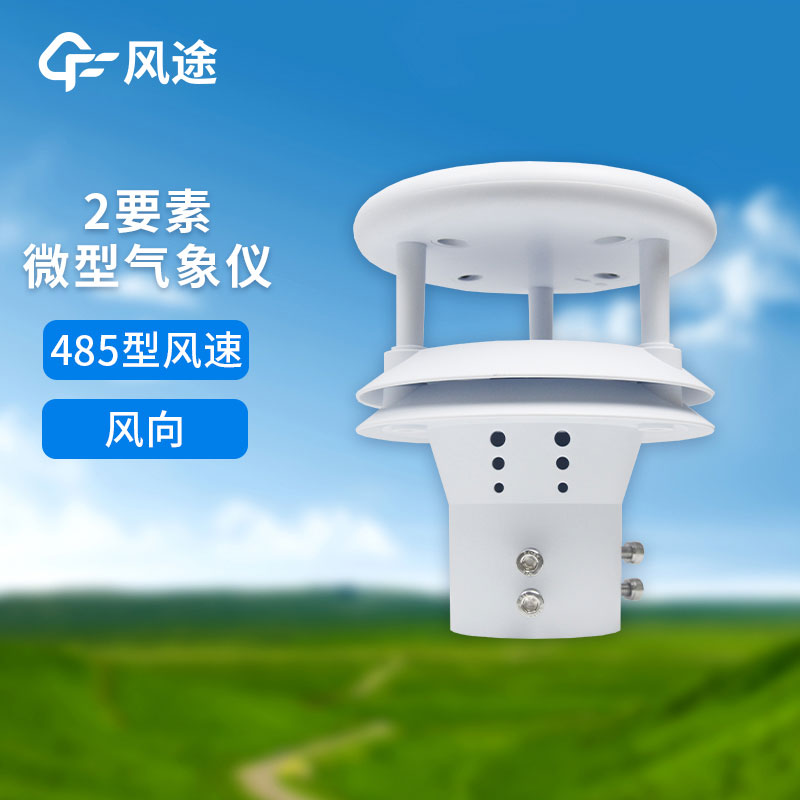
Ultrasonic wind speed sensor is a sensor used to measure wind speed, it adopts the ultrasonic principle and utilizes transmitting and receiving ultrasonic waves to measure wind speed. It consists of a transmitter, a receiver, a controller and a data processing unit. The transmitter transmits ultrasonic waves while the receiver receives the sent ultrasonic waves; the controller is used to adjust the parameters during the measurement process; the data processing unit is used to receive and process the signals transmitted by the controller, and ultimately calculates the value of wind speed.
It helps people to measure wind speed more accurately. Measuring wind speed is of great significance to human beings and can help us to understand the local climate and meteorological conditions and better predict the weather. Measuring wind speed also helps to prevent fires because, in general, the higher the wind speed, the bigger the fire. In addition, measuring wind speed can promote energy utilization, for example, it can increase the efficiency of wind turbines and help people produce more energy. Measuring wind speed can also help farmers to better manage their farmland, for example, by helping them to determine the timing of pollination and improve crop resistance. In addition, measuring wind speed can assist airlines in developing safe flight routes to avoid risks.
What is the main function of hydrological monitoring instruments and equipment? How do they play a role in hydrological monitoring? Next, I will make a brief introduction to these issues.The main functions of hydrological monitoring equipment are1. provide hydro-meteorological information services:...
Although the Air quality monitoring station is a fixed facility, its greatest advantage lies in its ability to achieve a high-density and refined regional monitoring layout.There are a limited number of large-scale air quality monitoring stations, and they are sparsely distributed. They can of...
GNSS sensor employs Differential RTK technology to achieve millimeter-level displacement monitoring. Widely applied in engineering fields such as dam safety monitoring, bridge structural health assessment, and landslide early warning systems, it is capable of accurately detecting minute displa...
The Internet of Things in Agriculture programme uses soil moisture monitoring as a cornerstone to ensure accurate knowledge of the planting site. With the help of automation control and wireless communication network and other technologies, it realises the automation of agricultural production manag...


 Skype
Skype
 whatsapp
 mail
mail