Shandong Fengtu IOT Technology Co., Ltd
Sales Manager:Ms. Emily Wang
Cel,Whatsapp,Wechat:+86 15898932201
Email:info@fengtutec.com
Add:No. 155 Optoelectronic Industry Accelerator, Gaoxin District, Weifang, Shandong, China


Sales Manager:Ms. Emily Wang
Cel,Whatsapp,Wechat:+86 15898932201
Email:info@fengtutec.com
Add:No. 155 Optoelectronic Industry Accelerator, Gaoxin District, Weifang, Shandong, China
time:2026-07-21 09:36:29 source:Weather Station viewed:45 time
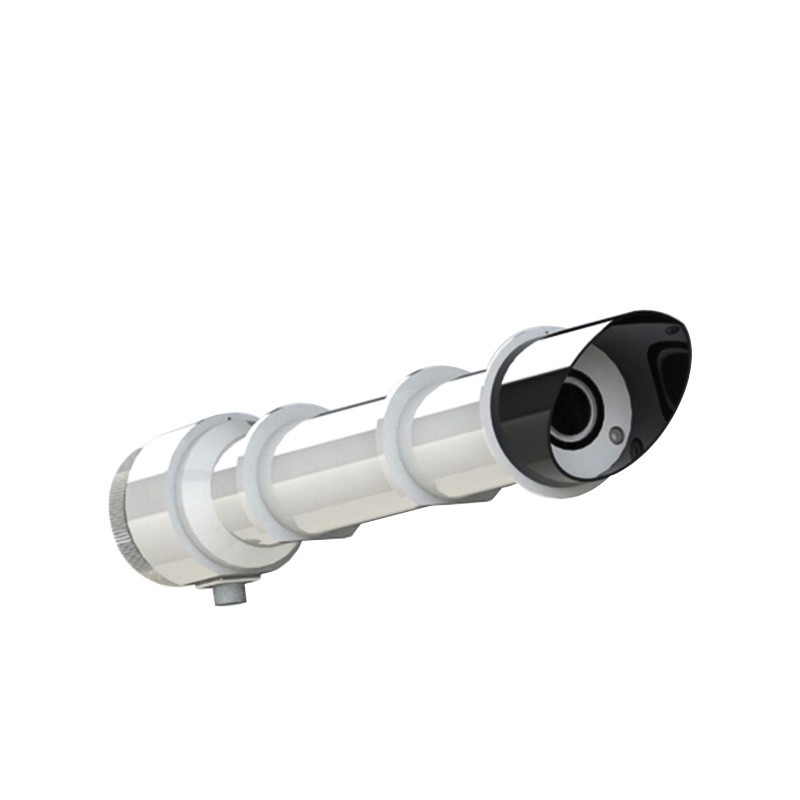
Direct radiation sensor is specifically designed to measure the energy of direct solar radiation in the form of parallel light, with a spectral range of 0.28-3μm. Its core component is a high-precision photosensitive element, employing a precise cylindrical optimized design and a quartz glass window, conforming to ISO9060 and WMO standards. It is widely used in meteorology, solar energy utilization, and atmospheric environmental monitoring.
Direct radiation sensor is an instrument used to measure the energy of solar radiation reaching the Earth's surface directly in the form of parallel light. The core component of this sensor is a high-precision photosensitive element, whose stability and accuracy are improved through a precise cylindrical optimized design. A quartz glass plate, precision-machined and cold-polished, is mounted on the outside of the sensing element. A light shield is installed at the front end of the quartz glass plate mounting cylinder to effectively prevent environmental factors from affecting the sensor's performance. The desiccant locking cap has a circular glass observation window with built-in color-changing silica gel desiccant for easy observation of desiccant moisture absorption.
Direct radiation sensor conforms to the technical specifications of ISO 9060 and the WMO (World Meteorological Organization) Guide, as well as the requirements of the Chinese meteorological standard QX/T 20-2016 Direct Radiation Meter. In terms of technical specifications, this sensor is rated FIRST CLASS, with a time response (95%) of 10 s, zero-point offset of thermal radiation ±2 W/m², zero-point offset of temperature change ±1 W/m², nonlinearity error ±0.2%, and annual stability ±0.5%/1 yr. The spectral response range is 285–3000 nm, with an aperture angle of 4°, tracking accuracy <±1°/24h, and sensitivity 7–14 μV/W•m⁻².
Regarding signal output, Direct radiation sensor offers multiple output options, including 0–20 mV millivolt voltage output, 4–20 mA standard current output, and RS485 (MODBUS protocol) output. The operating voltage varies depending on the output type. Millivolt output requires no external power supply, standard current output requires DC 24V, and RS485 output requires DC 12-24V. The sensor's operating temperature range is -40 to 85℃, humidity range is 0 to 100%RH, weight is 0.46kg (excluding cable), and dimensions are 290×67×56 (mm).
Structurally, the direct radiation meter consists of a light tube and an automatic tracking device. Multiple apertures inside the light tube reduce internal reflections and define the instrument's aperture angle; the slope of the apertures ensures an aperture angle of 4° for entry into the light tube. The sensing section is the core component of the light tube, consisting of a fast-response wire-wound electroplated multi-junction thermopile. The sensing surface is coated with a high-absorption black coating. When exposed to sunlight, the temperature of the hot junction rises, creating a thermoelectric electromotive force with the cold junction. This electromotive force is proportional to the solar radiation intensity.
Direct radiation sensor can be widely used in meteorological observation, solar energy utilization, agriculture, building material aging, and atmospheric environment monitoring for measuring direct solar radiation energy. In scenarios such as solar photovoltaic power plant performance monitoring, solar energy resource assessment, building physics research, and ecological monitoring, Direct radiation sensor provides accurate direct radiation data support.
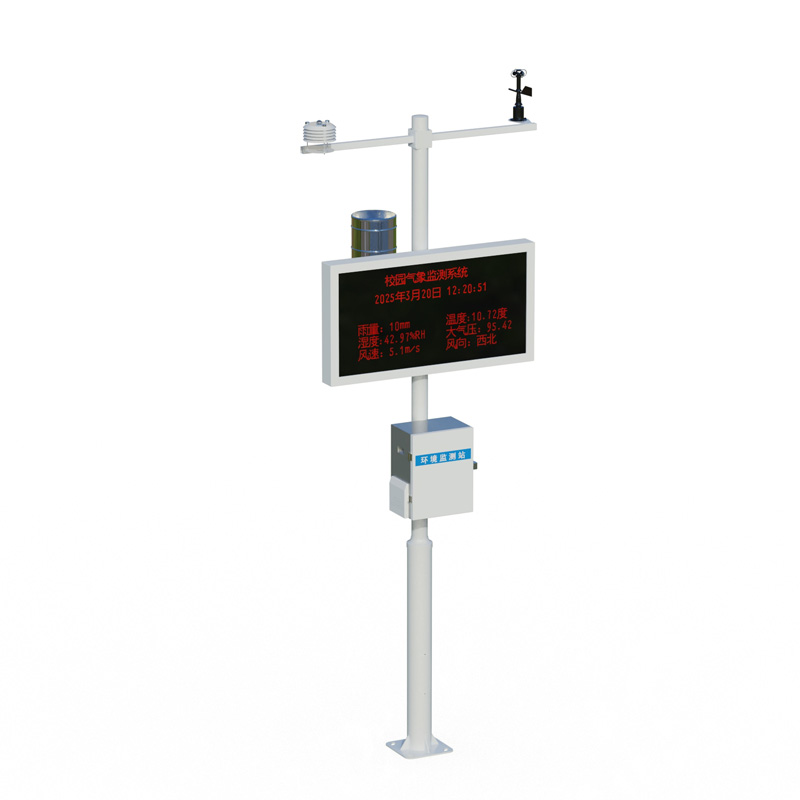
The establishment of small-scale automatic ambient air monitoring stations is important for real-time and accurate monitoring of air quality, tracking the spread and changes of pollutants, and it helps to present a comprehensive and objective picture of ambient air quality. This measure is essential...
ambient weather soil moisture sensor can measure the moisture content in the soil, which is mostly used in agricultural crop planting to monitor whether the crop is short of water....
Particulate matter is a key factor affecting air quality, and precise monitoring contributes to environmental protection. Particulate Monitors, especially those with PM2.5/PM10/TSP three-channel output functions, are becoming common tools in the field of environmental monitoring.Such monitoring equi...
Hydrological rainfall monitoring station is a tool for water and drought disaster monitoring, which can provide various hydrological rainfall data for flood control work and water resources management services. In the rapid development of China's water conservancy industry today, hydrological fo...


 Skype
Skype
 whatsapp
 mail
mail