Shandong Fengtu IOT Technology Co., Ltd
Sales Manager:Ms. Emily Wang
Cel,Whatsapp,Wechat:+86 15898932201
Email:info@fengtutec.com
Add:No. 155 Optoelectronic Industry Accelerator, Gaoxin District, Weifang, Shandong, China


Sales Manager:Ms. Emily Wang
Cel,Whatsapp,Wechat:+86 15898932201
Email:info@fengtutec.com
Add:No. 155 Optoelectronic Industry Accelerator, Gaoxin District, Weifang, Shandong, China
time:2023-02-08 17:41:31 source:Weather Station viewed:972 time
Field microclimate refers to a small local area, which is the most important environmental condition affecting crop growth and development and yield formation. By analyzing the distribution and characteristics of microclimate elements in farmland through field microclimate observation stations, we can find out measures to improve the environmental conditions for crop growth (i.e., farm microclimate conditions), thus making these microclimate conditions favorable for crop growth and development, which is of great importance for improving crop yield and quality.
In traditional agricultural production, farmers can only rely on their own experience and general weather forecasts for planting and field management, and have limited access to information and their own knowledge reserves are not rich enough to meet the needs of modern agricultural production. Today, with the development of modern science and technology, field temperature, relative humidity, soil temperature and soil moisture are collected by field microclimate observatories and other devices, which help agricultural growers to recognize the climate change in the planting environment and make targeted adjustments to agriculture to promote better and healthier growth and development of crops, thereby improving yield and quality.
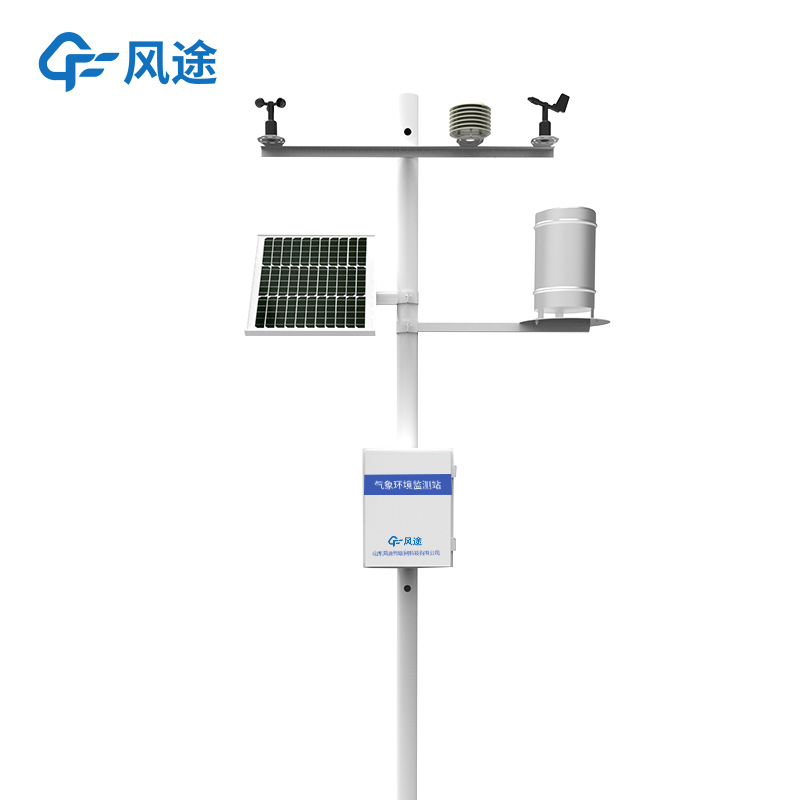
The field microclimate observatory, also known as a small automatic weather station, can monitor meteorological elements such as wind direction, wind speed, rainfall, temperature, relative humidity, soil temperature and soil moisture, which can provide data reference for farmers to sow seeds, apply medicine, fertilizer, disease prevention and later field management. In addition, the instrument is also used to conduct theoretical and applied research on farmland microclimate, investigation, analysis and exploitation of agro-climatic resources, agro-meteorological disaster defense, etc., to predict and control the occurrence and growth of pests and diseases, and to evaluate the effects of farmland technical measures, which are also very important.
Which brand of miniature weather station works well? You are asking the right person, nowadays, many manufacturers in the market are selling miniature weather station. It is an integrated ultrasonic weather sensor, which is very easy to use, and the price is not high, so it can be said to be a very...
To formulate an irrigation plan based on soil moisture monitoring data, multiple factors need to be taken into comprehensive consideration, including soil type, crop water requirements, historical and real-time evaporation data, crop growth stages, and real-time weather changes. Firstly, understandi...
Doppler Flow Meter is a dedicated sensor for measuring water flow velocity in natural water bodies. It accurately calculates flow velocity by calculating frequency changes and is widely used in irrigation canals, municipal sewer pipes, and hydrological basins. It is suitable for hydrological m...
In the operation and maintenance of expressways, slope disaster monitoring has always been a key aspect. Traditional monitoring methods, limited by high equipment costs, often focus only on key slopes, leaving many potential disaster-prone locations outside the monitoring scope. The sudden nature of...



 Skype
Skype
 whatsapp
 mail
mail