Shandong Fengtu IOT Technology Co., Ltd
Sales Manager:Ms. Emily Wang
Cel,Whatsapp,Wechat:+86 15898932201
Email:info@fengtutec.com
Add:No. 155 Optoelectronic Industry Accelerator, Gaoxin District, Weifang, Shandong, China


Sales Manager:Ms. Emily Wang
Cel,Whatsapp,Wechat:+86 15898932201
Email:info@fengtutec.com
Add:No. 155 Optoelectronic Industry Accelerator, Gaoxin District, Weifang, Shandong, China
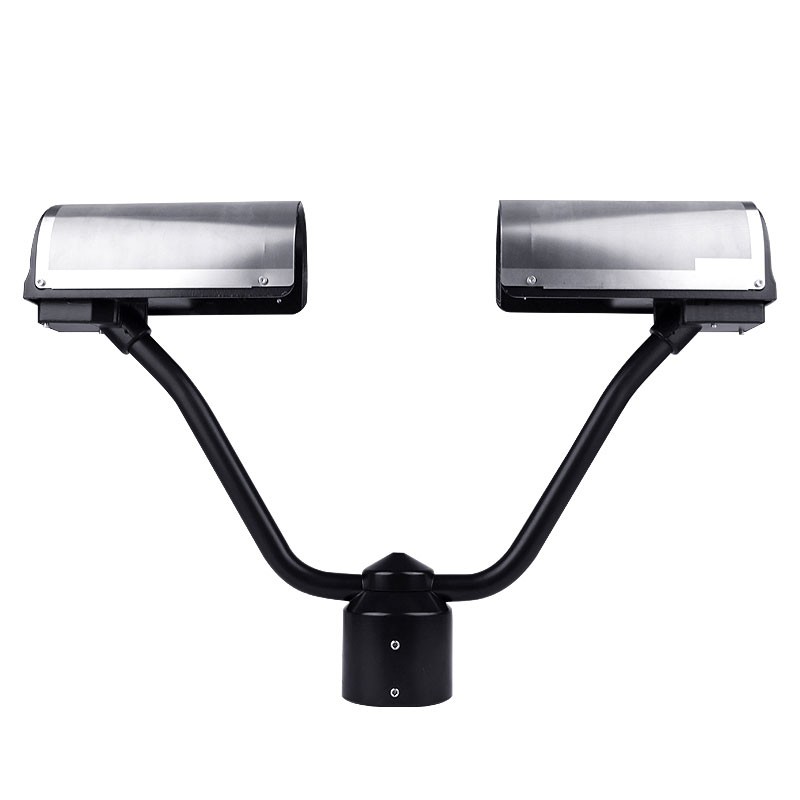
Model:FT-YD2
Brand:fengtu
1.Introduction to Precipitation Weather Phenomenon Instrument
Precipitation weather phenomenon instrument is a weather observation system used to estimate the intensity and amount of precipitation from an optical perspective.Precipitation weather phenomenon instrument is a sensor that automatically and continuously monitors precipitation particle spectrum and precipitation weather phenomenon types. Its working principle is to actively emit infrared light bands, calculate the spectral distribution of precipitation particle falling speed and size by measuring the changes in light energy received when precipitation particles pass through the light bands, and automatically identify and output precipitation weather phenomena based on the empirical model of precipitation particle spectrum.
2. Precipitation weather phenomenon instrument features
Precipitation weather phenomenon instrument adopts integrated design, compact size and easy installation; stable performance, accurate data and strong environmental adaptability; unique splash shields are covered on the transmitting and receiving ends to effectively prevent precipitation particles from splashing into the sampling area; professional application software is optional to receive instrument observation results and graphically display raindrop spectrum; calibration device is optional.
3. Application fields of Precipitation weather phenomenon instrument
It is suitable for scientific research institutes, artificial weather modification and other fields. It can effectively monitor precipitation types and provide early warning for disaster prevention and mitigation.
4. Precipitation weather phenomenon instrument technical parameters
| Physical specifications | ||
| Dimensions (length, width, height) | 660mm×450mm×120mm | |
| weight | ≤7kg | |
| Measuring performance | ||
| Measuring range | Particle size (liquid) | 0.2~5mm |
| Particle size (solid) | 0.2~25mm | |
| speed | 0.2~20m/s | |
| Measurement error | ±5% (liquid), ±20% (solid) | |
| Particle size distribution | 32 particle size levels, 32 speed levels | |
| Precipitation Type | Drizzle, rain, sleet, snow, hail, varying in intensity | |
| Precipitation type recognition accuracy | Automatic recognition rate is greater than 90% | |
| Precipitation intensity | 0~999 mm/h | |
| Weather Code (Output) | WMO4680 (default), optional WMO4677 or NWS | |
| Weather code output interval | 60s (default), 10s~60min adjustable | |
| Electrical properties | ||
| power supply | DC12~24V | |
| Power consumption | ≤4W@24V (not heated), ≤80W@24V (heated) | |
| Communication interface | RS232/RS485 | |
| Environmental adaptability | ||
| Operating temperature | -40~50℃ | |
| Operating humidity | 0~100%RH | |
| Storage temperature | -40~50℃ | |
| Storage humidity | 0~100%RH | |
| Protection level | IP65 | |
Automatic air quality monitoring stations are an important means of environmental monitoring. As the size of cities continues to grow, it has caused a certain degree of damage to the environment, so it is necessary to strengthen the construction of air quality monitoring systems. A grid-based monito...
Measuring rainfall is an important task in fields such as meteorological research, disaster early warning, hydrological monitoring, and agricultural management. Here are three common types of rain gauges.1. Radar Precipitation Sensor Rain Gauge DistrometerThe Radar Precipitation Sensor Rain Gauge Di...
A miniature weather monitoring station is a device for measuring, recording and transmitting meteorological data, which usually consists of multiple sensors that can measure a wide range of meteorological parameters such as temperature, humidity, barometric pressure, wind speed, wind direction, rain...
Most of the new energy research and development work is actually carried out in a relatively open environment, especially for wind and solar energy research and development, often due to the installation of the environment is very open caused by some important devices are easily affected by changes...


 Get a Free Quote

 Skype
 whatsapp
 mail