Shandong Fengtu IOT Technology Co., Ltd
Sales Manager:Ms. Emily Wang
Cel,Whatsapp,Wechat:+86 15898932201
Email:info@fengtutec.com
Add:No. 155 Optoelectronic Industry Accelerator, Gaoxin District, Weifang, Shandong, China


Sales Manager:Ms. Emily Wang
Cel,Whatsapp,Wechat:+86 15898932201
Email:info@fengtutec.com
Add:No. 155 Optoelectronic Industry Accelerator, Gaoxin District, Weifang, Shandong, China
time:2025-11-18 10:03:01 source:Weather Station viewed:473 time
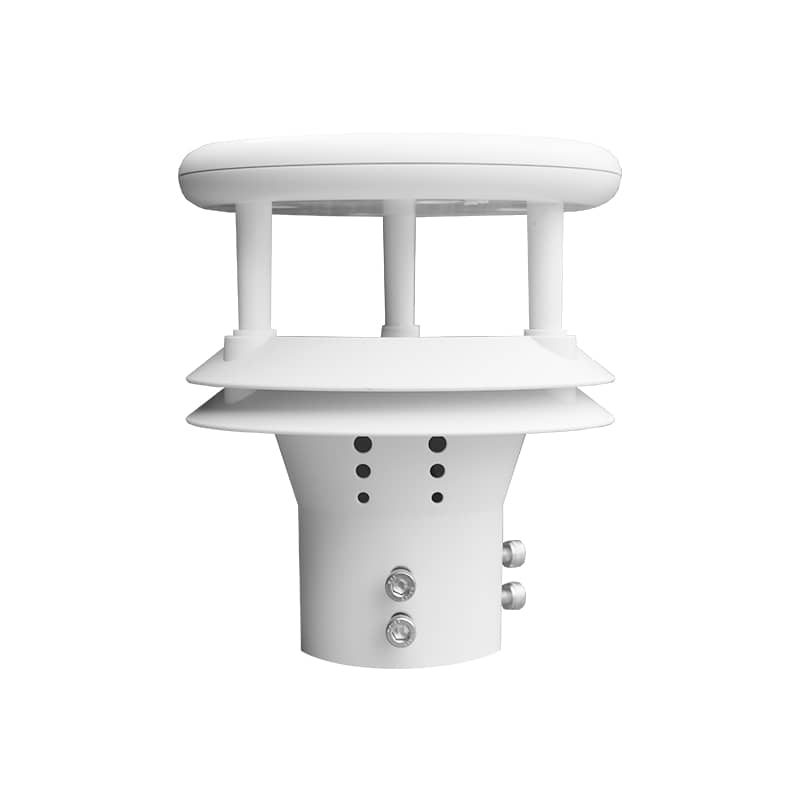
Ultrasonic Wind Speed Direction Sensor accurately captures wind direction changes, providing crucial data support for meteorology, agriculture, energy, and engineering construction.
Ultrasonic Wind Speed Direction Sensor, as the name suggests, is a device specifically designed to detect and measure wind direction. It typically has a unique shape, resembling a weather vane structure similar to an aircraft tail, and can sensitively respond to the effects of wind, converting its direction into a precise electrical signal. To cope with complex outdoor environments, high-quality Ultrasonic Wind Speed Direction Sensor devices often possess characteristics such as a wide wind measurement range, high structural strength, and strong corrosion resistance, ensuring stable operation even under harsh conditions such as strong winds, rain, snow, and salt spray. In practical applications, it is often paired with compact, portable, and easy-to-install anemometers to form a complete wind condition monitoring system, revealing the full picture of "wind."
So, in which specific scenarios is this ability to "sense wind direction" applied?
First, in the fields of meteorological observation and environmental assessment, it is the basic unit of a monitoring network. Weather stations across the country rely on it to provide real-time, continuous wind direction data, which is crucial for analyzing weather systems and predicting the diffusion paths of pollutants. When a toxic gas leak occurs, emergency response teams rely on wind direction data to quickly identify the affected area and organize effective evacuations.
Secondly, it plays a "decision advisor" role in wind energy utilization and engineering construction. During the wind farm site selection phase, long-term monitoring of wind patterns at candidate sites is necessary to determine the optimal arrangement and angle of wind turbines to maximize wind energy capture. Similarly, in constructing large-scale projects such as skyscrapers and cross-sea bridges, the impact of wind loads on structural safety must be assessed, and the measured data provided by Ultrasonic Wind Speed Direction Sensor becomes a crucial design basis.
Furthermore, precision agriculture increasingly relies on this technology. Wind direction is closely related to the spread of pests and diseases, temperature and humidity control, and the effectiveness of pesticide spraying. By monitoring wind direction in the fields, farmers can choose to work during windless or downwind periods, improving agricultural efficiency and reducing pollution to the surrounding environment.
Essentially, the use of Ultrasonic Wind Speed Direction Sensor transforms the invisible wind into quantifiable and analyzable data. It acts like nerve endings extending into the air, allowing us to "see" the direction of the wind. With the development of the Internet of Things and smart technologies, these seemingly simple devices are being connected through networks to form smarter systems, providing an increasingly solid data foundation for us to address climate change, optimize energy structures, and ensure production safety. In the exploration of harmonious coexistence between humanity and nature, accurately "catching the wind and recognizing the direction" has always been a crucial step.
Soil is key to plant growth, and its health directly affects the ability of plants to thrive. Due to natural and man-made factors, soil quality may deteriorate, affecting the environment in which plants can grow. Therefore, it is necessary to monitor soil indicators such as temperature, moisture and...
Small weather monitoring station, is an automated instrument in weather data collection, analysis and processing. It collects and stores and organizes physical quantities such as temperature and humidity in the atmosphere and then converts them into displayable graphics or text for managers to use....
The rainfall real-time monitoring system is widely used in hydrology, meteorology and flood control. It consists of rain gauge, data collector and computer. By analyzing and processing the rainfall information collected from the automatic monitoring stations, the rainfall value of each rainfall moni...
The establishment and utilization of the Tube Soil Moisture Station provides managers with a powerful tool to monitor and control soil moisture more effectively, promotes water-saving agriculture, and improves management techniques for agricultural production.Closely integrated with local agricultur...


 Skype
Skype
 whatsapp
 mail
mail