Shandong Fengtu IOT Technology Co., Ltd
Sales Manager:Ms. Emily Wang
Cel,Whatsapp,Wechat:+86 15898932201
Email:info@fengtutec.com
Add:No. 155 Optoelectronic Industry Accelerator, Gaoxin District, Weifang, Shandong, China


Sales Manager:Ms. Emily Wang
Cel,Whatsapp,Wechat:+86 15898932201
Email:info@fengtutec.com
Add:No. 155 Optoelectronic Industry Accelerator, Gaoxin District, Weifang, Shandong, China
time:2025-12-16 09:02:32 source:Weather Station viewed:499 time
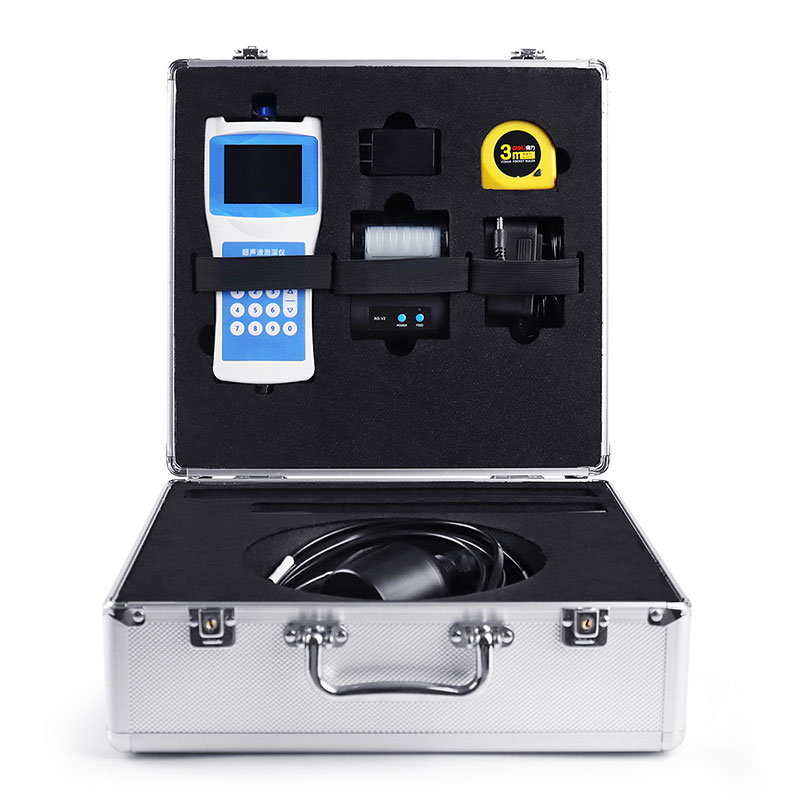
Depth Sounder is an electronic instrument that measures water depth using the principle of sound wave propagation in water. This device calculates the time interval between the transmission and reception of ultrasonic waves reflected from the seabed, and automatically converts this time interval into a water depth value based on the known speed of sound. Its core component is an underwater transducer, and it features portability and adjustable accuracy. It is widely used in professional fields such as hydrological surveys of rivers, lakes, and oceans, navigation, and underwater engineering measurements.
Depth Sounder is a professional electronic measuring device whose core function is to accurately determine the vertical distance from the water surface to the seabed, i.e., the water depth. The device's working principle is based on acoustic ranging technology. During operation, the instrument converts electrical energy into ultrasonic signals, which are transmitted to the seabed through a transducer installed on the hull or at a specific underwater location. Ultrasonic waves propagate in water at a relatively constant speed, and are reflected when they encounter the seabed, reefs, or other obstacles. Part of the sound wave signal is captured by the same transducer or a receiving transducer.
The instrument's internal timing circuit accurately records the time interval from the transmission of the ultrasonic wave to the reception of the echo. The average propagation speed of ultrasonic waves in clear water is approximately 1500 meters per second, and this speed fluctuates slightly with changes in water temperature, salinity, and pressure. Some high-precision devices have a sound speed calibration function. Based on the formula "water depth equals half the product of the speed of sound and the round-trip time," the data processing unit automatically calculates and displays the real-time water depth value. The measurement results are usually presented on the display screen in digital or graphical form and can be stored or transmitted externally.
A complete portable Depth Sounder system typically consists of a main display unit, an ultrasonic transducer probe, connecting cables, and a power supply unit. The main unit controls the measurement process, signal processing, and data display; the transducer is the core sensor for electro-acoustic signal conversion; the cables are used to transmit signals and power; and power can be supplied by a built-in battery or an external power source. The device is designed with waterproof, shockproof, and anti-interference features to adapt to the aquatic operating environment.
Depending on the measurement range and accuracy, Depth Sounder can be divided into various types to meet different application needs. Low-power single-frequency Depth Sounder is suitable for conventional water depth measurement and navigation obstacle avoidance in inland rivers, reservoirs, and nearshore areas. Dual-frequency Depth Sounder devices can simultaneously emit high and low-frequency sound waves. High frequencies are used to obtain detailed underwater topography, while low frequencies can penetrate water or soft sediments, making them suitable for geological exploration and underwater object detection. Additionally, there are surveying models with integrated positioning functions capable of generating contour maps.
In practical applications, Depth Sounder devices are indispensable tools for marine surveying, waterway dredging, reservoir capacity calculation, bridge and dock construction, underwater pipeline laying, and fisheries resource surveys. Their measurement data is crucial for ensuring navigation safety, conducting hydrological research, and guiding underwater engineering projects. When selecting equipment, users need to consider factors such as maximum depth range, measurement accuracy, sound wave frequency, data output interface, environmental adaptability, and portability to ensure the device meets the specific project requirements. Correct installation, proper operation, and regular calibration are fundamental to ensuring the long-term accuracy and reliability of Depth Sounder data.
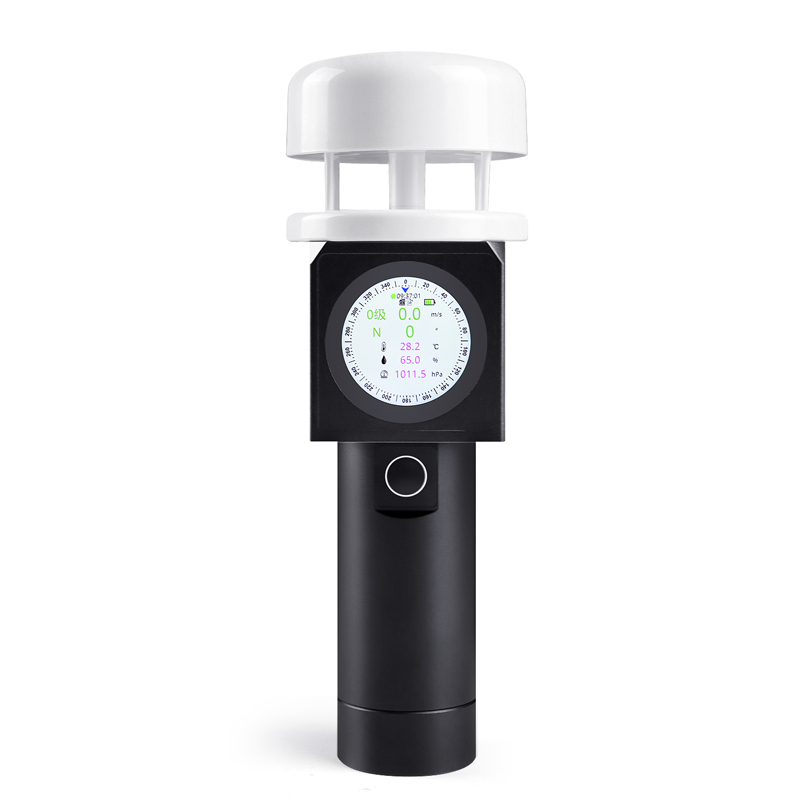
The weather station monitoring equipment is widely used in various fields that need weather monitoring, such as agriculture and hydrology. The equipment can monitor the rainfall near the ground, air temperature and humidity, wind speed and direction, air pressure, light radiation, carbon dioxide, so...
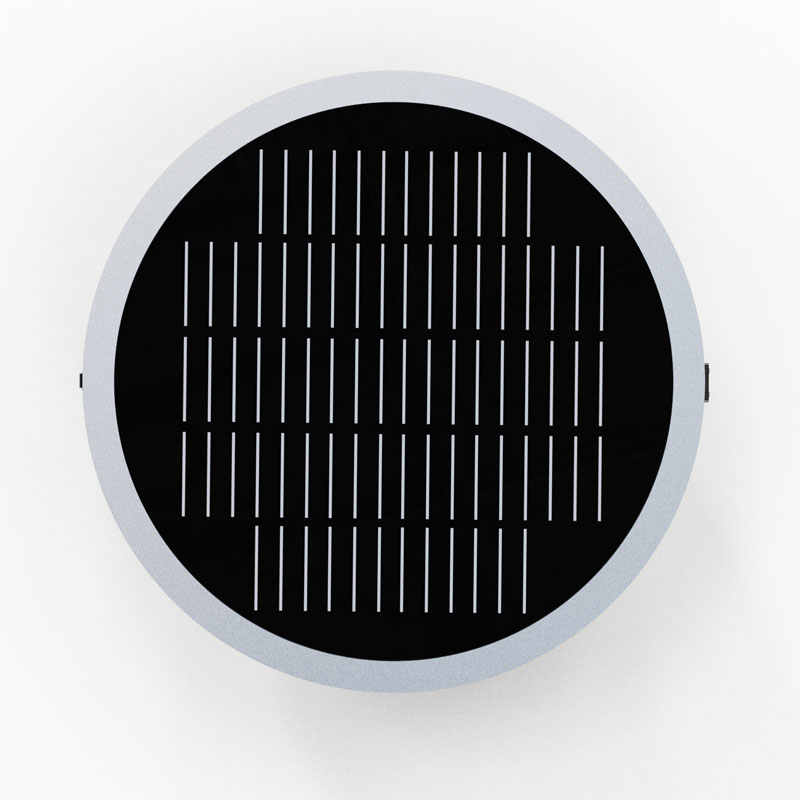
Photovoltaic weather stations are crucial for large-scale ground photovoltaic power stations. In terms of photovoltaic radiation monitoring, they can determine how much photovoltaic radiation is incident on the surface of photovoltaic modules, which is significant for assessing the potential for pow...
What does rain gauge Do is a meteorological instrument used to measure the amount of precipitation in a specific area over a specific time period, specifically rainfall....
What is a ducted air speed sensor?Firstly, let's understand why ducts need to measure wind speed. In many industrial and construction applications, ducts are commonly used to transport gases or liquids such as oil, gas, water, air and other chemicals. In these applications, the wind speed inside...


 Skype
Skype
 whatsapp
 mail
mail