Shandong Fengtu IOT Technology Co., Ltd
Sales Manager:Ms. Emily Wang
Cel,Whatsapp,Wechat:+86 15898932201
Email:info@fengtutec.com
Add:No. 155 Optoelectronic Industry Accelerator, Gaoxin District, Weifang, Shandong, China


Sales Manager:Ms. Emily Wang
Cel,Whatsapp,Wechat:+86 15898932201
Email:info@fengtutec.com
Add:No. 155 Optoelectronic Industry Accelerator, Gaoxin District, Weifang, Shandong, China
time:2026-03-19 09:50:15 source:Weather Station viewed:253 time
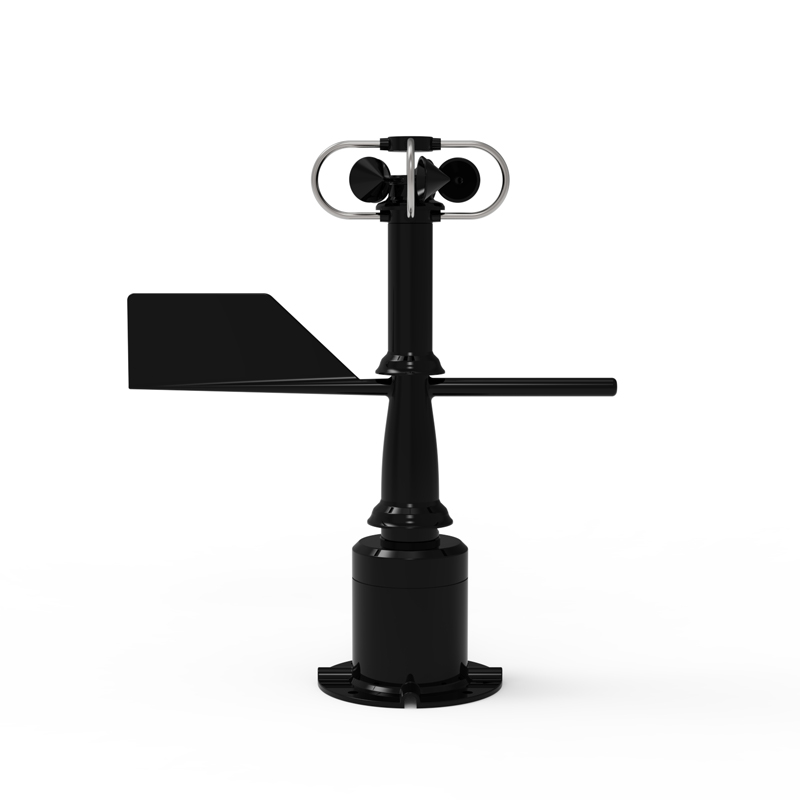
Mechanical anemometer employs a structural design featuring a rotating impeller and a wind direction vane, enabling the real-time monitoring of changes in wind speed and direction. It offers a wind speed measurement range of 0–60 m/s with an accuracy of ±0.2 m/s, and a wind direction accuracy of ±1°. Featuring an RS485 output interface, this device is well-suited for applications in meteorology, agriculture, environmental protection, and scientific research.
Mechanical anemometer is a measurement device based on the principles of fluid dynamics; it converts wind energy into measurable electrical signals through the physical motion of mechanical components. Its core assembly typically comprises a wind speed sensor—utilizing either wind cups or a propeller structure—and a wind direction sensor equipped with a vane. These components work in conjunction with precision mechanical transmission mechanisms and signal conversion modules to achieve accurate measurements of both wind speed and direction.
In terms of structural design, the wind speed sensor utilizes lightweight wind cups or blades; as the airflow drives their rotation, the rotational speed maintains a strong linear correlation with the actual wind speed. The wind direction sensor employs a tail fin or vane that pivots in response to changes in wind direction, utilizing an angular sensor to output the corresponding wind direction angle. All rotating components are fabricated from high-performance engineering plastics, characterized by their light weight, high structural strength, and corrosion resistance, ensuring stable and reliable long-term operation even in harsh environmental conditions.
Regarding performance specifications, the sensor features a wind speed measurement range of 0–60 m/s, a resolution of 0.01 m/s, and a maximum measurement error of ±0.2 m/s. The wind direction measurement range spans 0–360° with a resolution of 0.1°, maintaining an error margin within ±1°. The device boasts a low start-up wind speed threshold of just 0.5 m/s, demonstrating excellent responsiveness to light breezes. With a minimum data acquisition interval of 0.5 seconds, the sensor enables the real-time output of instantaneous wind speed, average wind speed, instantaneous wind force levels (on the 0–12 scale), and average wind force.
The sensor operates on a 12V DC power supply with a working current of only 55 mA, ensuring low power consumption. It features a standard RS485 communication interface, facilitating easy integration with data loggers, PLCs, or Remote Terminal Units (RTUs) to establish automated monitoring networks. Operating within a temperature range of -40°C to 70°C and capable of withstanding humidity levels of up to 100% (non-condensing), this device is ideally suited for continuous outdoor monitoring across a wide variety of climatic conditions.
In the field of meteorological monitoring, this sensor provides essential wind speed and direction data to weather stations, airports, ports, and similar facilities, thereby supporting weather forecasting and climate analysis. In agricultural applications, it serves to guide irrigation scheduling, pest and disease control, and greenhouse ventilation management. In environmental monitoring, it is utilized to assess atmospheric dispersion capabilities and track pollutant transport pathways. Furthermore, research institutions leverage its high-precision data to conduct studies ranging from wind energy resource assessments to boundary-layer meteorology.
Mechanical anemometer continues to hold a prominent position among various non-contact measurement technologies, distinguished by its simple structure, high reliability, and ease of maintenance. Its direct measurement principle ensures the authenticity and traceability of the data; when integrated with modern data acquisition and transmission technologies, it is capable of meeting diverse requirements—ranging from single-point observations to large-scale networked monitoring systems.
Agricultural productivity is closely linked to meteorological conditions, making the monitoring of climatic conditions on farmland particularly critical. However, although full-featured agro-meteorological monitoring stations can provide comprehensive monitoring data, they are often inconvenient in...
As a new type of radar level meter, frequency modulation radar level meter has increased the frequency modulation function compared with general radar level meter, and is currently more used in the market. Suitable for environments in pools, tanks and other occasions.Principle of frequency modulatio...
The water regime monitoring system is applied to the water conservancy management department to remotely monitor the water level and rainfall of the reservoir and collect real-time data, and provide accurate, timely and automatic on-site monitoring information to ensure the safe operation and manage...
A visibility detector is a device used to measure atmospheric visibility. It helps meteorologists, traffic controllers, pilots, and others to understand the current visibility conditions in the atmosphere so that they can make decisions accordingly.In meteorology, visibility is a key concept that de...


 Skype
Skype
 whatsapp
 mail
mail