Shandong Fengtu IOT Technology Co., Ltd
Sales Manager:Ms. Emily Wang
Cel,Whatsapp,Wechat:+86 15898932201
Email:info@fengtutec.com
Add:No. 155 Optoelectronic Industry Accelerator, Gaoxin District, Weifang, Shandong, China


Sales Manager:Ms. Emily Wang
Cel,Whatsapp,Wechat:+86 15898932201
Email:info@fengtutec.com
Add:No. 155 Optoelectronic Industry Accelerator, Gaoxin District, Weifang, Shandong, China
time:2024-04-22 08:52:46 source:Weather Station viewed:1036 time
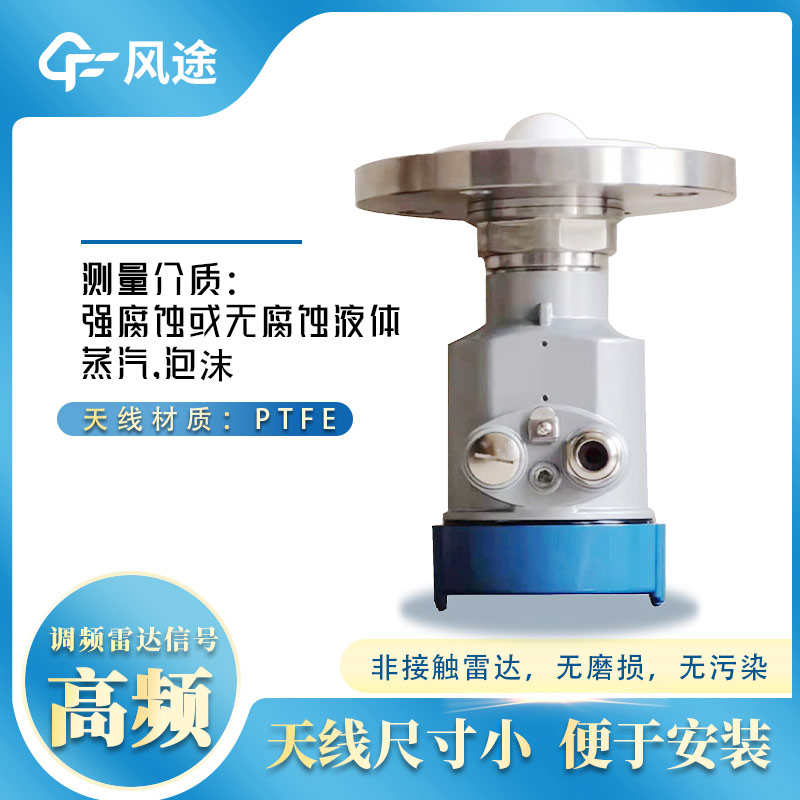
Radar level meter is a kind of liquid level measurement device using radar technology, which has the following main features:
Non-contact measurement: no need to touch the liquid, suitable for dirty or corrosive liquids.
Wide measurement range: suitable for liquid level heights from a few centimetres to tens of metres.
High accuracy: the measurement accuracy can reach millimetre level, which can accurately detect small changes in liquid level.
Wide applicability: it can be used to measure a variety of liquids such as water, oil, acid and alkali liquids.
Anti-interference: not affected by environmental factors such as temperature and humidity.
Fast response: it can provide liquid level change data quickly.
Easy to install and operate: easy to install and operate.
Self-diagnostic: with fault alarm and self-diagnostic function, easy to maintain.
Widely applicable: can be used in a variety of tank shapes and media, including liquids, particles, slurries and so on.
Radar level meter and guided wave radar level meter are two common liquid level measurement devices, they have some main differences in design and application:
Contact mode: radar level meter adopts non-contact measurement, which is suitable for use in environments with high food grade requirements, as it does not directly contact the liquid to avoid contamination. While the guided wave radar level meter is contact type, it needs to be measured through the guided wave rod in contact with the liquid.
Applicable media: guided-wave radar level gauge in the design of the medium needs to be considered corrosive and adhesion, suitable for media with low dielectric constant, because of its wave propagation along the waveguide rod waveform signal is more stable. Radar level meter is relatively loose on the requirements of the medium.
Selection flexibility: radar level gauge does not depend on the waveguide rod, so it can be more flexible interchangeable use. The guided wave radar level meter has a fixed length of wave guide rod, which needs to be customised according to the specific working conditions when selecting the type.
Measuring range: Radar level gauges are usually suitable for larger measuring ranges, such as tanks of 30-60 metres. Guided wave radar level gauge is generally used for shorter measuring distance due to the force limitation of guided wave rod, but under specific working conditions, such as tank agitation or medium fluctuation, guided wave radar can provide more stable measurement results.
Device style: Radar level meters are usually in the shape of a flare, while guided wave radar level meters have the obvious characteristics of a guided wave rod.
Small and medium-sized river hydrological monitoring system is an automated device that can measure water level, flow, rainfall and other data in real time. Its a tool for the water conservancy industry. It provides remote monitoring function, and no manual intervention is required, which greatly av...
Ultrasonic wind speed and direction sensors work by measuring the difference in propagation time of ultrasonic waves in different directions to determine wind speed and direction. Specifically:Ultrasonic waves have different propagation times in the downwind and upwind directions. When the wind is b...
With the rapid improvement of China's industrial level, the proportion of petroleum and by-products in industrial production is increasing, and the construction of reserve oil depots in China is becoming more and more intensive, putting forward higher requirements for the performance of oil tank...
As the air quality problem becomes increasingly serious, real-time monitoring of air quality is particularly important. By building micro-monitoring stations, we can achieve real-time monitoring of air quality and timely detection of sources of pollution in the atmosphere. The application of this te...



 Skype
Skype
 whatsapp
 mail
mail