Shandong Fengtu IOT Technology Co., Ltd
Sales Manager:Ms. Emily Wang
Cel,Whatsapp,Wechat:+86 15898932201
Email:info@fengtutec.com
Add:No. 155 Optoelectronic Industry Accelerator, Gaoxin District, Weifang, Shandong, China


Sales Manager:Ms. Emily Wang
Cel,Whatsapp,Wechat:+86 15898932201
Email:info@fengtutec.com
Add:No. 155 Optoelectronic Industry Accelerator, Gaoxin District, Weifang, Shandong, China
time:2026-02-25 09:32:38 source:Weather Station viewed:354 time
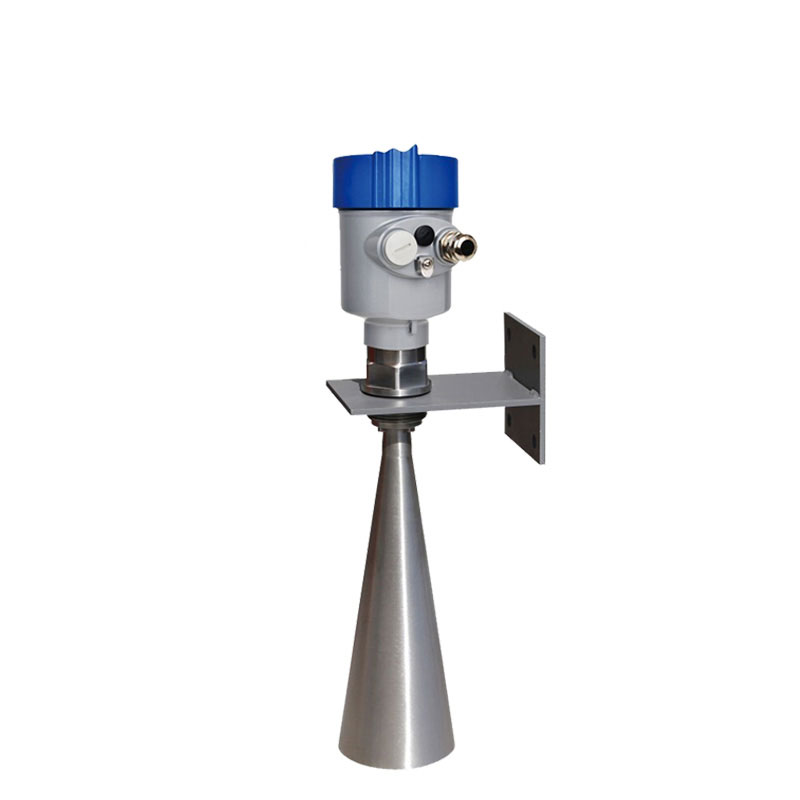
Radar Level Gaugeis an industrial instrument that utilizes the microwave echo ranging principle to achieve non-contact continuous liquid level measurement. It is widely used in industries such as petrochemicals, chemicals, and power, and supports two-wire and four-wire applications.
As a key level measurement instrument in industrial automation, theRadar Level Gaugecalculates the distance by emitting high-frequency microwaves and receiving reflected signals from the liquid surface, enabling non-contact continuous measurement of the liquid level of various media. Based on the time-of-flight principle, microwaves propagate at the speed of light. By calculating the time difference between the emitted and reflected waves, combined with a built-in microprocessor and intelligent echo processing software, it can accurately identify the true liquid level echo and eliminate false signals caused by interference within the tank, achieving measurement accuracy down to the millimeter level. ModernRadar Level Gaugeinstruments employ high-frequency microwave technology, such as the 26GHz or 80GHz band, featuring a small beam angle, concentrated energy, and strong anti-interference capabilities, enabling them to adapt to complex working conditions with large temperature and pressure variations and the presence of steam or dust.
In terms of technical specifications, theRadar Level Gaugeproduct series is comprehensive, supporting both two-wire and four-wire wiring methods. The two-wire system uses the same cable for power supply and signal transmission, resulting in a simple structure and low power consumption; the four-wire system separates power supply and signal transmission, suitable for applications with higher power consumption requirements. The maximum measurement range is up to 120 meters, with a blind zone reduced to 8 centimeters. The standard measurement range is 0.05 meters to 35 meters, meeting measurement needs from small storage tanks to large warehouses. The measurement media are suitable for various types, including water, acidic and alkaline liquids, oils, and slurries. For highly corrosive, high-viscosity, or toxic media, the non-contact measurement method offers significant advantages, preventing sensor corrosion or adhesion. Some models support HART communication protocol and RS485 digital output, facilitating integration into distributed control systems (DCS) or safety instrumented systems (SIS).
TheRadar Level Gaugeoperating principle is mainly divided into two types: pulse radar and frequency modulated continuous wave (FMCW) radar. Pulse radar achieves ranging by emitting narrow pulses and measuring the time difference, a mature and reliable technology. FMCW radar, on the other hand, calculates distance by emitting a continuous wave with linearly varying frequency and measuring the frequency difference between the transmitted signal and the echo, offering higher measurement accuracy and resolution, making it suitable for metrology and trade transactions. Modern FMCW radars employ digital direct frequency synthesis (DDS) technology to generate high-linearity frequency-modulated signals, combined with high-precision spectrum estimation algorithms, achieving a measurement accuracy of ±1 mm within a 20-meter range.
In industry applications, FMCW radars are widely used in petrochemical, chemical, power, metallurgical, water treatment, and food and beverage industries. In the petrochemical industry, they are used for level monitoring in crude oil storage tanks, refined oil storage tanks, reaction tanks, and separators, penetrating oil and gas evaporation layers and foam interference to achieve stable measurements. In the power industry, FMCW radars are used in limestone slurry tanks, water storage ponds, and fuel storage tanks in desulfurization systems, maintaining reliable operation in high-dust and high-vibration environments. In fine chemical production, the non-contact characteristics ofRadar Level Gaugeavoid the frequent corrosion failures of traditional instruments for level measurement of highly corrosive media such as sulfuric acid and nitric acid, improving production continuity and safety. In the food and beverage industry, the hygienicRadar Level Gaugemeets food-grade standards and is used for precise ingredient dispensing and inventory management in syrup and beverage storage tanks. Furthermore, some models have obtained Ex ia IIC T6 explosion-proof certification and IP68 protection rating, allowing installation in explosion-proof areas and harsh outdoor environments.
With the development of the Industrial Internet of Things and intelligent manufacturing, modernRadar Level Gaugeintegrates self-diagnostic functions such as heartbeat technology, supports online calibration and abnormal operating condition identification, and can remotely transmit level data to a monitoring platform for predictive maintenance and intelligent management. High frequency and intelligence are the main directions of current technological iteration. 80GHz millimeter-wave radar, with its smaller antenna size, narrower beam angle, and stronger penetration capability, performs better when dealing with low dielectric constant media and complex tank structures. Overall,Radar Level Gaugehas become one of the core instruments for liquid level measurement in industrial production due to its high precision, high reliability and wide adaptability to various working conditions.
Dissolved oxygen sensor operates based on the principle of fluorescence quenching, enabling precise detection of dissolved oxygen concentrations. It supports multi-dimensional compensation for temperature, pressure, and salinity, offering high precision and low power consumption, making it suitable...
automatic weather station price can range from a few thousand dollars to $20,000, usually in the low thousands....
An automatic rain gauge is a water situation monitoring system that measures, records, and automatically reports various rainfall information. It consists of an optical rain gauge, a data logger, and other components. It can wirelessly transmit rainfall data remotely to a monitoring platform,...
Deploying field intelligent meteorological observation stations in agricultural areas to build a meteorological monitoring network covering the entire region and accurate to the kilometre level allows for continuous intelligent monitoring of soil moisture and climatic conditions. By analysing the ke...


 Skype
Skype
 whatsapp
 mail
mail