Shandong Fengtu IOT Technology Co., Ltd
Sales Manager:Ms. Emily Wang
Cel,Whatsapp,Wechat:+86 15898932201
Email:info@fengtutec.com
Add:No. 155 Optoelectronic Industry Accelerator, Gaoxin District, Weifang, Shandong, China


Sales Manager:Ms. Emily Wang
Cel,Whatsapp,Wechat:+86 15898932201
Email:info@fengtutec.com
Add:No. 155 Optoelectronic Industry Accelerator, Gaoxin District, Weifang, Shandong, China
time:2023-05-30 15:13:37 source:Weather Station viewed:1319 time
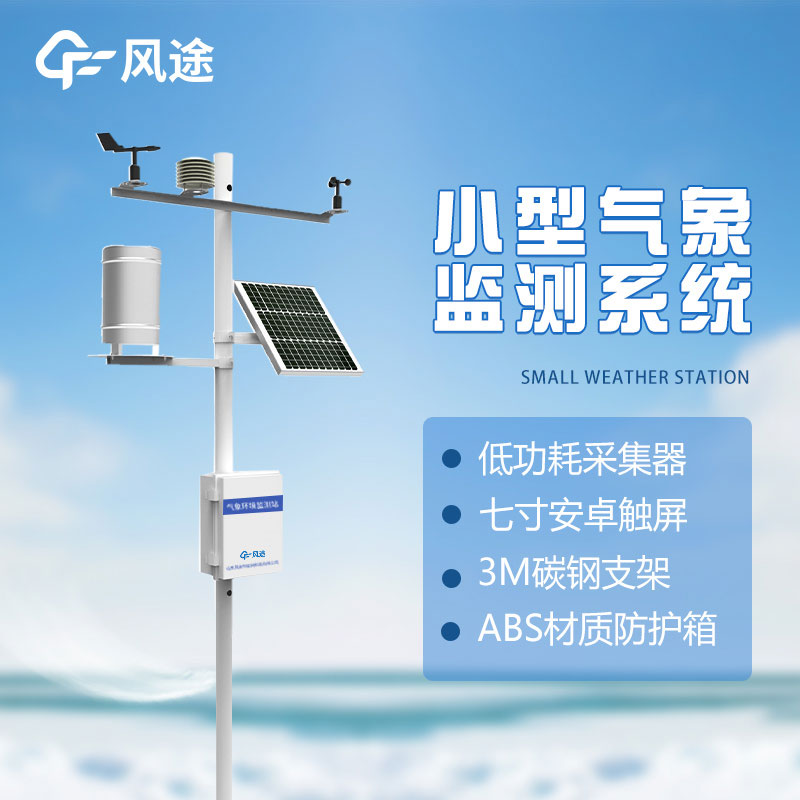
Meteorological monitoring systems play a vital role in our lives. It collects, analyses, processes and transmits large amounts of meteorological data in real time, providing critical information and decision support to the public, government and businesses. The following are the main roles of a weather monitoring system:
1. Provide weather forecasts: A weather monitoring system provides real-time access to weather data from around the world, including temperature, humidity, rainfall, wind speed, etc. By analysing this data, the meteorological department can accurately predict weather conditions for the coming days, weeks or even months, providing the public with accurate weather forecasts.
2. Support agricultural production: Weather monitoring systems provide key information for agricultural production, such as temperature, precipitation and wind speed. Farmers can use this information to adjust crop planting times, irrigation schemes and measures against pests and diseases to achieve good harvests and reduce losses.
3. Protecting natural resources: A weather monitoring system can help people better understand and respond to climate change. It can provide data on global climate change to help governments formulate appropriate policies to reduce the impact of natural disasters on the ecosystem and human society.
4. Ensure public safety: Weather monitoring systems can provide government departments with early warning information on disasters such as floods, typhoons and rainstorms, helping the public to take emergency measures to avoid and mitigate the damage caused by disasters.
5. Support traffic management: Weather monitoring systems provide reliable data support for transportation by monitoring weather conditions such as road temperature and humidity in real time. This helps transport authorities to adjust traffic signals, road planning and vehicle routing to improve road safety and operational efficiency.
6. Promote tourism: Weather monitoring systems can provide accurate weather information for the tourism industry and help tourists to rationalise their travel activities. For example, tourists can choose the right time to visit a scenic spot based on the weather forecast, avoiding weather-related disruptions to their tourist experience.
7. Support energy management: By monitoring weather conditions, weather monitoring systems help the energy sector to adjust energy production and consumption strategies, reduce energy consumption and reduce environmental pollution. For example, wind farms can use weather monitoring systems to understand wind conditions in real time in order to optimise their operational strategies.
8. Support scientific research: Weather monitoring systems provide rich meteorological data for scientific research, enabling researchers to grasp changes in meteorological phenomena and their causes more quickly and thus better serve scientific research.
The price of a wind speed sensor is greatly affected by the product type and functional configuration. The FT series offers various models with prices ranging from 600 to 18,000 yuan. Users can choose the appropriate equipment based on their monitoring scenario and output signal requirements....
A tunnel visibility sensor is a device used to measure visibility data in tunnels and is one of the main tools used to monitor and improve traffic safety in road tunnels.Tunnel visibility sensors measure visibility in the air primarily through the use of a laser beam. By measuring the scattering and...
In numerous fields such as meteorological observation, aerospace, and environmental monitoring, measuring wind speed and direction is of extremely great significance. Wind speed and direction data are essential for improving the accuracy of weather forecasts. They can assist meteorological departmen...
the best anemometers in the world is a handheld and portable anemometer used to accurately measure wind speed....


 Skype
Skype
 whatsapp
 mail
mail