Shandong Fengtu IOT Technology Co., Ltd
Sales Manager:Ms. Emily Wang
Cel,Whatsapp,Wechat:+86 15898932201
Email:info@fengtutec.com
Add:No. 155 Optoelectronic Industry Accelerator, Gaoxin District, Weifang, Shandong, China


Sales Manager:Ms. Emily Wang
Cel,Whatsapp,Wechat:+86 15898932201
Email:info@fengtutec.com
Add:No. 155 Optoelectronic Industry Accelerator, Gaoxin District, Weifang, Shandong, China
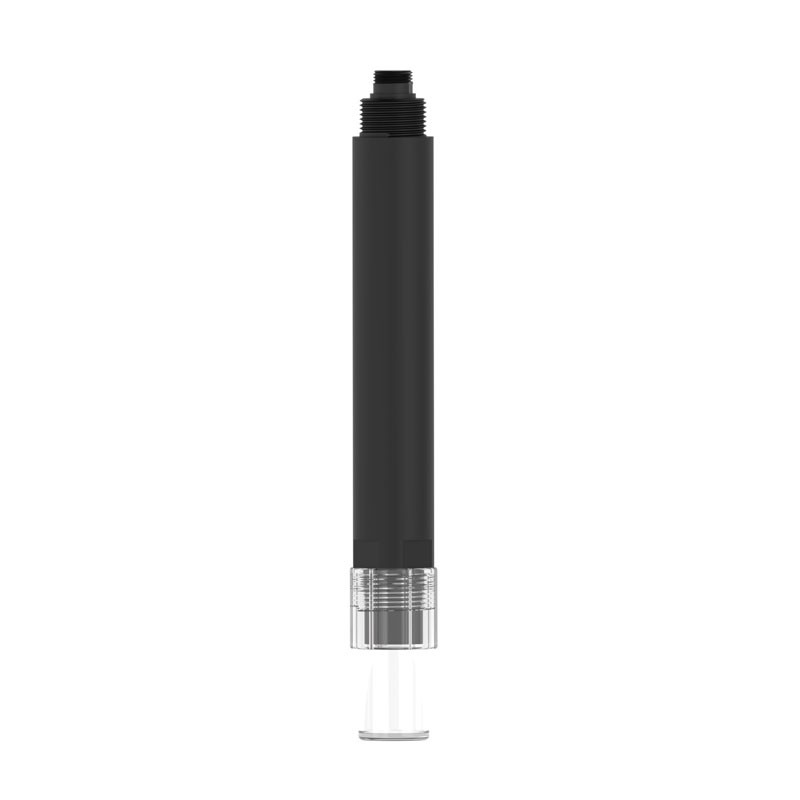
Model:FT-S2
Brand:fengtu
1、Water Hardness Meter Product Overview
Water Hardness Meter converts the hardness value into an electrical output by measuring the concentration of calcium and magnesium ions in the water.Designed for environmental water quality monitoring and the testing of water samples with varying ionic strengths (high or low), this product meets the requirements for online water hardness measurement in most industrial and environmental applications.
Water Hardness Meter employs an indirect measurement method based on conductivity; it measures the conductivity of the water sample and converts this reading into a water hardness value (expressed as calcium ions) based on a pre-calibrated correlation between conductivity and water hardness.
2、Water Hardness Meter Product Features
Signal output: RS485 (MODBUS-RTU).
Internal signal isolation technology ensures strong interference immunity.
Excellent reproducibility and thermal stability; low drift; compact size; fast response time.
Easy installation: 3/4" NPT pipe thread facilitates submersion or mounting on pipelines and tanks.
Stable performance and long service life.
IP68 waterproof rating.
3、Water Hardness Meter Technical Specifications
| Measurement Principle | Contact Electrode Indirect Measurement Method (Conductivity Calibration to Water Hardness) |
| Signaling method | RS485 (MODBUS-RTU) |
| Water hardness measurement range | 0~1000mg/L (as Ca) |
| Water hardness resolution | 0.1mg/L |
| Measurement accuracy | ±10% (water hardness); ±0.1°C (temperature) |
| Response time | Approx. 30s (98% static liquid) |
| Casing material | ABS |
| Cable length | Standard 5 meters |
| Supply voltage | 12-24VDC (0.4W@12V) |
| Measurement Environment | Temperature 0~50℃ (non-freezing), <0.2MPa |
| Waterproof rating | IP68 |
| Installation Method | In-line installation, NPT3/4 thread |
4、Water Hardness Meter Maintenance and Care
1. Usage and Maintenance
Standard electrodes require periodic cleaning and calibration; the maintenance interval should be determined by the customer based on specific operating conditions. Cleaning method for standard electrodes: Use a soft-bristled brush to remove any deposits (taking care to avoid scratching the electrode surface), rinse with distilled water, and then proceed with calibration.
Note: Ensure the sensor's aviation connector is securely tightened.
2. Sensor Calibration
a) Zero-point Calibration
Place the sensor into a water hardness standard solution with known parameters (0–100 mg/L), ensuring the solution covers one-third of the sensor. Wait 3–5 minutes for the water hardness reading to stabilize. Then, write the actual solution value to address 0x00010 (zero-point calibration) in accordance with the communication protocol data format to complete the zero-point calibration.
b) Slope Calibration
Place the sensor into a water hardness standard solution with known parameters (100–1000 mg/L), ensuring the solution covers one-third of the sensor. Wait 3–5 minutes for the water hardness reading to stabilize. Then, write the actual solution value to address 0x00011 (slope calibration) in accordance with the communication protocol data format to complete the slope calibration.
c) Temperature Zero-point Calibration
Place the sensor into a solution of known temperature and wait 3–5 minutes for the temperature reading to stabilize. Then, write the current temperature (multiplied by 10) to address 0x000F (temperature zero-point calibration) in accordance with the communication protocol data format to complete the calibration; the temperature offset value can be determined by reading address 0x000F.
Soil moisture monitoring system can continuously monitor soil moisture for a long time. Users can install soil moisture sensors at different locations and depths according to their needs. The system also supports the addition of other sensors for measuring soil temperature, conductivity, pH, as well...
air pollution sensor tracks all key pollution markers such as particulate matter (PM2.5, PM10), carbon monoxide, sulfur dioxide, nitrogen dioxide, ozone and other gases....
The FT - GSZ04 Water Supply Quality Station is a Water Quality Monitoring Station Secondary Water that integrates Internet of Things technology, combining functions such as sensor data collection, data display, and analysis. The system consists of multiple units including steady - flow exhaust, anal...
During the crop growing season, crops are on the verge of extinction due to a drop in temperature, known as a low-temperature disaster. When low temperature disaster occurs, it is usually manifested by low temperature, insufficient sunshine and rainy weather. Low temperature disaster and frost disas...


 Get a Free Quote
 Skype
Skype
 whatsapp
 mail
mail