Shandong Fengtu IOT Technology Co., Ltd
Sales Manager:Ms. Emily Wang
Cel,Whatsapp,Wechat:+86 15898932201
Email:info@fengtutec.com
Add:No. 155 Optoelectronic Industry Accelerator, Gaoxin District, Weifang, Shandong, China


Sales Manager:Ms. Emily Wang
Cel,Whatsapp,Wechat:+86 15898932201
Email:info@fengtutec.com
Add:No. 155 Optoelectronic Industry Accelerator, Gaoxin District, Weifang, Shandong, China
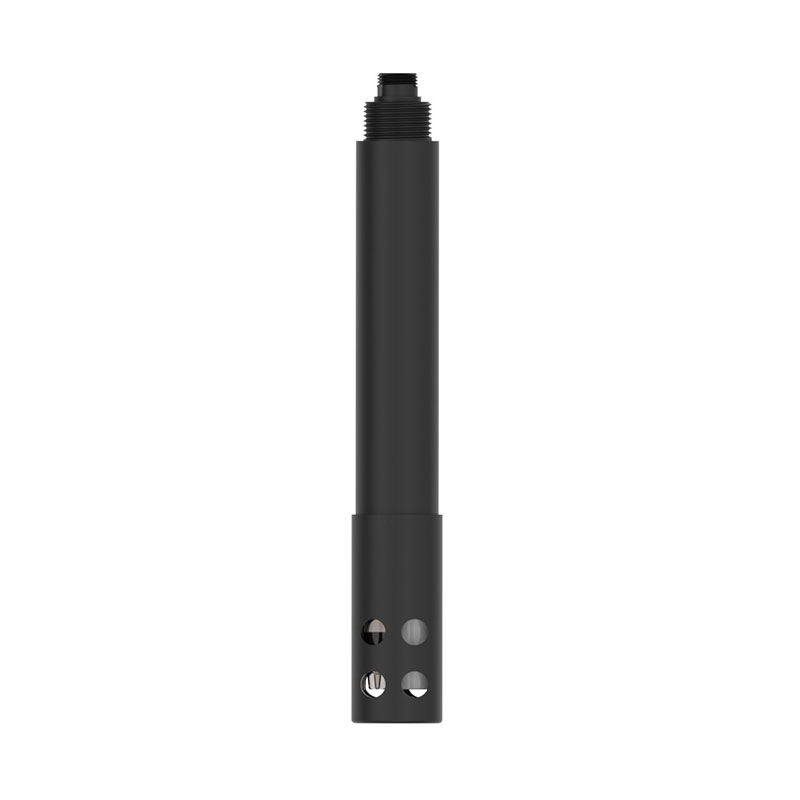
Model:FT-S14
Brand:fengtu
1. Chloride Ion Sensor Application Environment Description
Chloride Ion Sensor calculates the concentration of chloride ions by measuring the current generated by the REDOX reaction of chloride ions on the inductive electrode.The S14 Chloride Ion Sensor uses an ion-selective electrode to test free chloride ions in water. It is fast, simple and economical, and can meet the measurement requirements of chloride ions in most industrial environments.
Signal output: RS-485 (MODBUS-RTU)
2. Technical Parameters of Chloride Ion Sensor
| Measuring principle | Ion selection method |
| Output method | RS-485 (MODBUS-RTU) |
| Range | 0-3500.0mg/L |
| Resolution | 0.1mg/L |
| Accuracy | ±5%; ±0.3℃ |
| Shell material | ABS |
| Cable length | 5m |
| Supply voltage | DC12-24V(0.4W@12V) |
| Calibration method | Two-point calibration |
| Measurement environment | 0-50℃(no freezing) |
| Waterproof grade | IP68 |
| Installation | Immersion installation, NPT3/4 thread |
3. Chloride Ion Sensor Maintenance and Care
In order to obtain the most stable results, it is recommended to immerse the ion selective electrode in a standard solution (usually 100ppm) for 10-15 minutes before measurement until the reading is stable.
In order to obtain high-precision results, it is recommended to repeat these steps: remove the electrode from the standard solution, rinse, blot dry, and then immerse in the standard solution (immerse for at least 2 minutes to obtain a stable reading) to ensure that the electrode is properly rinsed and pre-conditioned.
When the electrode is used for the first time or after long-term storage, it needs to be soaked in the standard solution overnight or even 48 hours to get a stable reading. After pretreatment, spray the electrode with deionized water and carefully dry it with absorbent paper instead of wiping it dry.
When the sensor is not in use, place it vertically and do not place it horizontally for a long time.
When the sensor is not used for a long time, the electrodes should be kept dry.
Automatic rainfall monitoring station itself is a means to monitor rainfall, water level and other parameters. It can provide timely information on rainfall, water level, etc. in the rainy season, which is beneficial to the people to protect their lives and properties from losses. With strong anti-i...
In the fields of atmospheric and tunnel environment detection, every data point is crucial for ensuring safety and the accuracy of decision - making. The FT - FT - SGT1 portable light transmittance detector emerges as your reliable detection partner.Operationally, the FT - SGT1 detector is extremely...
gas sensors are devices that detect the presence of various gases, detect a particular gas and measure whether that gas is present near the sensor or its amount in the air....
The integrated rainfall monitoring station is a new type of equipment for real-time monitoring and analysis of precipitation in the region. The equipment adopts different types of rain sensors to automatically collect rainfall data and transmit them to the monitoring center through the network. As a...


 Get a Free Quote
 Skype
Skype
 whatsapp
 mail
mail