Shandong Fengtu IOT Technology Co., Ltd
Sales Manager:Ms. Emily Wang
Cel,Whatsapp,Wechat:+86 15898932201
Email:info@fengtutec.com
Add:No. 155 Optoelectronic Industry Accelerator, Gaoxin District, Weifang, Shandong, China


Sales Manager:Ms. Emily Wang
Cel,Whatsapp,Wechat:+86 15898932201
Email:info@fengtutec.com
Add:No. 155 Optoelectronic Industry Accelerator, Gaoxin District, Weifang, Shandong, China

Model:FT-S4
Brand:fengtu
1. Residual Chlorine Sensor Application Environment Description
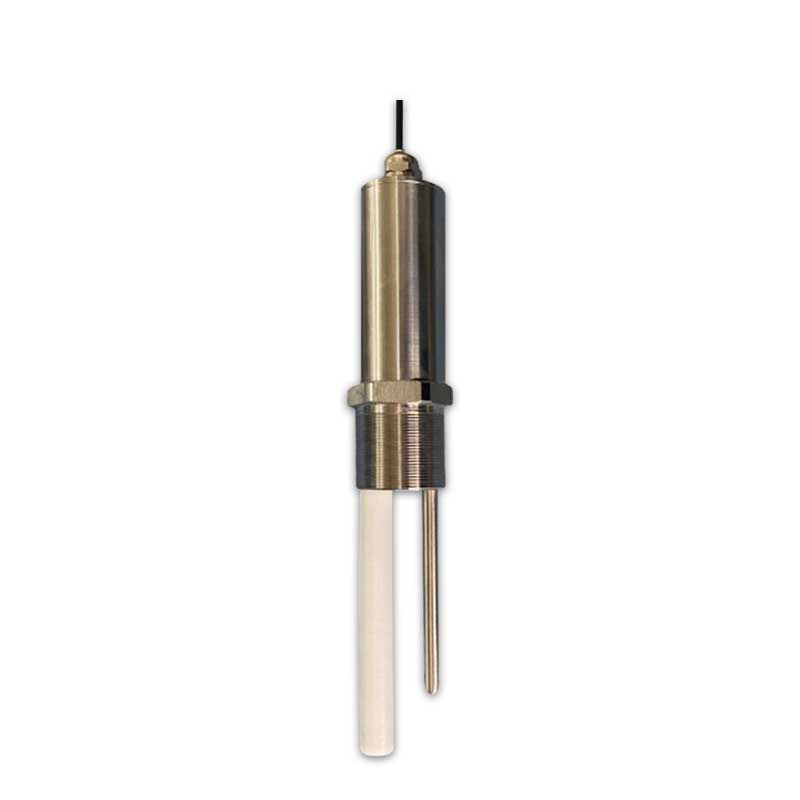
Residual Chlorine Sensor is based on industrial online residual chlorine electrode, built-in temperature sensor, integrated structure easy to install, and automatic temperature compensation.Residual Chlorine Sensor is used in drinking water treatment plants, bottling plants, drinking water distribution networks, swimming pools, cooling water circulation, water quality treatment projects and other places where the residual chlorine content in aqueous solutions needs to be continuously monitored.
2. Technical Parameters of Residual Chlorine Sensor
| pH Sensor | ||
| Range and resolution | 0~14(PH) | 0.01 |
| Accuracy | ±0.1PH; ±0.3℃ | |
| Residual Chlorine Sensor | ||
| Range and resolution | 0~5.00 mg/L | 0.01 |
| Accuracy | ±5% of reading; ±0.3℃ | |
| Communication | RS485(MODBUS-RTU) | |
| Shell material | ABS | |
| Temperature compensation | Automatic temperature compensation | |
| pH compensation | Automatic pH compensation | |
| Cable length | Standard 5 meters | |
| Supply voltage | 12-24VDC (0.3W@12V) | |
| Waterproof grade | IP68 | |
| Installation | Flow cell installation, 3/4NPT | |
3. Electrical connection of Residual Chlorine Sensor
1. Installation
Use the matching flow cell for installation. The sensor and the flow cell should be installed tightly. Make sure that the measuring part of the sensor is placed near the water inlet of the flow cell and not facing the water outlet as much as possible. Ensure a stable flow rate. It is recommended that the flow rate be controlled at 30-60L/h to ensure the accuracy of the test.
2. Electrical connection
The cable is a 4-core twisted pair shielded cable, and the line sequence definition is:
Red line - power line (12 ~ 24VDC)
Black wire - ground wire (GND)
Blue line—485A
Green Line—485B
Note: The cable color may vary slightly due to different production batches. Please refer to the cable silk screen for specific details.
The wiring sequence should be carefully checked before powering on to avoid unnecessary losses due to wiring errors.
4. Maintenance and care
1.PH electrode
When using for the first time or after a long period of non-use, the sensitive bulb and reference liquid junction should be immersed in 3.3mol/L KCI solution for more than 2 hours. When using, they should be washed with deionized water (or distilled water) and wiped dry to prevent impurities from entering the measured liquid.
The wiring terminal part should be kept clean and dry. The sensor should be cleaned when not in use and inserted into a protective cover filled with 3.3 mol/L KCI solution, or the sensor should be inserted into a container filled with 3.3 mol/L KCI solution.
Check whether the wiring terminals are dry. If there are stains, wipe them with anhydrous alcohol and continue to use them after they are dry. The sensor should avoid being immersed in deionized water, protein solution, strong acid and alkali solution, and acidic fluoride solution for a long time, and prevent contact with silicone grease. The glass membrane of the sensor that has been used for a long time may become translucent or have sediment. At this time, it can be washed with dilute hydrochloric acid and rinsed with water.
When the sensor has been used for a long time and measurement errors occur, it can be calibrated and corrected by using the instrument. If the sensor cannot be calibrated and measured after the above maintenance and care, it means that the sensor has failed. Please replace the sensor.
2. Residual chlorine electrode
New electrodes and electrodes that have been stored for a long time need to be activated before use. Place the sensor in tap water and let it stand for 24 hours. If the returned value is inaccurate, you need to do the following:
Zero and slope calibration of the sensor
Return to factory for inspection
GNSS sensor is a device used to receive and process global navigation satellite system signals. This device enables precise positioning and is widely used in geological disaster monitoring, building safety assessment, and transportation management, playing a crucial role in fields such as aviation and surveying....
This is a full-color screen, highly intelligent negative oxygen ion monitoring station developed by Windway Technology on the basis of the old model, based on previous R&D experience! Interested, you can contact the customer for consultation! Next, let's see what features the device has!FT-F...
The safety of reservoir dams is crucial to the lives and property of people in downstream areas, making it essential to establish a scientific and systematic monitoring system. It mainly consists of four core components: deformation monitoring, seepage monitoring, meteorological monitoring, and term...
Wireless Wave Height Meter is a wave height measurement instrument that integrates pressure-sensitive elements and measurement circuitry into a single unit, capable of directly outputting digital signals. The device utilizes RS485 long-distance communication technology to ensure robust anti-in...


 Get a Free Quote
 Skype
Skype
 whatsapp
 mail
mail