Shandong Fengtu IOT Technology Co., Ltd
Sales Manager:Ms. Emily Wang
Cel,Whatsapp,Wechat:+86 15898932201
Email:info@fengtutec.com
Add:No. 155 Optoelectronic Industry Accelerator, Gaoxin District, Weifang, Shandong, China


Sales Manager:Ms. Emily Wang
Cel,Whatsapp,Wechat:+86 15898932201
Email:info@fengtutec.com
Add:No. 155 Optoelectronic Industry Accelerator, Gaoxin District, Weifang, Shandong, China
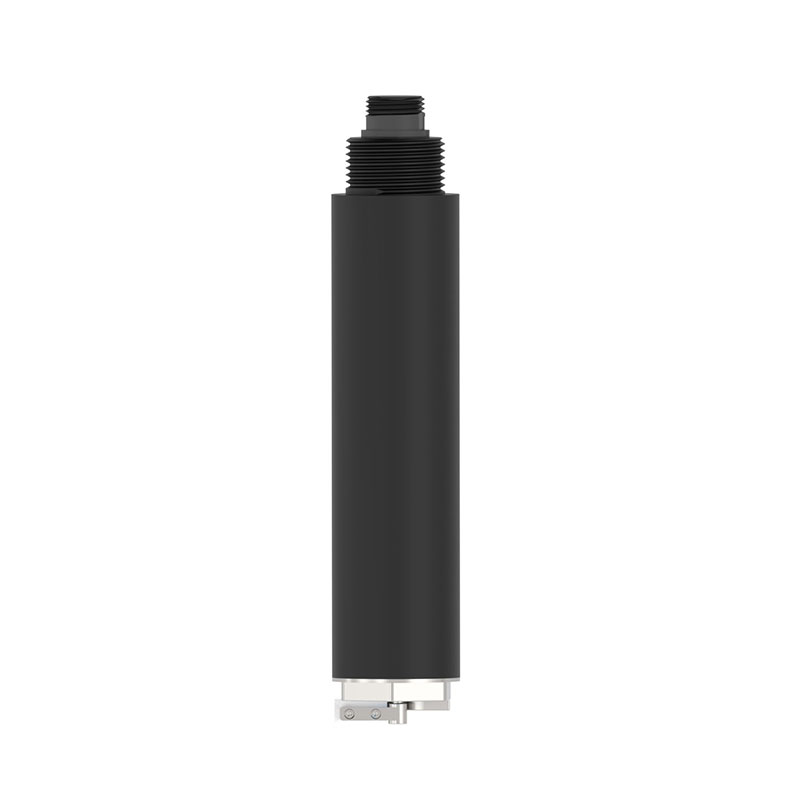
Model:FT-S15S
Brand:fengtu
one.How Chlorophyll Sensor works
Chlorophyll Sensor mainly monitors the content of chlorophyll a in water. It has a small volume and is suitable for various water quality environments.Chlorophyll Sensor is a device specially used to detect chlorophyll content.Its working principle is based on the fluorescence and light absorption properties of chlorophyll.
When illuminated by natural light or a light source of a specific wavelength, chlorophyll absorbs light energy and emits fluorescence.The intensity of this fluorescence is proportional to the chlorophyll content, so the chlorophyll content can be estimated by detecting the intensity of the fluorescence.
The advantage of Chlorophyll Sensor is that it can measure chlorophyll content in real time, quickly and non-destructively, and can be used for research, investigation and monitoring of rivers, lakes, ponds, marine surveys, aquaculture, drinking water sources, algae and phytoplankton conditions.
two.Chlorophyll Sensor technical parameters
| Measurement principle | Fluorescence method |
| Measuring range | 0-400ug/L |
| resolution | 0.01ug/L |
| Accuracy | R2>0.999 |
| temperature compensation | Automatic temperature compensation |
| Self-cleaning function | Equipped with an automatic cleaner to prevent biological adhesion and light window pollution to ensure long-term monitoring stability; the automatic cleaning time and cleaning frequency can be set, and the power consumption is 0.7W |
| Output mode | RS-485 (ModbusRTU protocol) |
| Storage temperature | -5℃~65℃ |
| working environment | 0℃~50℃,<0.2MPa |
| Installation method | Submersible installation, 3/4NPT mounting thread |
| Cable length | 5m |
| Power consumption | 0.4W,12V power supply |
| powered by | DC: 12V~24V |
| Protection level | IP68 |
| Calibration method | Two point calibration |
| Shell material | 316L stainless steel |
three.Chlorophyll Sensor Dimensions/Installation
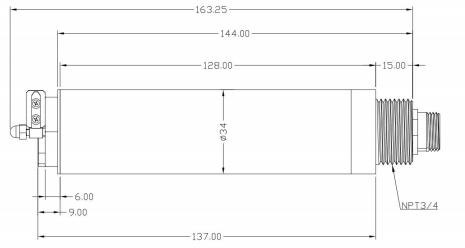
1.Chlorophyll Sensor size chart
2.Wiring diagram
The cable is a 4-core shielded wire:
Red wire—power wire (12~24V) black wire—ground wire (GND)
Green line—485B Yellow line—485A
3.Installation
1) On site, according to the actual situation, you can choose 6 points (3/4 NPT) thread for fixed installation or
Mounting accessory bracket installation, or other installation method that can fix the sensor.
2) Fixed installation is preferred, drag chain installation is prohibited.
3) When installing, fully consider the water flow and liquid level changes to ensure that the water flow can cross the optical path and the sensor is 10cm or deeper underwater.
4) Installation distance requirements: keep more than 3cm from the side wall and more than 10cm from the bottom.
Four.Chlorophyll Sensor care and maintenance
1.Maintenance schedule
Maintenance project maintenance time notes
Clean the sensor 0.5 to 3 days (without brush) 4 to 8 weeks (with brush)
Sensor inspection 6 months
Replace O-rings every 1 to 2 years
2.Maintenance methods
1) Check the outer surface of the sensor.Rinse the outer surface of the sensor with clean water.If there is still dirt remaining, please wipe it with a damp soft cloth.For some stubborn dirt, you can add some household detergent to the water to clean it.
2) Check the sensor cable and check whether the cable sheath is broken.The cable should not be tight during normal operation.
3) Check the measurement window to see if there is any dirt and wipe it with a dust-free cloth.
4) Sensor calibration can be calibrated through the host computer software, or it can be calibrated by yourself.
RS-485 sends MODBUS commands to self-calibrate.
3.Sensor calibration
3.1 Zero point calibration
Use a brown beaker to measure an appropriate amount of distilled water, place the sensor vertically in the solution, with the front end of the sensor at least 10cm away from the bottom of the beaker, and wait for 3 to 5 minutes for the value to stabilize before performing zero point calibration.
3.2 Slope calibration
Place the sensor in the standard solution, with the front end of the sensor at least 10cm away from the bottom of the beaker, and wait for 3 to 5 minutes for the value to stabilize before performing slope calibration.
Wind speed monitoring is a critical task during UAV flight. It not only helps the flight control system to develop a flight plan and adjust it in real time, but also provides critical environmental data to ensure flight safety. However, UAV wind speed and direction monitoring faces several challenge...
Explosion-proof automatic weather station, mainly used for environmental monitoring and management in electric power, petroleum, chemical and other industries, is a meteorological observation instrument. It can monitor the changes of various meteorological data in the atmosphere exactly within a cer...
What is the meaning of water and rain situation? In fact, the water and rain situation refers to the water and rain situation. Water condition refers to the condition of river water, such as river flow, water level, flow rate, etc.; while rain condition refers to the condition of rainfall in a certa...
Atmospheric transmittance refers to the ratio of the luminous flux that passes through the atmosphere to the incident luminous flux when light propagates in the atmosphere. When the atmospheric transmittance is high, it means that more light can successfully propagate in the atmosphere. In this case...


 Get a Free Quote
 Skype
Skype
 whatsapp
 mail
mail