Shandong Fengtu IOT Technology Co., Ltd
Sales Manager:Ms. Emily Wang
Cel,Whatsapp,Wechat:+86 15898932201
Email:info@fengtutec.com
Add:No. 155 Optoelectronic Industry Accelerator, Gaoxin District, Weifang, Shandong, China


Sales Manager:Ms. Emily Wang
Cel,Whatsapp,Wechat:+86 15898932201
Email:info@fengtutec.com
Add:No. 155 Optoelectronic Industry Accelerator, Gaoxin District, Weifang, Shandong, China
time:2026-05-12 09:51:04 source:Weather Station viewed:187 time
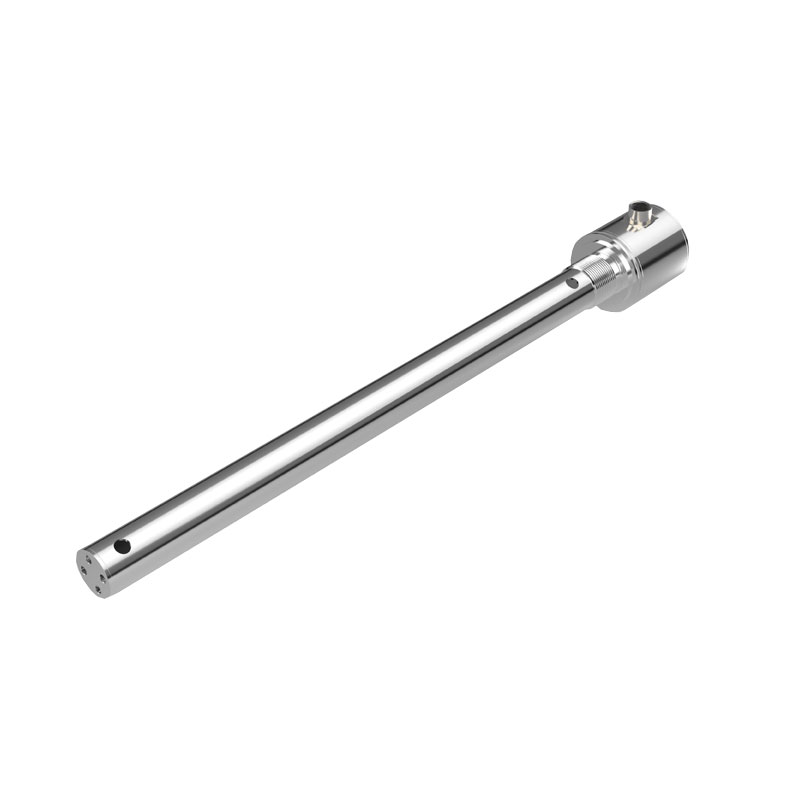
Oil Level Sensor provides real-time online monitoring of oil tank level changes and lubricating oil health status. Made of stainless steel, it offers a range of 300 to 2000 mm with an accuracy of ±0.5% F.S., suitable for various media environments including automobiles, ships, industrial equipment, and tank trucks.
Oil Level Sensor is a key device for real-time online monitoring of oil tank level changes and lubricating oil health status. It is primarily used in the automotive, marine, and industrial equipment industries, and is suitable for various container scenarios such as storage tanks, oil tanks, and tank trucks. Constructed of stainless steel, it can adapt to the measurement needs of various media such as oil, water, diesel, and refrigerants, and possesses strong corrosion resistance and impact resistance.
In terms of technical specifications, Oil Level Sensor offers multiple ranges of 300mm, 500mm, 700mm, 1000mm, 1500mm, and 2000mm, allowing users to select or customize according to the actual container depth. The liquid level measurement accuracy is ±0.5%F.S, meeting the accuracy requirements of most industrial and automotive applications. The device supports 24/7 uninterrupted monitoring, promptly reflecting oil status and tank level changes, helping maintenance personnel accurately monitor equipment operation.
In automotive applications, the oil level sensor can be used to detect the fuel level in the fuel tank, enabling digital display of vehicle fuel quantity and accurate fuel consumption calculation. Unlike traditional sliding resistance oil level sensors, which are prone to aging due to friction after long-term use, the modern capacitive Oil Level Sensor employs a design without mechanical moving parts, with no elastic or moving structures, resulting in high impact resistance, reliability, and effectively extended service life. In the marine industry, Oil Level Sensor can be used for fuel and lubricating oil level monitoring in barges, inland waterway tankers, and various ship supply tanks. Some products have obtained marine certification, demonstrating corrosion resistance.
In industrial equipment, this sensor is widely used for oil monitoring in hydraulic systems, lubrication systems, generator sets, and construction machinery. By continuously monitoring fluid parameters, oil level changes and oil quality deterioration can be accurately recorded, helping users extend oil change intervals and precisely plan oil change cycles, thus reducing maintenance costs. Some products also integrate multi-parameter monitoring functions such as temperature, dielectric constant, and water activity, further expanding the dimensions of online monitoring. For distributed oil tank scenarios such as lubricating oil tanks, Oil Level Sensor can be used in conjunction with monitoring systems such as KingSCADA to achieve remote centralized monitoring, replacing inefficient traditional methods such as manual gauging.
Overall, Oil Level Sensor improves condition-based maintenance efficiency, optimizes oil change cycles, and reduces reliance on offline analysis through uninterrupted online monitoring, making it an important component of oil management in automotive, marine, and industrial equipment.
Water level monitoring instrument is specifically designed for precise distance measurement, utilizing the FMCW (Frequency Modulated Continuous Wave) mode. It features non-contact installation, a compact structure, low power consumption, and strong anti-interference capabilities, making...
rainfall measuring measures mainly collect the water that falls on them and record changes in the depth of rainfall over time, usually expressed in millimeters....
An air quality monitoring station is a device system based on the concept of grid - based layout, which conducts all - round and refined monitoring of air quality in a specific area. It divides the monitoring area into multiple grids and sets up monitoring stations at key positions in each grid to a...
The water regime monitoring system is applied to the water conservancy management department to remotely monitor the water level and rainfall of the reservoir and collect real-time data, and provide accurate, timely and automatic on-site monitoring information to ensure the safe operation and manage...


 Skype
Skype
 whatsapp
 mail
mail