Shandong Fengtu IOT Technology Co., Ltd
Sales Manager:Ms. Emily Wang
Cel,Whatsapp,Wechat:+86 15898932201
Email:info@fengtutec.com
Add:No. 155 Optoelectronic Industry Accelerator, Gaoxin District, Weifang, Shandong, China


Sales Manager:Ms. Emily Wang
Cel,Whatsapp,Wechat:+86 15898932201
Email:info@fengtutec.com
Add:No. 155 Optoelectronic Industry Accelerator, Gaoxin District, Weifang, Shandong, China
time:2026-05-08 09:49:58 source:Weather Station viewed:203 time
Universal GNSS monitoring equipment employs differential RTK technology to achieve millimeter-level displacement monitoring. It is widely applicable across engineering fields—including dam safety monitoring, bridge structural health assessment, and landslide early warning systems—and features high precision, exceptional stability, and real-time data transmission capabilities, making it ideal for scenarios involving geohazards, reservoirs, mines, and slopes.
The Universal GNSS monitoring device is a high-precision terminal for displacement and deformation monitoring, based on the Global Navigation Satellite System (GNSS). It is extensively utilized in engineering applications such as dam safety surveillance, bridge health monitoring, and landslide early warning systems. The device utilizes differential RTK technology, achieving millimeter-level positioning accuracy through the collaborative operation of a reference station and a monitoring station.
In practical applications, the Universal GNSS monitoring device is capable of automatically collecting 3D displacement data from the monitored object around the clock. Equipped with built-in MEMS sensors, the device can automatically switch its operating mode in response to changes in the displacement rate at the monitoring point, thereby enabling a combined dynamic and static monitoring capability. The unit features an integrated design that consolidates the antenna, receiver, communication module, and battery into a single compact unit; this design minimizes the installation and wiring requirements for external components, thereby reducing the complexity of field deployment as well as operational and maintenance costs.
The low-power consumption characteristics of the Universal GNSS monitoring device make it highly suitable for deployment in remote outdoor environments lacking access to mains electricity. With a total power consumption of less than 1.5 watts, the device can operate continuously when paired with a solar power supply system, ensuring uninterrupted data collection even during prolonged periods of overcast or rainy weather. Typically boasting an IP67 or higher ingress protection rating, the device operates within a temperature range spanning from -40°C to +75°C, enabling it to withstand harsh outdoor environmental conditions such as torrential rain, extreme cold, and high-salinity fog.
The device supports a variety of communication protocols—including 4G LTE (full-network compatibility), LoRa, and RS485—enabling the real-time upload of monitoring data to a centralized early warning and management platform. The platform automatically processes, analyzes, and interprets the data; should the cumulative displacement or displacement rate exceed pre-configured thresholds, the system automatically issues early warning alerts. This capability provides critical data support for ensuring the safe operation of dams, assessing the structural health of bridges, and facilitating early warning systems for geological hazards. This device has currently achieved practical engineering application across various fields—including geological disaster prevention and control, safety monitoring for water conservancy projects, mine slope monitoring, and highway slope inspection—demonstrating stable and reliable operation.
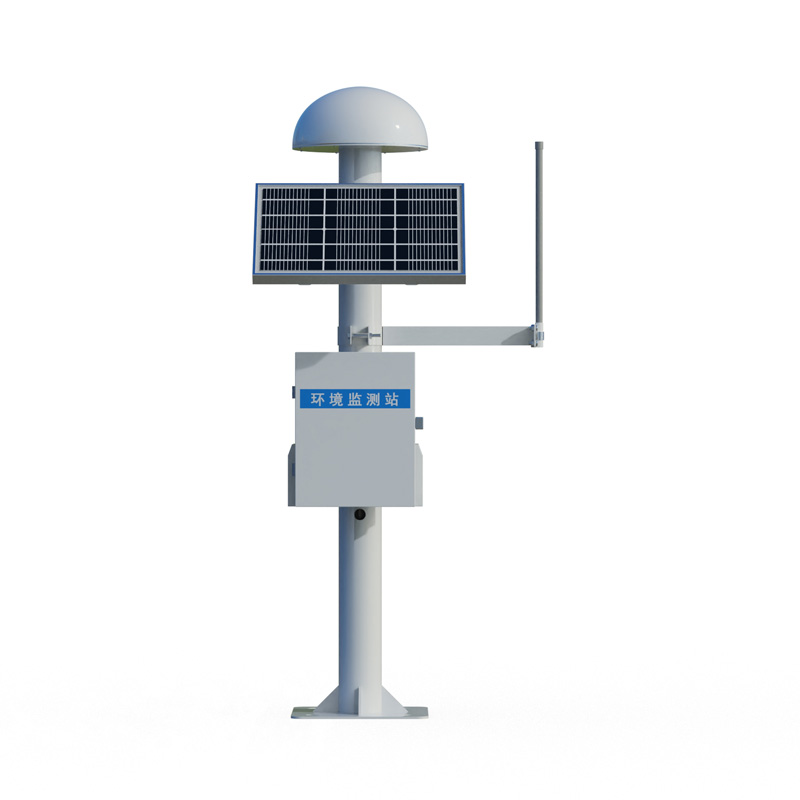
Micro monitoring station is an integrated weather sensor launched by Fengtu Technology, which adopts integrated structure, compact design, easy to carry, five-proof body, safety and environmental protection. The product can be used to detect the concentration of tiny particles in the atmosphere, but...
water level sensors for water tanks Water level sensors for water tanks Water level sensors for water tanks, containers and reservoirs....
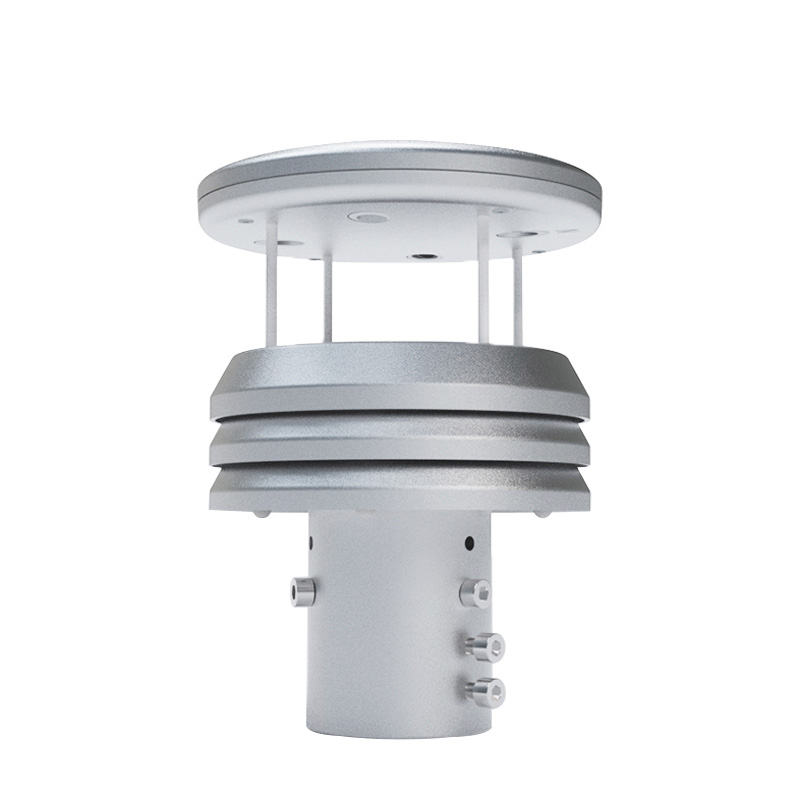
Wind speed and direction sensor, used to measure the instantaneous wind speed and wind direction of the instrument. Commonly used wind cup type wind direction anemometer, and sensor wind speed and wind direction meter.Ultrasonic wind speed and direction meter is wind way technology using ultrasonic...
weather instrument is mainly used to monitor and record various physical parameters in the atmospheric environment. It is composed of meteorological data acquisition, transmission, analysis and processing system....


 Skype
Skype
 whatsapp
 mail
mail