Shandong Fengtu IOT Technology Co., Ltd
Sales Manager:Ms. Emily Wang
Cel,Whatsapp,Wechat:+86 15898932201
Email:info@fengtutec.com
Add:No. 155 Optoelectronic Industry Accelerator, Gaoxin District, Weifang, Shandong, China


Sales Manager:Ms. Emily Wang
Cel,Whatsapp,Wechat:+86 15898932201
Email:info@fengtutec.com
Add:No. 155 Optoelectronic Industry Accelerator, Gaoxin District, Weifang, Shandong, China
time:2025-06-19 09:44:38 source:Weather Station viewed:721 time
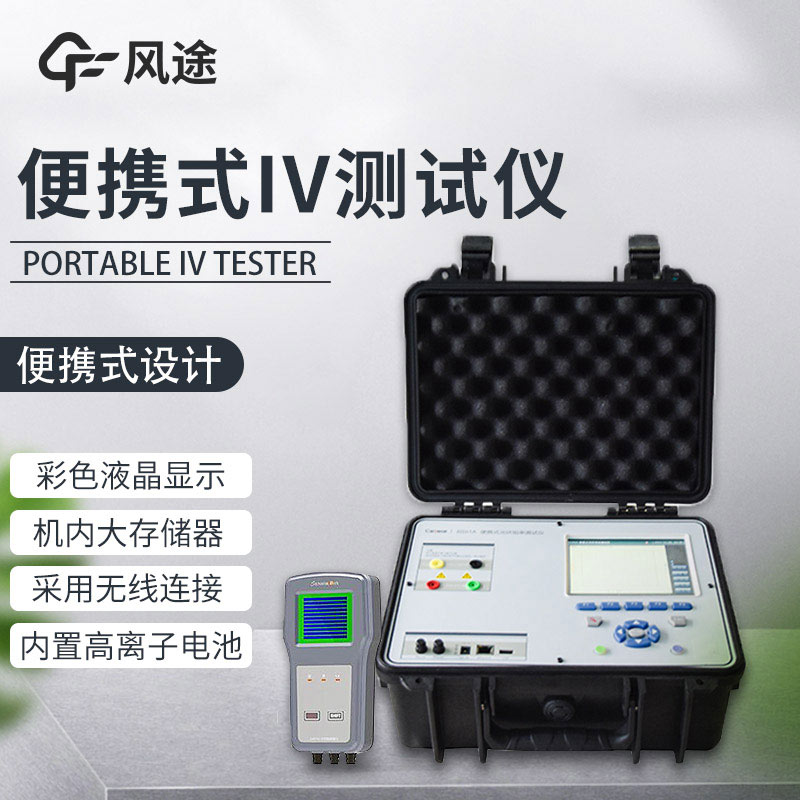
FT-IV2 I-V Curve Tracer is a high-precision testing equipment based on current-voltage (IV) characteristic analysis, used for performance evaluation of electronic components such as photovoltaic modules and semiconductor devices.
Working Principle
The working principle of FT-IV2 is based on the photoelectric effect and circuit measurement principles. Before testing, ensure the tested electronic component is correctly connected to the detector, and set simulated lighting conditions to replicate the light intensity and spectral distribution of the actual working environment. The component is first placed in an open-circuit state to measure its open-circuit voltage (Voc). The detector gradually increases the working voltage from 0V while precisely measuring the corresponding output current. By continuously measuring current responses at different voltages, a large number of voltage and current data points are obtained, thereby plotting a complete and accurate IV characteristic curve. This curve intuitively shows the current changes of the component at different voltages, reflecting core performance parameters such as photoelectric conversion efficiency, fill factor, and maximum power point.
Functional Features
Rich Measurement Parameters: Capable of measuring short-circuit current, open-circuit voltage, maximum power, peak power point voltage/current, I-V curve, P-V curve, etc. It also supports power generation testing of solar cell modules, irradiance flux testing, and can measure the surface irradiance and back temperature of solar cell modules.
Convenient Operation: Equipped with a touchscreen and keyboard, as well as peripheral interfaces. It supports storage expansion via USB ports, facilitating data storage and parameter setting.
Strong Environmental Adaptability: Built-in with a rich database of solar cell module correction models covering most manufacturers' products, providing standard STC test condition correction. It also has environmental monitoring functions such as panel temperature detection and solar irradiance detection to ensure measurement accuracy in different environments.
High Safety Performance: Features high-voltage isolated power supply design, allowing users to manually add test correction models through specific parameter settings. It has automatic range switching, overvoltage/overcurrent protection, and temperature protection to effectively ensure user safety.
Strong Portability: Equipped with a large-capacity replaceable lithium-ion battery for long-lasting power supply. With a relatively small volume, it is easy to carry and move, suitable for on-site testing in various locations.
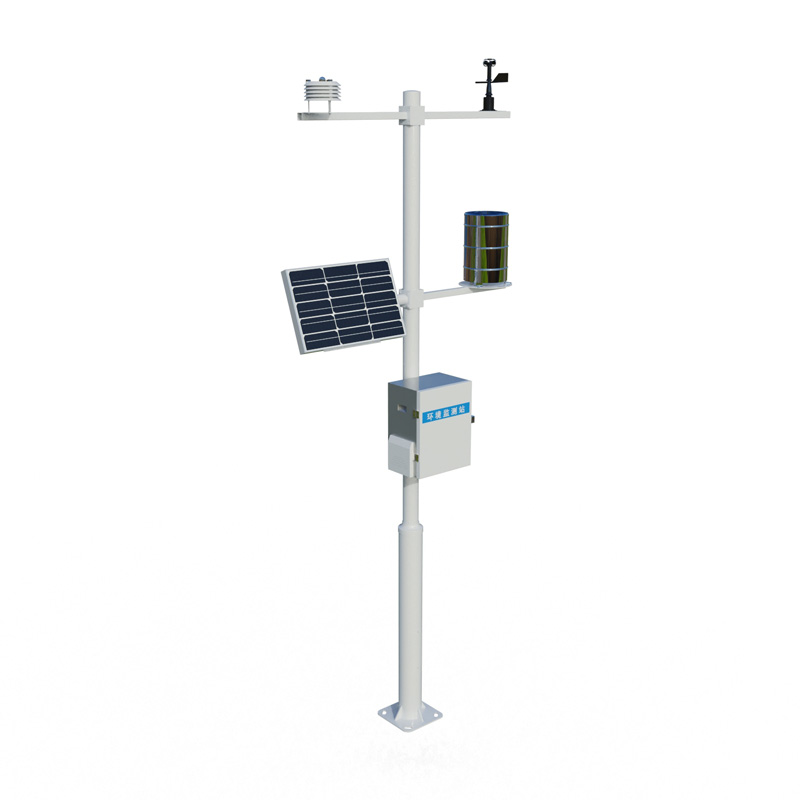
Most agricultural workers believe that the wind direction, wind speed and other factors do not have much impact on crop growth, but can not be ignored on the harm caused by crop plants, crop collapse is often encountered in modern agricultural production, we use ultrasonic wind speed and wind direct...
Wind is a phenomenon of air movement in the atmosphere, and its speed and direction are influenced by a variety of factors, including topography, climate, and seasons. A wind rose is a type of chart used to represent the distribution of wind direction and speed; it shows the frequency and intensity...
Outdoor adventure activities such as camping, mountaineering, hiking and fishing have become popular choices for modern urbanites to pursue nature and relax. It is crucial to know the weather conditions of your destination before you set off, but traditional weather forecasts often have wide coverag...
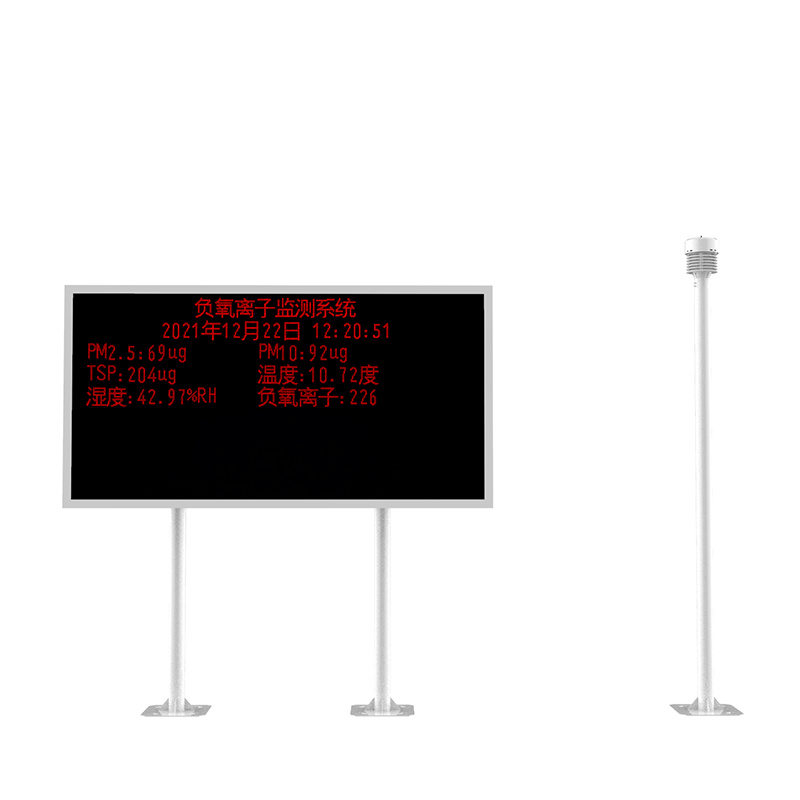
Air quality sensor is a device used for real-time monitoring of air pollutant concentrations and environmental parameters. Widely applied in environmental monitoring and public health, it can detect multiple parameters such as PM2.5, PM10, carbon monoxide, sulfur dioxide, nitrogen dioxide, and ozone, helping to assess levels of harmful gases and smog, supporting data-driven decision-making and health protection measures....


 Skype
Skype
 whatsapp
 mail
mail