Shandong Fengtu IOT Technology Co., Ltd
Sales Manager:Ms. Emily Wang
Cel,Whatsapp,Wechat:+86 15898932201
Email:info@fengtutec.com
Add:No. 155 Optoelectronic Industry Accelerator, Gaoxin District, Weifang, Shandong, China


Sales Manager:Ms. Emily Wang
Cel,Whatsapp,Wechat:+86 15898932201
Email:info@fengtutec.com
Add:No. 155 Optoelectronic Industry Accelerator, Gaoxin District, Weifang, Shandong, China
time:2024-01-22 17:19:48 source:Weather Station viewed:823 time
The Internet of Things in agriculture is playing an increasingly important role in modern agriculture, and one of its fundamental applications is soil moisture monitoring. By accurately obtaining real-time data on the growing environment, we are able to use technologies such as automated control and wireless communication networks to replace traditional manual agricultural production management methods.
As a large agricultural country, we are faced with the major challenge of achieving timely and effective drought prevention and water conservation in irrigation. In order to meet this challenge, we urgently need to use professional soil moisture monitoring systems to establish soil moisture monitoring points and use the systems to build a soil moisture monitoring network. This networked coverage and refined monitoring data will provide strong support for the rapid development of modern agriculture and ensure stable and efficient agricultural production.
The Soil Moisture Monitoring System solution is dedicated to the precise monitoring of soil moisture content, and its core components include a management cloud platform, communication network, and monitoring equipment. The system is capable of monitoring soil conditions over a long period of time and continuously, and farmers can flexibly arrange the monitoring equipment according to their actual needs. The advantage of this solution is that it can comprehensively, scientifically and realistically reflect the soil changes in the monitored area, and provide timely and accurate soil moisture conditions at each monitoring point. This not only provides valuable basic information for farmers, but also provides strong support for disaster mitigation and drought relief.
In addition, the solution is scalable. Depending on the actual monitoring needs, we can easily add sensors to monitor soil temperature, soil conductivity, soil PH, groundwater level and quality, air temperature and humidity, light intensity, wind speed and direction, and rainfall. This flexibility allows the system to meet different functional upgrades and expansion needs, further increasing its applicability and application value in the field of agricultural monitoring.
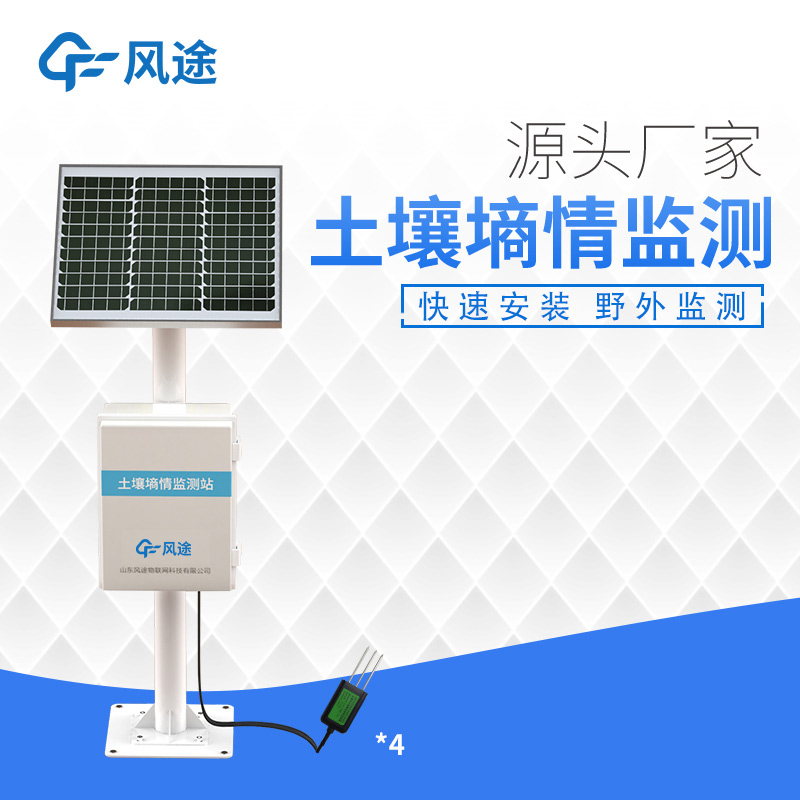
How can measured moisture be used for early warning of droughts and floods?The main steps include:Continuous monitoring of soil moisture: by using equipment such as soil moisture monitors, the soil is continuously monitored in real time to obtain data on the moisture content of the soil. This data c...
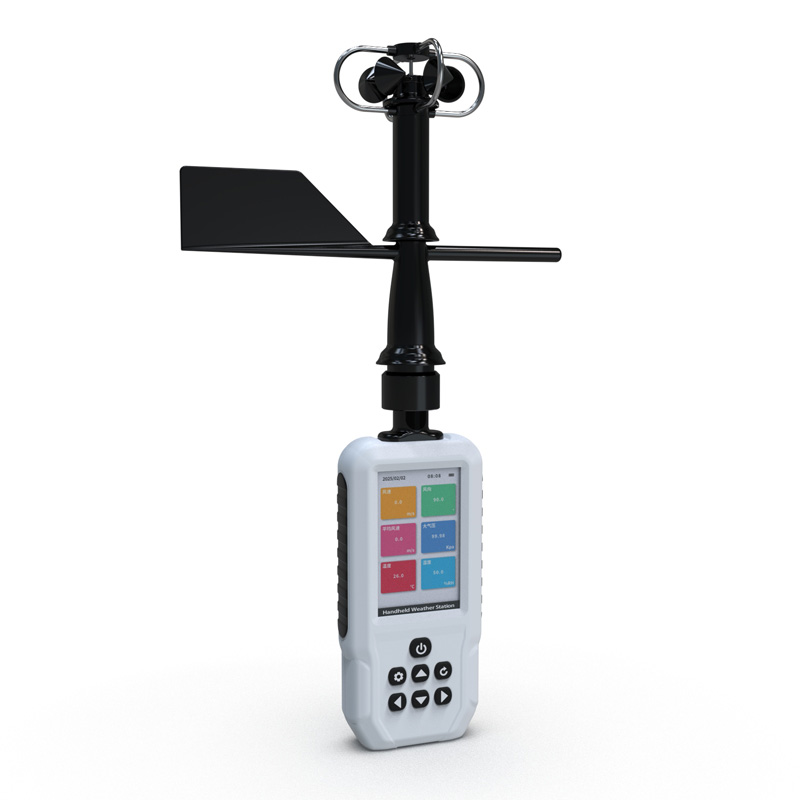
The electronic weather instrument is a portable device that integrates multiple meteorological data, including wind speed, wind direction, temperature, humidity, atmospheric pressure, altitude, thermal index, wet-bulb temperature, wave height, dew point temperature, wind chill index, and GNSS positioning. This highly integrated instrument is widely used in environmental monitoring, meteorological research, third-party testing, and emergency response, providing accurate meteorological data support....
The six-element weather sensor is a meteorological sensor that can simultaneously measure six basic meteorological parameters, including temperature, humidity, air pressure, wind speed, wind direction and rainfall. These parameters are the six basic elements commonly used in meteorological observati...
A meteorological and environmental monitoring system is an integrated system of equipment and software for monitoring and recording changes in atmospheric and environmental parameters. It monitors and records data on meteorological elements, environmental pollutants, etc. in real time for meteorolog...


 Skype
Skype
 whatsapp
 mail
mail