Shandong Fengtu IOT Technology Co., Ltd
Sales Manager:Ms. Emily Wang
Cel,Whatsapp,Wechat:+86 15898932201
Email:info@fengtutec.com
Add:No. 155 Optoelectronic Industry Accelerator, Gaoxin District, Weifang, Shandong, China


Sales Manager:Ms. Emily Wang
Cel,Whatsapp,Wechat:+86 15898932201
Email:info@fengtutec.com
Add:No. 155 Optoelectronic Industry Accelerator, Gaoxin District, Weifang, Shandong, China
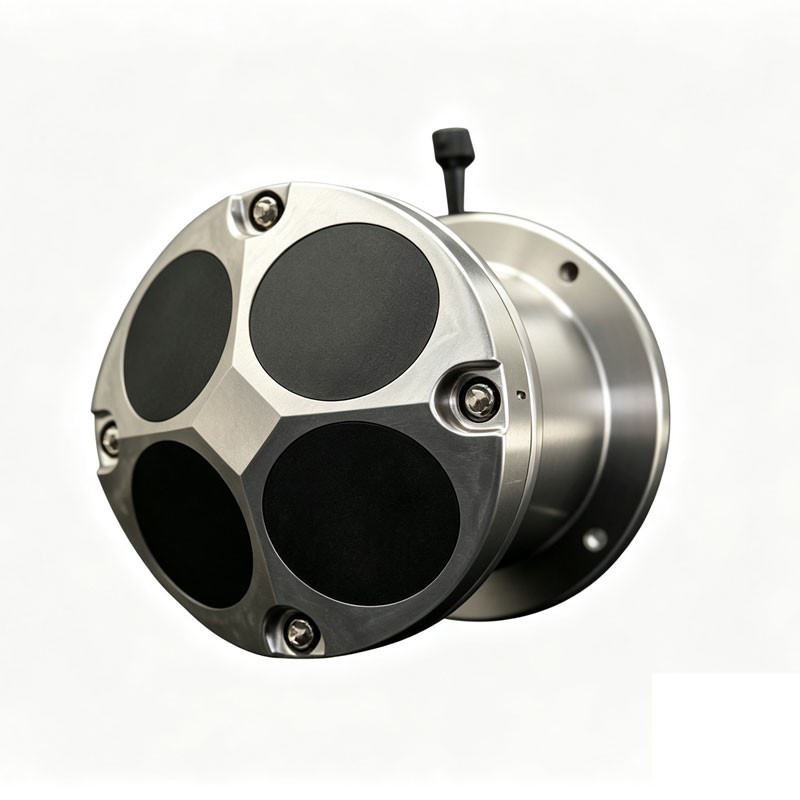
Model:ADCP-2
Brand:fengtu
1、Marine ADCP Product Introduction
Marine ADCP relies on underwater acoustics combined with the Doppler effect to measure the velocity and direction of ocean currents in layers.The ADCP-2Marine ADCP is an acoustic Doppler current profiler. Featuring a four-beam optimized design and a titanium alloy casing, it supports pressure resistance up to 6000 meters, offering excellent environmental adaptability and portability.
Its modular architecture is compatible with multiple power supply and communication interfaces, enabling deep integration of underwater flow field data acquisition and intelligent decision-making.
Currently, it is widely used in platforms such as AUVs, ROVs, USVs, and underwater gliders.
2、Marine ADCP Product Advantages
Domestic Substitution: The product is comparable to top international ADCP products and can directly replace them.
High Precision: Precision comparable to top international products.
High Reliability: Continuous operating time of at least 100 days.
Small Size: Significantly smaller than comparable international products.
Strong Compatibility: Compatible with similar product protocols.
Easy Operation: Can operate upon power-on/can be set to automatic operation.
High Cost-Effectiveness: Performance comparable to comparable international products, with a more competitive price.
3、Marine ADCP Application Scenarios
Ocean current field observation, nearshore hydrological surveys, marine engineering surveys, port and waterway monitoring, marine scientific research, deployment of marine observation platforms
4、Marine ADCP Technical parameters
| Composition | Technical Specifications | Parameters | ||
| Flow rate and direction measurement | Operation Mode | Direct reading | ||
| Underwater profile range | 55m/70m (broadband/narrowband) | |||
| Flow measurement accuracy | ±0.3%±3mm/s | |||
| Flow rate resolution | 1mm/s | |||
| Speed test range | ±5.0m/s (default); ±20.0m/s (maximum) | |||
| Flow measurement range | 0-360° | |||
| Flow measurement accuracy | ±2° | |||
| Number of units | 1-255 | |||
| Unit layer thickness | 0.5m-4m | |||
| Data output rate | 2Hz (Bottomless tracking mode); 1Hz (Bottom tracking mode) | |||
| Bottom tracking | Range | 0.8m-120m | ||
| Measurement accuracy | ±0.3%±3mm/s | |||
| Resolution | 1mm/s | |||
| Transducers and Hardware | Frequency | 600kHz | ||
| Beam count | 4-beam Janus | |||
| Beam angle | 20° | |||
| Beam width | 3.5° | |||
| Internal storage | 64GB Micro SD Card | |||
| Deep measurement | Height measurement resolution | 1mm/s | ||
| Height measurement accuracy | ±1%±0.5cm | |||
| Communication | Communication Interface | RS-232 or RS-422 | ||
| Standard Sensor | Temperature sensor | Range: -5℃ to 45℃; Accuracy: ±0.1℃ | ||
| Pressure sensor | Range: Determined by the depth rating; Accuracy: ±0.25%; | |||
| Attitude sensor (roll and pitch) | Range: ±85°; Accuracy (RMS): ±0.2°; Resolution: 0.1° | |||
| Compass sensor | Range: 0-360°; Accuracy (RMS): ±0.8°; Resolution: 0.1° | |||
| Power supply | Power supply interface | 20-50V, 5A | ||
| Average power consumption | ≤10W | |||
| Structure | Casing material | Titanium alloy | ||
| Environment | Operating temperature | -5℃-45℃ | ||
| Storage temperature | -40℃-70℃ | |||
| Physical properties | Pressure depth | 1000m 3000m 6000m | ||
| Weight (in air / in water) | 3.5kg/2.8kg(1000m) | 4.8kg/3.8kg(3000m) | 5.7kg/4.6kg(6000m) | |
| Dimensions (excluding top connector) | Φ148×150mm(1000m) | Φ148×157mm(3000m) | Φ148×167mm(6000m) | |
| Available options | External battery, bottom tracking (function), AC/DC power converter | |||
The main function of a small weather monitoring station is to monitor the information of weather elements that affect people's lives and the development of various industries. Small weather monitoring stations can be used to monitor the weather elements in the region in real time, thus providing...
Monitoring wind speed and direction is extremely critical for multiple industries such as fisheries, meteorology, industry, mining and healthcare. As wind power technology evolves and environmental standards improve, the demand for accuracy and performance of wind speed and direction measurement equ...
A soil moisture monitoring system is an automated system used to monitor soil moisture conditions, which can help farmers or agricultural researchers better understand soil moisture conditions in order to develop more effective irrigation schedules and crop management strategies.Soil moisture monito...
The Foliage Temperature and Humidity Sensor is a highly accurate measurement tool specifically designed to accurately monitor moisture levels on plant leaves, including tiny water or ice crystals. The shape of this sensor mimics a real leaf, a design that allows it to more realistically simulate and...


 Get a Free Quote
 Skype
Skype
 whatsapp
 mail
mail