Shandong Fengtu IOT Technology Co., Ltd
Sales Manager:Ms. Emily Wang
Cel,Whatsapp,Wechat:+86 15898932201
Email:info@fengtutec.com
Add:No. 155 Optoelectronic Industry Accelerator, Gaoxin District, Weifang, Shandong, China


Sales Manager:Ms. Emily Wang
Cel,Whatsapp,Wechat:+86 15898932201
Email:info@fengtutec.com
Add:No. 155 Optoelectronic Industry Accelerator, Gaoxin District, Weifang, Shandong, China
time:2024-12-30 13:33:52 source:Weather Station viewed:821 time
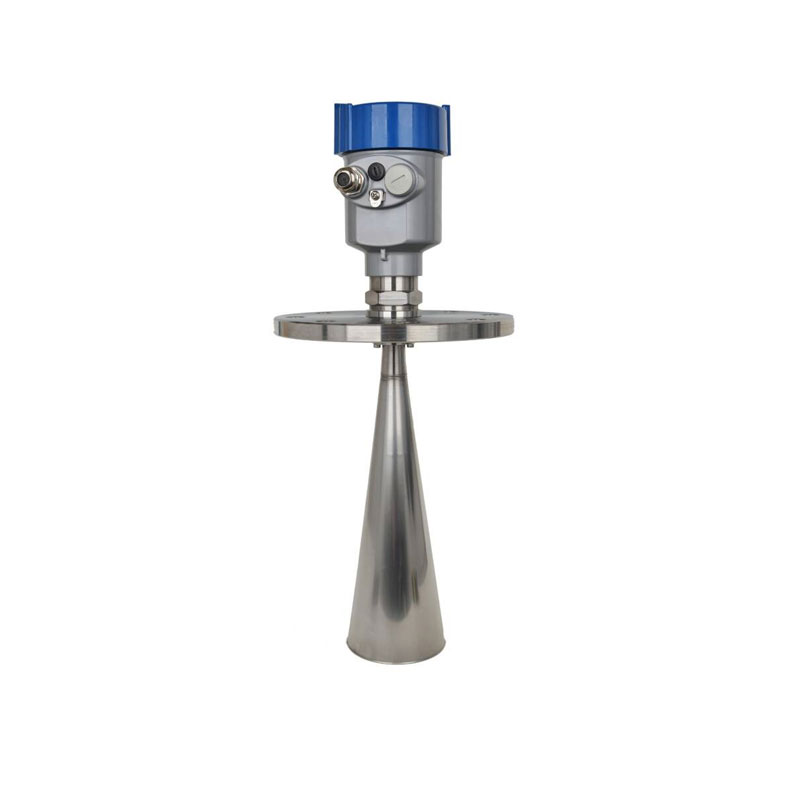
1.Principle of level sensor for water product
level sensor for water is a device that measures the level of water in a fixed container that is too high or too low, and is used to detect the level of water in a tank, pond, river, or any other body of water.The radar level antenna emits narrow microwave pulses, which are transmitted downward through the antenna. After the microwave contacts the surface of the measured medium, it is reflected back and is received again by the antenna system. The signal is transmitted to the electronic circuit part and automatically converted into a level signal (because the microwave propagates extremely fast, the electromagnetic wave reaches the target and is reflected back to the receiver. The time taken is almost instantaneous).
2. Technical parameters of level sensor for water
Application: temperature-resistant, pressure-resistant, slightly corrosive liquids
Measuring range: 30 meters
Process connection: thread, flange
Medium temperature: -40~250℃
Process pressure: -0.1~4.0MPa
Accuracy: ±3mm
Protection level: IP67
Frequency range: 26GHz
Explosion-proof level: ExiaⅡC T6 Ga/Exd ia IIC T6 Gb
Signal output: 4...20mA/HART (two lines/four lines) RS485/Mod bus
3. Product features of level sensor for water
The antenna is small in size and easy to install; the non-contact radar has no wear and pollution.
Almost unaffected by corrosion and foam; almost unaffected by water vapor, temperature and pressure changes in the atmosphere.
Serious dust environment has little impact on the work of high-frequency level meters.
The wavelength is shorter and reflects better on tilted solid surfaces.
The beam angle is small and the energy is concentrated, which enhances the echo capability and helps avoid interference.
The measurement blind area is smaller, and good results can be achieved for small tank measurements.
High signal-to-noise ratio for better performance even under fluctuating conditions.
High frequency, it is the best choice for measuring solids and low dielectric constant media.
Building a smart irrigation district starts with online flow monitoring in river - irrigated areas.Open Channel Flow Monitors are applicable to flow measurement of rectangular, trapezoidal open channels and culverts in reservoirs, rivers, water conservancy projects, urban water supply, sewage treatm...
Soil moisture is a measure of soil moisture and is extremely critical to agricultural production as it directly affects the growing conditions of crops. Moisture content is measured by the percentage of soil water content, which can be expressed as the ratio of the weight of water in the soil to the...
The miniature meteorological instrument is a comprehensive meteorological sensor for use in a wide range of environments, which can simultaneously measure temperature, humidity, atmospheric pressure, wind speed and other meteorological elements for detecting meteorological conditions and environment...
An air quality monitoring station is a device system based on the concept of grid - based layout, which conducts all - round and refined monitoring of air quality in a specific area. It divides the monitoring area into multiple grids and sets up monitoring stations at key positions in each grid to a...


 Skype
Skype
 whatsapp
 mail
mail