Shandong Fengtu IOT Technology Co., Ltd
Sales Manager:Ms. Emily Wang
Cel,Whatsapp,Wechat:+86 15898932201
Email:info@fengtutec.com
Add:No. 155 Optoelectronic Industry Accelerator, Gaoxin District, Weifang, Shandong, China


Sales Manager:Ms. Emily Wang
Cel,Whatsapp,Wechat:+86 15898932201
Email:info@fengtutec.com
Add:No. 155 Optoelectronic Industry Accelerator, Gaoxin District, Weifang, Shandong, China
time:2026-06-23 09:43:44 source:Weather Station viewed:78 time
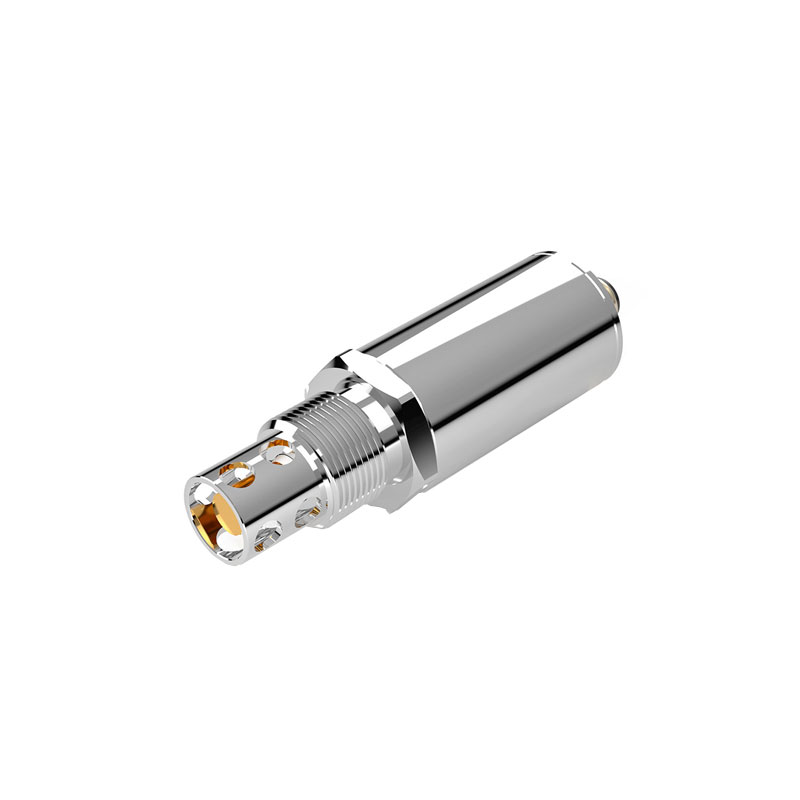
Oil dielectric constant sensor utilizes electrochemical impedance spectroscopy (EIS) to detect the dielectric constant of lubricating oil in real time. It exhibits high sensitivity to oil contamination, additive depletion, and aging, allowing for online measurement of oil quality changes and providing data support for condition-based equipment maintenance and optimized oil change cycles.
Lubricating oil is a critical medium for the operation of mechanical equipment, and its quality changes directly affect the equipment's service life and operational safety. Traditional oil testing relies on periodic sampling and laboratory analysis, which suffers from long cycles and poor timeliness, making it difficult to meet the needs of real-time equipment monitoring. Oil dielectric constant sensor, as an online monitoring method, can continuously track the health status of the oil, providing timely and effective data support for equipment maintenance.
Oil dielectric constant sensor uses EIS to detect the dielectric constant of the oil. By analyzing the impedance spectrum, multiple parameters can be obtained simultaneously, thereby assessing the depletion of lubricating oil additives, monitoring the degree of oil aging, and determining the oil contamination status. The deterioration process of lubricating oil contains information about equipment failure, and its dielectric constant changes accordingly during this process. By continuously measuring the dielectric constant, the sensor can reflect the changing trends of oil quality in real time, providing equipment managers with a basis for judgment.
Currently, Oil dielectric constant sensor sensors used in industrial settings typically employ coaxial or flat electrodes as sensing elements, covering the variation range of the dielectric constant of commonly used lubricating oils. The measurement accuracy and resolution meet the engineering requirements for online monitoring. The sensor housing is mostly made of stainless steel, providing a high level of protection and allowing for long-term stable operation in high-temperature, high-pressure, and vibration environments within oil pipelines. The output signal generally includes an analog current signal and a digital communication interface, facilitating integration with programmable logic controllers (PLCs) or host computer systems to achieve automatic data acquisition and remote transmission.
The online monitoring capability of Oil dielectric constant sensor effectively reduces reliance on offline analysis, improves condition-based maintenance efficiency, and helps users optimize oil change cycles. Through continuous monitoring of the oil condition, equipment managers can promptly grasp changes in oil quality, avoiding unnecessary oil change waste and preventing equipment failures caused by oil deterioration. This technology has been widely applied in the power industry, including wind power, hydropower, thermal power, and nuclear power, as well as in fields such as engineering machinery, aviation and marine, steel metallurgy, and industrial production. In lubricating oil monitoring systems for critical equipment such as steam turbines, compressors, and gearboxes, dielectric constant, along with parameters such as viscosity, density, temperature, moisture content, and particle size, constitute comprehensive monitoring indicators, providing multi-dimensional data for equipment condition assessment.
With the increasing demands for reliability and economy in industrial equipment, [specific technology name - likely a specific technology or method], as one of the core means of online oil monitoring, is gradually being integrated into predictive maintenance systems. Its characteristics of no sampling required, real-time feedback, and continuous tracking provide a practical technical path for equipment operation management, helping to achieve an effective balance between equipment operating costs and safety.
Moisture describes the level of moisture in the soil, which reflects the actual water content in the soil and is critical to plant growth. There are three key indicators of soil moisture: the maximum saturated water content of the soil, which is the degree to which the soil can become completely sat...
a light sensor is a light-sensitive device that detects light and converts it into an electrical signal that can be used to measure illuminance....
Malodorous gases are a type of gaseous substances that can cause people unpleasant feelings. Industrial production, municipal sewage, sludge treatment, and waste disposal facilities are the main sources of malodorous gases.Malodorous gases are toxic to varying degrees to the human respiratory,...
Fengtu Technology, a manufacturer of water quality testing equipment, integrates the R&D, production, and sales of water quality analysis instruments and online monitoring devices. Its systems consist of six core components—water quality sensors, data acquisition units, communication syst...


 Skype
Skype
 whatsapp
 mail
mail